Classes of Matter
TL;DR
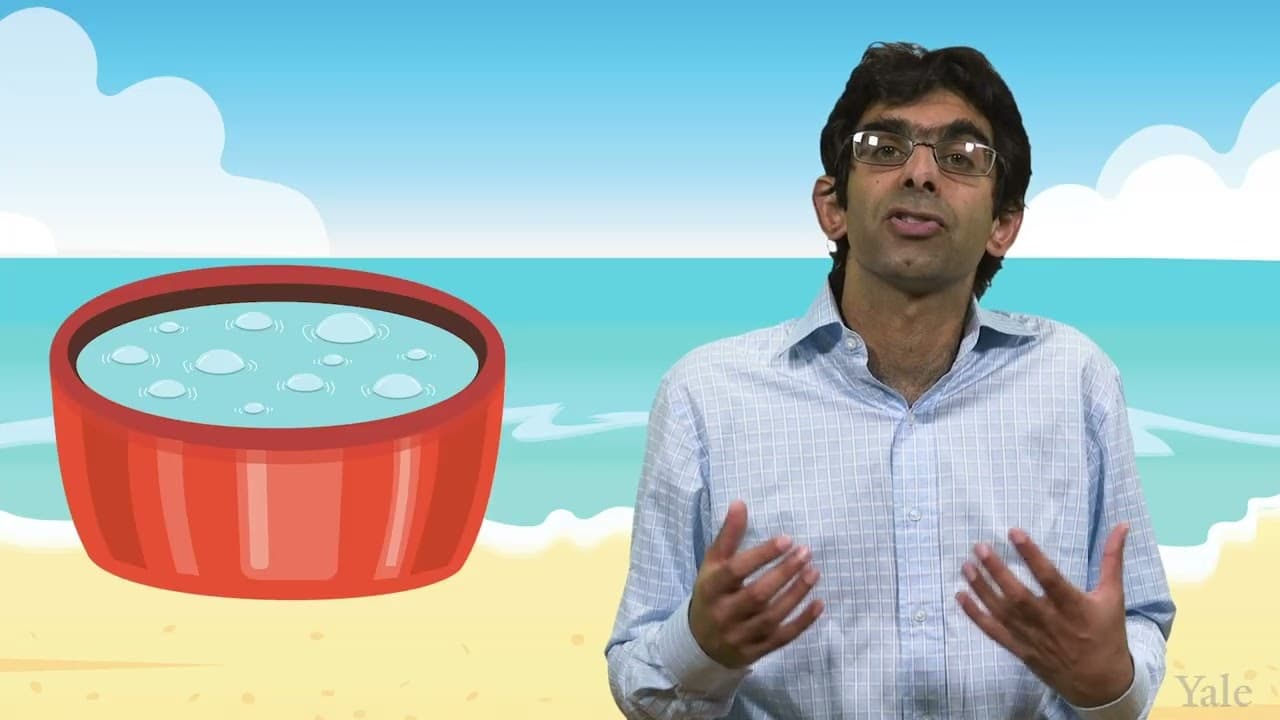
This video explains the four classes of matter - pure substances (elements and compounds), homogeneous mixtures, and heterogeneous mixtures.
Transcript
♪ Nilay's chemistry. ♪ - Chemistry is the study of matter. And in order to understand and communicate the properties of matter, chemists divide matter into different classes. In this video, we are going to talk about the four different classes of matter. If you have a glass full of water with no other chemicals in the water, then the water is a pur... Read More
Key Insights
- ❓ Chemistry is the study of matter and its properties.
- ❓ Pure substances have constant composition and include elements and compounds.
- 🫥 Homogeneous mixtures are uniform throughout, while heterogeneous mixtures have visible components.
- ❓ Physical processes can separate mixtures, while chemical reactions can decompose compounds.
Install to Summarize YouTube Videos and Get Transcripts
Explore YouTube Video Summarizer or Get YouTube Transcript Extractor
Questions & Answers
Q: What is a pure substance?
A pure substance is a form of matter with a constant composition that cannot be separated by physical processes. Examples include water and silver.
Q: How are elements different from compounds?
Elements are pure substances that cannot be decomposed further via chemical reactions, while compounds can be broken down into simpler substances through chemical reactions.
Q: What are homogeneous mixtures?
Homogeneous mixtures are uniform throughout, with no visibly distinguishable parts. Examples include seawater, air, and wine.
Q: How are heterogeneous mixtures different from homogeneous mixtures?
Heterogeneous mixtures have visibly distinguishable parts and are not uniform throughout. Examples include pizza, chocolate chip cookies, and Chex mix.
Summary & Key Takeaways
-
Chemistry is the study of matter, and this video discusses the four classes of matter - pure substances, elements, compounds, homogeneous mixtures, and heterogeneous mixtures.
-
Pure substances have a constant composition and cannot be separated by physical processes. Elements are pure substances that cannot be further decomposed, while compounds can be decomposed via chemical reactions.
-
Homogeneous mixtures, like seawater and air, are uniform and do not have visibly distinguishable parts. Heterogeneous mixtures, like pizza and chocolate chip cookies, have distinguishable components.
Read in Other Languages (beta)
Share This Summary 📚
Summarize YouTube Videos and Get Video Transcripts with 1-Click
Try YouTube Summary with ChatGPT & Claude or YouTube Transcript Generator
Explore More Summaries from YaleCourses 📚

Summarize YouTube Videos and Get Video Transcripts with 1-Click
Try YouTube Summary with ChatGPT & Claude or YouTube Transcript Generator