How to Scale a Faceless YouTube Channel Fast
TL;DR
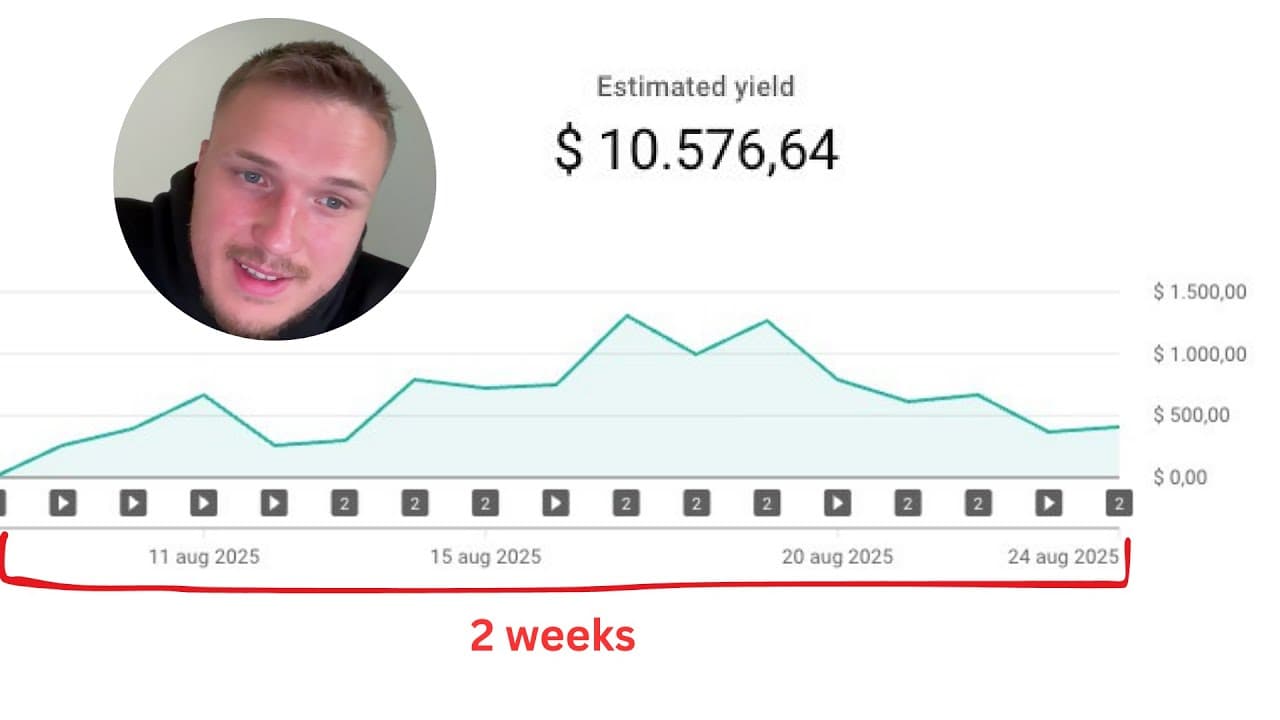
Fast faceless-channel growth depends on selecting a large, timely market, publishing a quick proof-of-concept video, and scaling only after analytics show traction. The featured channel used 20 videos, roughly $50 per video, an RPM of about $5, and frequent uploads, while its operators replicated successful formats, maintained momentum, and tested titles, thumbnails, hooks, and ideas through rapid feedback loops.
Transcript
Okay, today video is pretty short but packed with value. I'm going to show you exactly how you can make $10,000 from a faceless YouTube channel as quickly as possible after monetization and scale it further. So, just a quick remark, most people will quit watching this video right now and click off. So, only a few will get to see what separates peop... Read More
Key Insights
- The featured channel used 20 videos to produce the reported result, with posting beginning in late July before monetization and scaling. The stated operating figures were roughly $50 per video, an RPM near $5, and a claimed profit margin of 90 percent.
- High-risk niches can provide faster rewards because profitable, easily produced subjects tend to attract strong competition. The recommended approach is to enter only when a channel can compete through credible performance signals, effective content strategy, rapid execution, and the ability to outscale existing publishers.
- Demand gaps can emerge when established channels are terminated, lose visibility, stop publishing effectively, or fail to maintain momentum. An audience may continue seeking familiar content, allowing another channel to capture traffic if it recognizes the gap and publishes suitable material quickly.
- Audience size is important, but predictable audience behavior is presented as even more valuable. The strategy uses curiosity, urgency, fear of missing out, and other attention triggers to earn clicks, retain viewers, and produce strong post-viewing metrics in broadly appealing niches.
- Data-driven niche selection starts with formats already working for competitors or related subniches. The creator then changes limited variables, such as a country, company, or public figure, combining demonstrated demand with a segment that appears less thoroughly served.
- Asymmetric niches allow a small number of successful uploads to offset several failures. The strategy accepts that five, eight, or ten videos may underperform because one or two outliers can recover production costs, generate profit, and increase traffic across the channel.
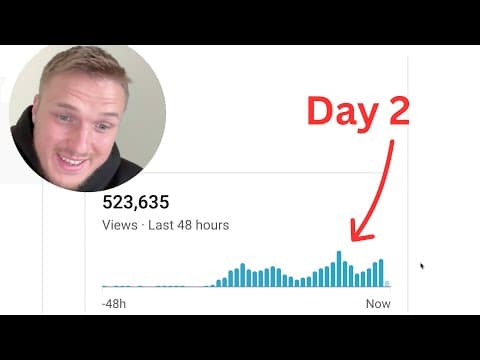
- Proof of concept should precede aggressive scaling. The first video on the featured channel reportedly went live within 24 hours of identifying the niche, using a shorter, quickly produced format to test whether impressions, average view duration, subscribers, and audience matching improved.
- Fast feedback loops are central to scaling because teams can test ideas, titles, thumbnails, and opening hooks, then replicate what generates views. Analytics, comments, non-subscriber behavior, satisfaction signals, and competitor comparisons guide decisions, while parallel production and consistent uploads protect momentum.
Install to Summarize YouTube Videos and Get Transcripts
Explore YouTube Video Summarizer or Get YouTube Transcript Extractor
Questions & Answers
Q: How can a faceless YouTube channel scale quickly after monetization?
A faceless channel can scale by first confirming demand with quickly produced, shorter videos and then expanding production only after analytics indicate traction. The described process uses multiple writers or editors, parallel video production, documented guidelines, and standard operating procedures. It also tests ideas, titles, thumbnails, and hooks rapidly, studies viewer behavior and comments, and publishes consistently while momentum remains strong.
Q: What results and operating numbers were reported for the featured channel?
The featured channel reportedly used 20 videos after posting began in late July. The transcript states that each video cost roughly $50, the channel had an RPM of about $5, and uploads sometimes occurred once or twice per day. It also claims a 90 percent profit margin. The channel was monetized and then scaled as performance improved and competing channels appeared.
Q: How should a profitable faceless YouTube niche be selected?
The proposed selection method looks for a large audience, urgent demand, identifiable market gaps, scalable production, and evidence that similar content already works. It favors niches where audience behavior is predictable and attention can be earned through curiosity, urgency, or fear of missing out. The strategy also accepts that niches promising quick returns may carry higher competitive and channel risks.
Q: Why are proven competitor formats useful for choosing video ideas?
Proven formats provide evidence that viewers already respond to a topic, title pattern, or content structure. The suggested method is to identify something working for a competitor or related subniche, then alter a limited variable such as the country, company, or featured personality. If that variation becomes an outlier, the channel can produce additional versions while changing enough details to continue testing audience demand.
Q: What is an asymmetric niche in faceless YouTube publishing?
An asymmetric niche is described as a market where a few successful uploads can compensate for several videos that perform poorly. Five, eight, or ten videos may initially fail, while one or two outliers can offset production costs, return substantial profit, and lift the wider channel. Underperforming videos may also begin attracting views later, so early failures are treated as part of the testing process.
Q: When should a faceless channel increase its upload volume?
Upload volume should increase after the channel demonstrates proof of concept through growing impressions, improving average view duration, initial subscribers, and signs that YouTube can identify the appropriate audience. The strategy advises starting with fast, shorter productions, evaluating their performance, and surrounding the channel with a structured team only after traction appears. Once momentum is visible, publishing days should not be skipped.
Q: How do rapid feedback loops improve YouTube channel growth?
Rapid feedback loops let a team test variations in topics, titles, thumbnails, and opening hooks, then quickly concentrate resources on the combinations that attract views. The process compares analytics, non-subscriber viewing behavior, comments, satisfaction signals, and competitor results. When one upload performs materially better, the channel replicates its underlying idea with altered details instead of immediately abandoning it for something unrelated.
Q: Why is parallel video production useful for a faceless channel?
Parallel production keeps several videos moving through scripting and editing at the same time, potentially using one or two writers and multiple editors. If an upload encounters limited monetization, copyright concerns, or another production problem, the team still has alternative content ready. Clear guidelines and standard operating procedures reduce repeated questions, coordinate contributors, and help the channel respond quickly when performance data identifies a promising format.
Summary & Key Takeaways
-
The channel reportedly reached the featured result with 20 videos after posting began in late July. Its operating figures included roughly $50 per video, an RPM of about $5, one or two uploads on some days, and a claimed 90 percent profit margin. The strategy prioritized fast execution after monetization.
-
Niche selection centered on high-risk, high-reward markets with large audiences, urgent demand, and identifiable content gaps. The approach looked for proven ideas from competitors or related subniches, then changed details such as countries, companies, or featured personalities. Audience behavior and attention triggers guided packaging and topic selection.
-
Scaling began only after early performance supplied proof of concept. Production was parallelized across writers and editors, supported by guidelines and standard operating procedures. Analytics, comments, competitor performance, and viewer behavior informed rapid experiments. Successful outlier videos were replicated with small changes, while consistent publishing preserved the channel's momentum.
Read in Other Languages (beta)
Share This Summary 📚
Summarize YouTube Videos and Get Video Transcripts with 1-Click
Try YouTube Summary with ChatGPT & Claude or YouTube Transcript Generator
Explore More Summaries from Andrew 📚




Summarize YouTube Videos and Get Video Transcripts with 1-Click
Try YouTube Summary with ChatGPT & Claude or YouTube Transcript Generator