What Is Buzz and How to Use It Effectively?
TL;DR
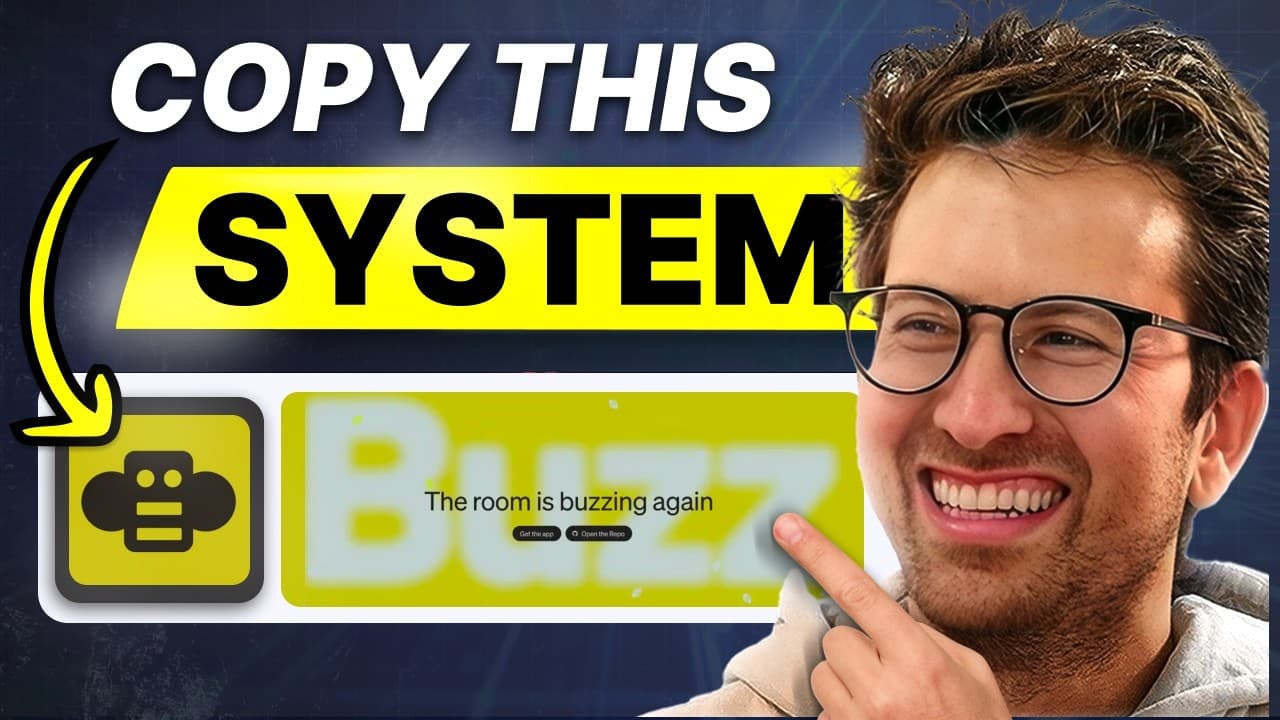
Buzz is an open-source, agent-native chat app that positions itself as a 'Slack killer' by integrating agents as first-class team members. It allows users to swap harnesses under agents, maintain context across projects, and utilize shared compute for local models. This makes Buzz particularly suited for solopreneurs and small teams aiming to iterate quickly.
Transcript
Jack Dorsey just launched Buzz and it's gone completely viral. Yes, it's the same Jack Dorsey who co-founded Twitter, who co-founded Block. This guy is building what people are calling a Slack killer. Now, why does this matter for you? Well, it's being called a Slack killer because it's almost like this agentic version of Slack. It's a way to have ... Read More
Key Insights
- Buzz is an open-source chat app built on open protocols, designed to integrate agents as first-class team members.
- Agents in Buzz can swap harnesses, allowing users to switch underlying AI models without losing context or data.
- Buzz supports audio huddles where agents can join live calls, enhancing real-time collaboration.
- The app includes built-in Git hosting, enabling agents to create feature branches and work in parallel worktrees.
- Buzz allows users to deploy live applications directly from chat, exemplified by a CRM app built with Wasp and deployed to Railway.
- Shared compute functionality lets multiple users access a single local model from various devices, optimizing resource use.
- Buzz is in early preview, making it ideal for small teams and solopreneurs looking to iterate quickly on projects.
- The openness of Buzz's design allows for flexible integration and adaptation, potentially surpassing Slack and GitHub in functionality.
Install to Summarize YouTube Videos and Get Transcripts
Explore YouTube Video Summarizer or Get YouTube Transcript Extractor
Questions & Answers
Q: How does Buzz integrate agents as team members?
Buzz treats agents as first-class team members, allowing them to participate in conversations and projects as integral components. Unlike Slack, where agents are added through integrations, Buzz provides a platform where agents are native participants, capable of carrying context across various tasks and projects.
Q: What is the significance of swappable harnesses in Buzz?
Swappable harnesses in Buzz allow users to change the underlying AI model for agents without losing the context of previous chats and projects. This flexibility helps in managing model fatigue and ensures continuity in workflow, as users can switch between Claude Code, Codex, Goose, or open code as needed.
Q: How do audio huddles work in Buzz?
Audio huddles in Buzz enable real-time voice interactions with agents, allowing them to join calls with full chat context. This feature supports dynamic collaboration, as users can engage in live discussions with agents, enhancing the creative process and decision-making in a more interactive manner than traditional text exchanges.
Q: What role does Git hosting play in Buzz?
Buzz includes built-in Git hosting, allowing agents to create feature branches and work in parallel worktrees. This feature ensures local files remain intact while multiple versions are developed simultaneously. It extends Buzz's functionality beyond Slack, positioning it as a potential competitor to GitHub by enabling end-to-end app deployment.
Q: How does Buzz support shared compute?
Shared compute in Buzz allows multiple users to access a single local AI model from different devices. This feature is particularly beneficial for small teams or startups, as it optimizes resource usage by enabling collaborative work on a shared model, facilitating efficient project development without the need for extensive individual resources.
Q: Why is Buzz ideal for solopreneurs and small teams?
Buzz's design, emphasizing openness and flexibility, makes it ideal for solopreneurs and small teams. Its ability to maintain context across projects, swap AI models easily, and support real-time collaboration through audio huddles allows for rapid iteration and innovation, essential for small teams aiming to develop and deploy projects quickly.
Q: What are the potential benefits of Buzz's open protocol?
Buzz's open protocol allows for flexible integration and adaptation, enabling users to customize and extend the app's functionality according to their needs. This openness supports innovation and collaboration, as users can contribute to the app's development, potentially leading to a tool that surpasses existing platforms like Slack and GitHub.
Q: How does Buzz maintain context across projects and agents?
Buzz maintains context across projects and agents by treating the chat as a shared context layer for both humans and agents. This design ensures that all conversations, decisions, and project details are preserved, allowing seamless transitions and continuity in workflow, regardless of changes in team composition or AI models used.
Summary & Key Takeaways
-
Buzz, developed by Jack Dorsey, is an open-source chat app that integrates agents as core team members, offering a unique alternative to Slack. It allows for swappable AI model harnesses, maintaining project context across changes, and supports real-time audio huddles with agents. This makes it particularly useful for solopreneurs and small teams.
-
The app includes features like Git hosting and shared compute, enabling efficient management of parallel worktrees and local models. Buzz's design emphasizes openness, supporting seamless integration and adaptation, which positions it as a potential competitor to both Slack and GitHub.
-
Buzz is currently in early preview, ideal for small teams iterating quickly on projects. Its ability to maintain context across agents and projects, along with its openness, offers users flexibility and control over their workflow, making it a valuable tool for those exploring the future of work.
Read in Other Languages (beta)
Share This Summary 📚
Summarize YouTube Videos and Get Video Transcripts with 1-Click
Try YouTube Summary with ChatGPT & Claude or YouTube Transcript Generator
Explore More Summaries from Greg Isenberg 📚



Summarize YouTube Videos and Get Video Transcripts with 1-Click
Try YouTube Summary with ChatGPT & Claude or YouTube Transcript Generator