How AI CoScientist Transforms Chemical Research
TL;DR
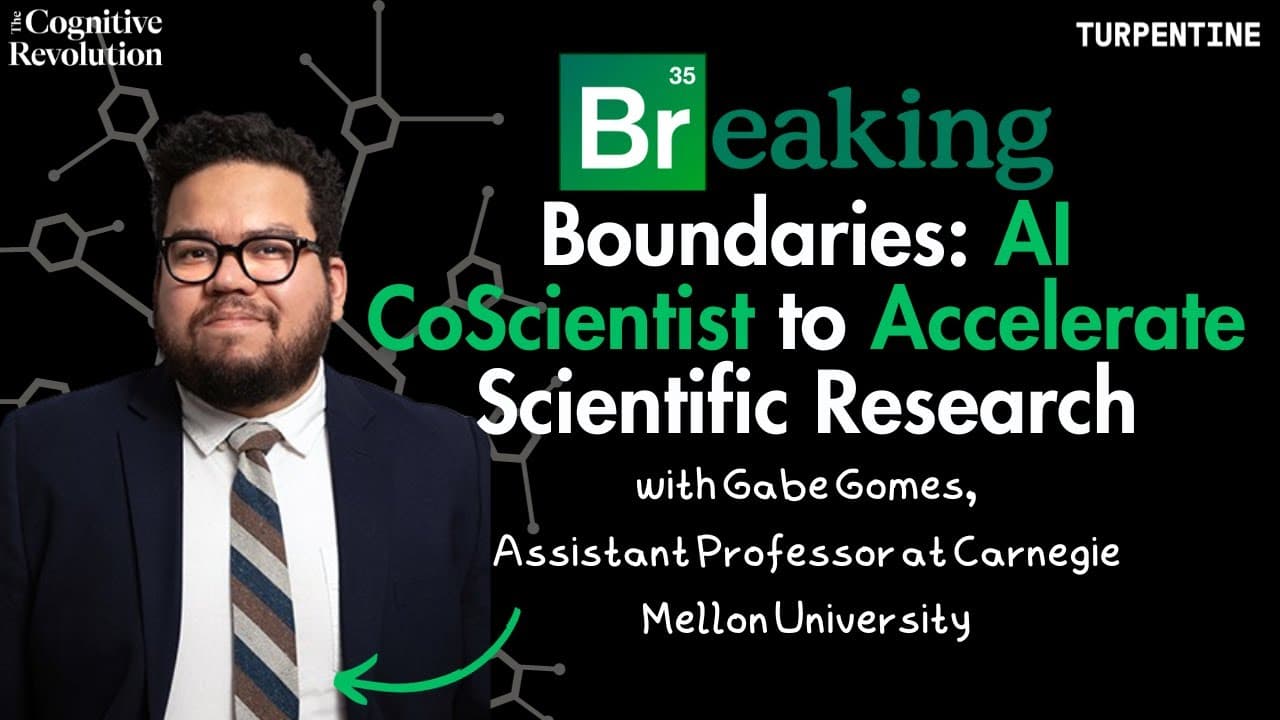
AI CoScientist, developed by Gabe Gomes at Carnegie Mellon University, revolutionizes chemical research by automating experiment design and execution through natural language input. Using Emerald Cloud Lab, it democratizes scientific knowledge, accelerates research, and reduces manual labor in labs, allowing scientists to focus on complex problem-solving and innovation.
Transcript
at 6 am on the Sunday after that janky prototype I woke up with this idea okay there is a way for us to go from natural language all the way to the code that allows for running these experiments and the new sense uh screenshots and and messages on slack saying AGI is here and I'm like you cannot joke about this I came to the office right away to se... Read More
Key Insights
- AI CoScientist is an AI system that automates the design and execution of chemical experiments.
- Emerald Cloud Lab functions like a cloud computing service but for scientific experiments, enabling remote experiment execution.
- AI CoScientist uses natural language processing to convert human instructions into executable code for lab equipment.
- The system can optimize chemical reactions by exploring a vast array of variables efficiently.
- AI CoScientist reduces the manual labor traditionally required in chemical research, such as weighing and mixing chemicals.
- The system is designed to be modular, allowing it to adapt to various scientific fields beyond chemistry.
- AI CoScientist demonstrates the potential to democratize scientific research by making complex techniques accessible to more researchers.
- The development of AI CoScientist highlights the importance of balancing technological advancement with ethical considerations and safety measures.
Install to Summarize YouTube Videos and Get Transcripts
Explore YouTube Video Summarizer or Get YouTube Transcript Extractor
Questions & Answers
Q: How does AI CoScientist automate chemical research?
AI CoScientist automates chemical research by using natural language processing to convert scientists' instructions into executable code for lab equipment. It leverages the capabilities of Emerald Cloud Lab, which functions like a cloud computing service for scientific experiments, allowing for remote execution and optimization of chemical reactions. This reduces manual labor and accelerates the research process.
Q: What is Emerald Cloud Lab and how does it work?
Emerald Cloud Lab is a facility that functions similarly to a cloud computing service but for scientific experiments. It houses various instruments and robots that can execute experiments based on code. Scientists can submit experiment protocols remotely, and the lab performs the tasks using its automated systems, enabling efficient and scalable research execution.
Q: In what ways does AI CoScientist democratize scientific research?
AI CoScientist democratizes scientific research by making complex chemical techniques accessible to a broader range of researchers. By automating routine tasks and experiment execution, it allows scientists to focus on problem-solving and innovation. This reduces the barrier to entry for conducting advanced chemical research, expanding opportunities for more scientists to contribute to scientific advancement.
Q: What are the ethical considerations associated with AI CoScientist?
The ethical considerations associated with AI CoScientist include ensuring the safe and responsible use of its capabilities to prevent misuse. As the system can potentially be used for unsavory purposes, it is crucial to implement guardrails and safety measures. Balancing technological advancement with ethical oversight is essential to maximize benefits while minimizing risks.
Q: How does AI CoScientist optimize chemical reactions?
AI CoScientist optimizes chemical reactions by efficiently exploring a vast array of variables, such as chemical concentrations, temperatures, and reaction times. It uses advanced algorithms to identify the optimal conditions for maximizing reaction yield. This process, traditionally labor-intensive and time-consuming, is streamlined through AI, enhancing the accuracy and speed of research outcomes.
Q: What impact does AI CoScientist have on the role of researchers?
AI CoScientist shifts the role of researchers from performing routine manual tasks to focusing on complex problem-solving and innovation. By automating experiment execution, researchers can dedicate more time to designing experiments, analyzing data, and developing new hypotheses. This transformation enhances research efficiency and allows scientists to pursue more ambitious scientific goals.
Q: Can AI CoScientist be applied to fields beyond chemistry?
Yes, AI CoScientist's modular architecture allows it to be adapted to various scientific fields beyond chemistry. While initially applied to chemical research, its capabilities can be extended to biology, material science, and other domains. This flexibility broadens the potential impact of AI CoScientist, enabling advancements across multiple scientific disciplines.
Q: What are the potential risks of deploying AI CoScientist widely?
The potential risks of deploying AI CoScientist widely include the possibility of misuse for harmful purposes and the need for robust safety measures to prevent such outcomes. As the technology becomes more accessible, it is essential to establish ethical guidelines and regulatory frameworks to ensure its responsible use, safeguarding the benefits while mitigating potential dangers.
Summary & Key Takeaways
-
AI CoScientist, developed by Gabe Gomes, automates chemical experiment design and execution using natural language processing. By leveraging Emerald Cloud Lab, it allows scientists to conduct remote experiments, streamlining the research process and reducing manual labor. This innovation democratizes access to complex chemical techniques, enabling faster scientific progress.
-
Emerald Cloud Lab acts as a cloud computing service for scientific experiments, offering a range of instruments and robots to execute experiments based on code generated by AI CoScientist. This setup allows for efficient optimization of chemical reactions and exploration of numerous variables, enhancing the speed and accuracy of research.
-
The modular architecture of AI CoScientist makes it adaptable to various scientific fields, not just chemistry. It represents a significant shift in how research is conducted, focusing on intellectual problem-solving rather than routine tasks. The development also emphasizes the need for ethical considerations in deploying such powerful technologies.
Read in Other Languages (beta)
Share This Summary 📚
Summarize YouTube Videos and Get Video Transcripts with 1-Click
Try YouTube Summary with ChatGPT & Claude or YouTube Transcript Generator
Explore More Summaries from Cognitive Revolution "How AI Changes Everything" 📚




Summarize YouTube Videos and Get Video Transcripts with 1-Click
Try YouTube Summary with ChatGPT & Claude or YouTube Transcript Generator