How Do Trump's Tariff Plans Impact the Economy?
TL;DR
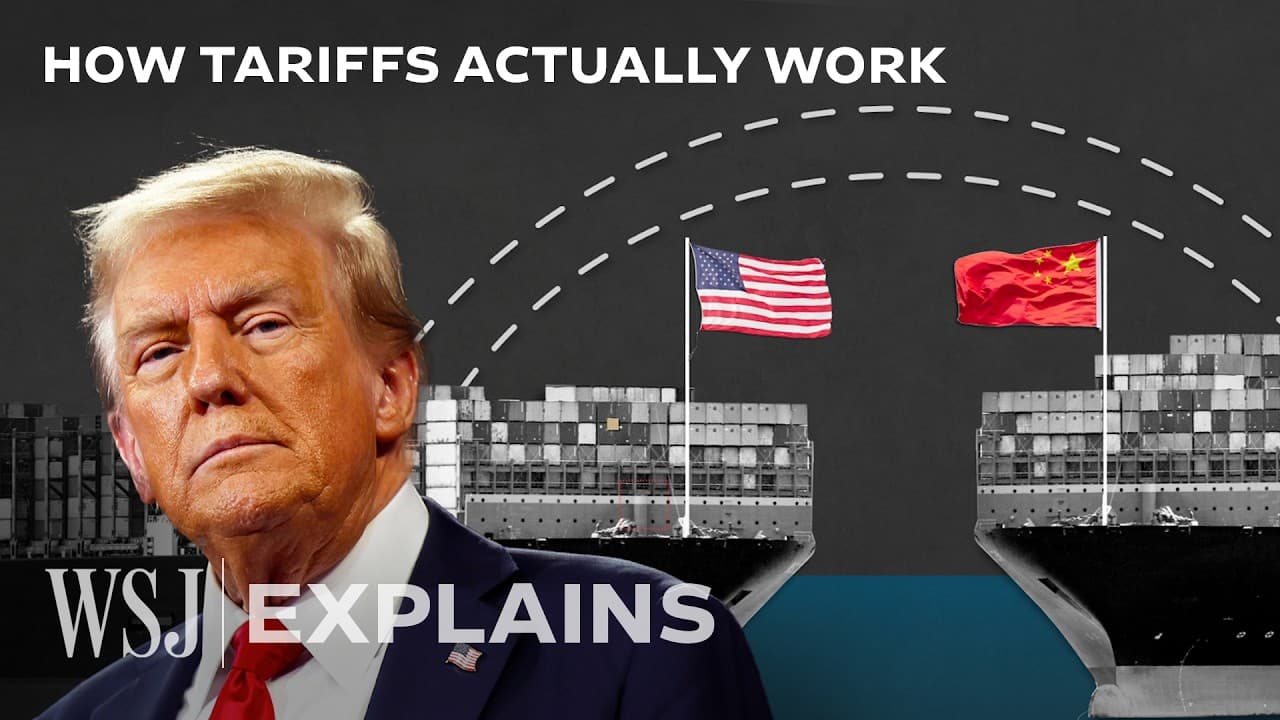
Tariffs are taxes on imports that aim to protect domestic industries but often result in higher consumer prices and potential trade wars. Trump's proposed tariffs could significantly impact the economy by increasing costs for American households and potentially reducing jobs. Despite potential revenue generation, the long-term effects remain uncertain.
Transcript
- [Speaker] Before we get into tariffs,- - The heart of the Donald Trump economic plan. - [Speaker] We should talk about the chicken war. - The chicken war is a cluckin' good story. - [Speaker] In post World War II, West Germany, people started eating a lot of chicken, specifically American chicken. Midway through 1962, US farmers were on track to ... Read More
Key Insights
- Tariffs are taxes on imports designed to protect domestic industries by making foreign goods more expensive.
- The 'Chicken War' demonstrated how tariffs can disrupt trade and affect consumer prices negatively.
- Trump's tariffs on washing machines increased prices for both imported and domestic models, indirectly affecting related goods like dryers.
- While tariffs can create jobs, they often do so at a high cost to consumers, as seen with the $815,000 per job created in the washing machine industry.
- Tariffs on steel and aluminum aimed to punish China but also raised costs for US industries using these materials, resulting in job losses.
- Trump's proposed tariffs could cost American households $1,700 annually and potentially eliminate over 684,000 jobs.
- Tariffs are difficult to remove due to vested interests and their use as bargaining chips in international negotiations.
- The long-term impact of Trump's tariff plans remains unclear, with potential for significant economic disruption and trade retaliation.
Install to Summarize YouTube Videos and Get Transcripts
Explore YouTube Video Summarizer or Get YouTube Transcript Extractor
Questions & Answers
Q: How do tariffs impact consumer prices?
Tariffs increase the cost of imported goods, as the importing company passes the tariff cost to consumers. This results in higher consumer prices for both imported and domestically produced goods, as domestic producers raise prices due to increased demand. This was evident in the case of washing machines, where tariffs led to price hikes for both imports and domestic models.
Q: What was the economic impact of Trump's washing machine tariffs?
Trump's washing machine tariffs led to increased prices for both imported and domestic washing machines, as well as related goods like dryers. While the tariffs created approximately 1,800 jobs, they cost consumers an additional $1.5 billion, effectively making each job cost $815,000. This highlights the inefficiency and high consumer cost of job creation through tariffs.
Q: Why are tariffs difficult to remove once implemented?
Tariffs are difficult to remove due to domestic interest groups that benefit from them and the use of tariffs as bargaining chips in international negotiations. These groups gain market share and influence, making it politically challenging to eliminate tariffs even when they have negative economic impacts. Additionally, tariffs can be used strategically in trade discussions, further complicating their removal.
Q: What are the potential effects of Trump's proposed tariffs on the US economy?
Trump's proposed tariffs could significantly impact the US economy by increasing costs for American households and potentially reducing jobs. Studies estimate that these tariffs could cost the average household $1,700 annually and eliminate over 684,000 jobs. The tariffs aim to generate revenue but risk economic disruption and potential trade retaliation, with uncertain long-term effects.
Q: How did tariffs on steel and aluminum affect US industries?
Tariffs on steel and aluminum aimed to penalize China but also raised costs for US industries using these materials, such as automotive and construction. This squeezed profit margins and put US companies at a competitive disadvantage against foreign producers not subject to the tariffs. As a result, job losses occurred in downstream industries, offsetting any job gains in protected sectors.
Q: What lessons can be learned from the 'Chicken War' regarding tariffs?
The 'Chicken War' illustrates how tariffs can disrupt trade and negatively affect consumer prices. In response to European tariffs on American chicken, the US imposed tariffs on European trucks, leading to reduced imports and higher prices. This example shows how tariffs can have long-lasting effects and unintended consequences, such as trade imbalances and limited consumer choices.
Q: Why does Trump focus on tariffs despite their economic downsides?
Trump focuses on tariffs as a tool to protect domestic industries and generate revenue for tax cuts. Despite their economic downsides, tariffs are seen as a means to address trade imbalances and retaliate against countries like China for trade rule violations. They are also used as leverage in trade negotiations, reflecting a shift in US trade policy towards more protectionist measures.
Q: How might Trump's tariff plan affect global trade relations?
Trump's tariff plan could strain global trade relations by provoking retaliatory measures from affected countries. This could lead to a trade war, with reduced US exports and imports, and increased tensions between the US and other nations. The plan's aggressive tariffs, particularly on China, may escalate geopolitical conflicts and disrupt international trade dynamics, with uncertain long-term outcomes.
Summary & Key Takeaways
-
Tariffs are import taxes that protect domestic industries but can lead to higher consumer prices and trade tensions. Trump's tariffs on washing machines increased prices for both imports and domestic products, showing how tariffs can indirectly affect related goods. While they created jobs, the cost was high, with consumers paying significantly more.
-
Trump's tariffs on steel and aluminum aimed to penalize China but also raised costs for US industries, leading to job losses in downstream sectors. His proposed tariffs could cost American households significantly and result in job losses, with uncertain long-term effects on the economy.
-
Tariffs are challenging to remove due to domestic interests and their role in international negotiations. Trump's proposed tariffs could generate revenue but risk economic disruption and trade retaliation. The long-term impact of these policies remains uncertain, with potential for significant global economic shifts.
Read in Other Languages (beta)
Share This Summary 📚
Summarize YouTube Videos and Get Video Transcripts with 1-Click
Try YouTube Summary with ChatGPT & Claude or YouTube Transcript Generator
Explore More Summaries from The Wall Street Journal 📚



Summarize YouTube Videos and Get Video Transcripts with 1-Click
Try YouTube Summary with ChatGPT & Claude or YouTube Transcript Generator