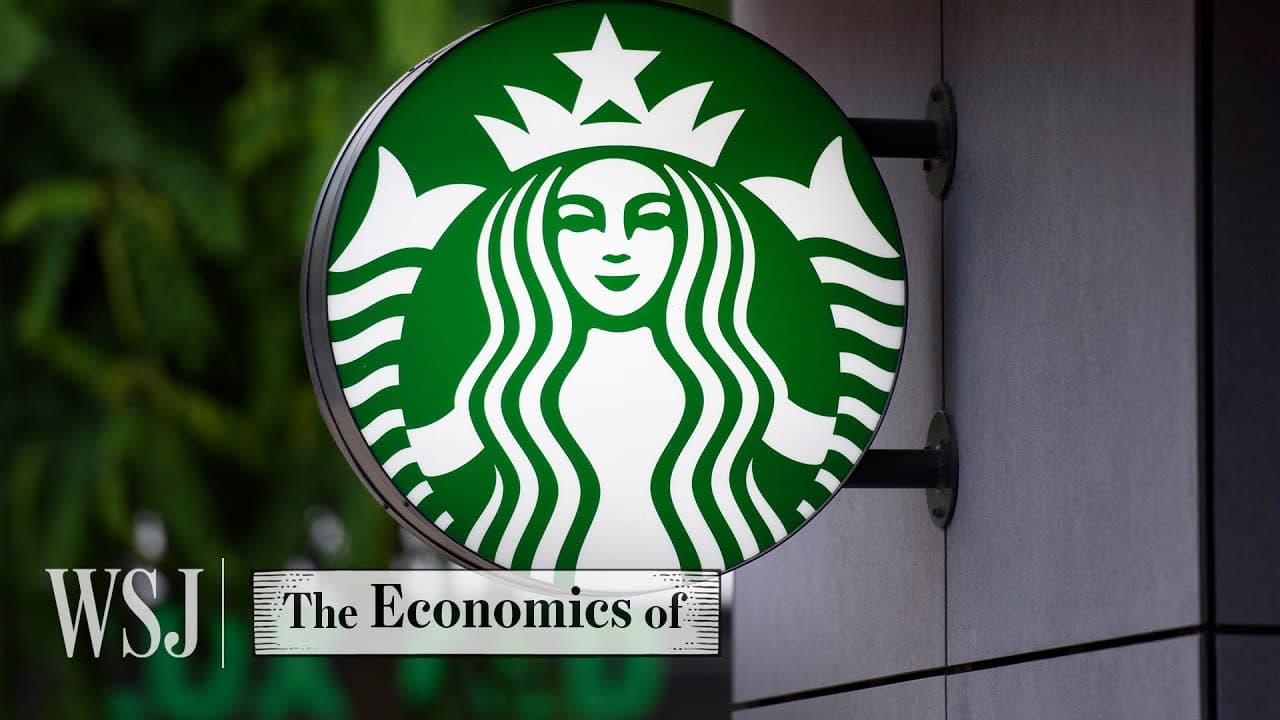
Why Starbucks Operates Like a Bank | WSJ The Economics Of
TL;DR
Starbucks operates like a bank with its prepaid cards.
Transcript
(dramatic music) (liquid hissing) - [Narrator] If you've ever ordered something at Starbucks, you've probably loaded one of these. - Starbucks, between October and December has had something like $3 billion of value is loaded onto these cards. I mean, that's a lot of money. - [Narrator] So much money in fact, that if Starbuc... Read More
Key Insights
- Starbucks has accumulated $3 billion on its cards between October and December, making it comparable to a medium-sized bank in terms of cash holdings.
- The company's use of prepaid cards allows it to generate upfront revenue, which can be used even before products are purchased.
- Starbucks' mobile app and gift cards are crucial to its business model, with nearly half of all transactions made through these channels.
- Cold beverages have become increasingly important for Starbucks, with new offerings like nitro iced coffee and cold foam drinks boosting sales.
- The Starbucks mobile app, launched in 2009, has been pivotal in its digital transformation, accounting for a significant portion of transactions.
- Starbucks emphasizes a strong internal culture, referring to employees as 'partners' and offering them company shares through the Beanstalk program.
- Drive-thru and mobile orders have become vital, especially during the pandemic, accounting for a large portion of their sales.
- Starbucks faces challenges with unionization efforts, as some locations have voted in favor, pushing the company to maintain direct relationships with employees.
Install to Summarize YouTube Videos and Get Transcripts
Explore YouTube Video Summarizer or Get YouTube Transcript Extractor
Questions & Answers
Q: How does Starbucks generate upfront revenue through its prepaid cards?
Starbucks generates upfront revenue by allowing customers to load money onto prepaid cards, which can be used for future purchases. This system functions similarly to a bank, as the company can utilize these funds before the actual products are purchased, providing a financial cushion and enhancing cash flow.
Q: What role does the Starbucks mobile app play in the company's business model?
The Starbucks mobile app is a crucial component of the company's business model, accounting for a significant portion of transactions. Launched in 2009, it facilitates mobile orders and payments, creating a seamless customer experience and helping Starbucks gather valuable consumer data to tailor offerings and improve service.
Q: How has Starbucks adapted its beverage offerings to maintain customer interest?
Starbucks has continuously adapted its beverage offerings by introducing new products like cold beverages, including nitro iced coffee and cold foam drinks. These innovations respond to changing consumer preferences and have become a significant revenue driver, especially as traditional frappuccino sales have softened over time.
Q: What challenges does Starbucks face with its internal culture and employee relationships?
Starbucks faces challenges in maintaining its internal culture and direct employee relationships amidst growing unionization efforts. Some employees have voted in favor of unionization, seeking a more direct relationship with the company. Starbucks aims to preserve its partner-centric culture, emphasizing collaboration without union intermediaries.
Q: How important are drive-thru and mobile orders to Starbucks' business strategy?
Drive-thru and mobile orders are essential to Starbucks' business strategy, especially during the pandemic. These channels accounted for approximately 80% of U.S. transactions, allowing the company to maintain sales volumes as customer preferences shift towards convenience and contactless experiences, ensuring continued growth and market relevance.
Q: What is the significance of Starbucks' internal culture and employee benefits?
Starbucks' internal culture is significant as it fosters a sense of partnership among employees, who are referred to as 'partners.' This culture is reinforced by offering company shares through the Beanstalk program, aligning employee interests with corporate success and promoting a collaborative and motivated workforce.
Q: Why is Starbucks' approach to store design important?
Starbucks' approach to store design is important as it ensures a consistent customer experience across locations. The company meticulously choreographs store layouts, creating a familiar and welcoming environment that reinforces its brand identity and enhances customer satisfaction, contributing to its global success and market dominance.
Q: How does Starbucks' financial strategy compare to traditional banks?
Starbucks' financial strategy, through its prepaid cards, parallels traditional banks by holding significant cash reserves from customer deposits. This approach provides liquidity and financial flexibility, enabling the company to invest in growth and innovation while minimizing reliance on external financing, akin to a banking institution's operations.
Summary & Key Takeaways
-
Starbucks has transformed its business model to operate similarly to a bank, holding billions in prepaid card balances that provide upfront revenue. This strategy has been integral to its financial success and expansion.
-
The company's mobile app and gift cards are central to its operations, with a significant portion of transactions occurring through these platforms. This digital shift has allowed Starbucks to adapt to changing consumer behaviors.
-
Despite its success, Starbucks faces challenges with unionization efforts, as employees seek more direct relationships with the company. Starbucks strives to maintain its internal culture and partner-centric ideology amidst these pressures.
Read in Other Languages (beta)
Share This Summary 📚
Summarize YouTube Videos and Get Video Transcripts with 1-Click
Try YouTube Summary with ChatGPT & Claude or YouTube Transcript Generator
Explore More Summaries from The Wall Street Journal 📚




Summarize YouTube Videos and Get Video Transcripts with 1-Click
Try YouTube Summary with ChatGPT & Claude or YouTube Transcript Generator