How Did Duolingo Become a $7.7 Billion Business?
TL;DR
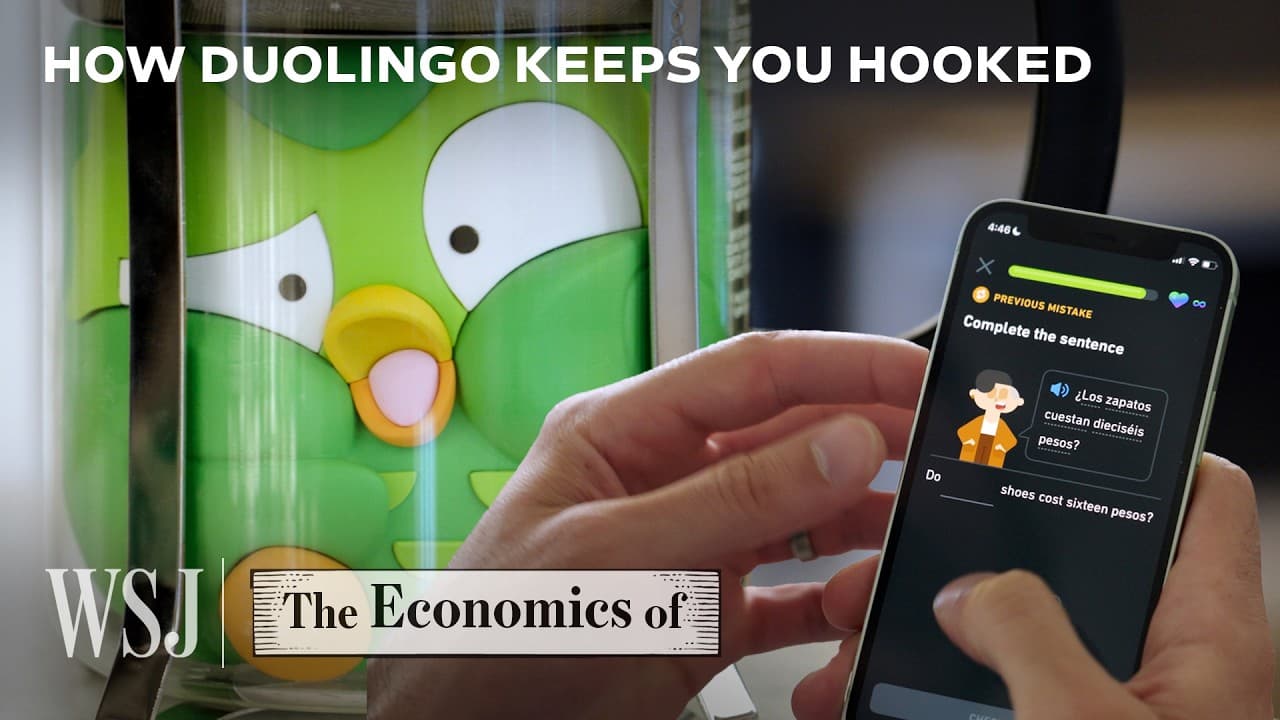
Duolingo became a $7.7 billion business by offering free language learning through gamification and AI while generating revenue from less than 10% of its users who pay for subscriptions or ads. The company utilizes rigorous A/B testing, personalized notifications, and extensive data analysis to enhance user engagement and retention, despite challenges in converting more users to paid subscribers.
Transcript
(upbeat music) - [Reporter] This is Duolingo. Around 34 million people use the language learning app every single day, some for well over a decade, making the company around $500 million annually and making it one of the top education apps in Apple's App Store for the past decade. And yet. - Most people who use Duolingo do not pay. - [Reporter] All... Read More
Key Insights
- 🥶 Duolingo's unique approach combines free access with gamification, making language learning enjoyable and competitive, crucial for user retention.
- ☠️ The company's reliance on data-driven strategies showcases how tech companies can personalize services to enhance user experiences and engagement, increasing overall success rates.
- 💨 Duolingo’s low percentage of active subscribers indicates a potential market opportunity for growth if the company finds effective ways to convert users from free to paid tiers.
- 👍 A/B testing has become a cornerstone of Duolingo's development strategy, focusing on continuous improvement through user feedback, proving essential for app optimization.
- 👤 Despite its growth, challenges remain as competition increases, which may prompt Duolingo to reevaluate its strategies for maintaining user interest and increasing revenue.
- 👤 The innovative use of AI not only aids in personalizing the user experience but also positions Duolingo as a forward-thinking leader in the education technology sector.
- 😀 Recent ventures into AI-powered services reflect a shift toward offering more interactive and user-centric features, potentially setting trends in the education app market.
Install to Summarize YouTube Videos and Get Transcripts
Explore YouTube Video Summarizer or Get YouTube Transcript Extractor
Questions & Answers
Q: How does Duolingo generate revenue if most users never pay?
Duolingo primarily relies on a small percentage of paying users, with around 9% subscribing to its service. Revenue also comes from advertisements, which, while only contributing less than 8% of total income, are designed to monetize the platform effectively without compromising user experience through intrusive promotions.
Q: What strategies does Duolingo use to engage and retain users?
Duolingo utilizes gamification to make learning interactive and enjoyable. This includes lives, progress bars, and experience points, making users feel invested in their language journey. Further, personalized notifications and reminders enhance daily engagement, boosting return rates and creating a community feel among users.
Q: How crucial is A/B testing to Duolingo's growth?
A/B testing is vital to Duolingo's strategy, allowing the company to refine user experiences based on real-time feedback. With around 10,000 tests conducted, they can adjust lesson difficulty, notification timing, and app features. These adjustments help understand user behavior and drive both engagement and subscriptions.
Q: What role does AI play in Duolingo's operations?
AI is integral to Duolingo, enabling personalized learning experiences based on user data. The company harnesses extensive data from users' interactions and applies algorithms to tailor exercises and notifications. This constant analysis of over 13 billion weekly exercises helps maintain user interest and optimize learning outcomes.
Q: Why have Duolingo's subscription rates remained low compared to its user base?
Although Duolingo has a large user base, only a small fraction (less than 10%) subscribe, as many rely on the free content. The company has opted for a user-friendly approach that prioritizes accessibility over aggressive monetization, potentially hindering subscription growth in the short term.
Q: What new monetization strategies is Duolingo considering?
Duolingo is exploring new options, like the AI-powered Duolingo Max tier, which offers features such as role-playing with AI bots. This tier aims to enhance engagement and appeal to users seeking more interactive learning experiences while also generating additional revenue for the company.
Q: How did the pandemic affect Duolingo's growth?
The pandemic created a unique opportunity for Duolingo as many people turned to language learning while travel was restricted. This spike in interest led to increased app downloads and active participation, significantly boosting the company's growth and establishing it as a leader in the language learning market.
Q: In what ways might Duolingo's growth strategy change moving forward?
As user retention becomes a challenge—especially with many leaving after mastering a language—Duolingo may look to balance its free access model with increased efforts to convert users to paid subscriptions. This could include more targeted advertising or incentives for users to choose premium options.
Summary & Key Takeaways
-
Duolingo, a free language learning app, has gained immense popularity with over 34 million daily users and generates significant revenue through a small percentage of paying subscribers and minimal advertising.
-
To maintain user engagement and retention, Duolingo employs gamification techniques and collects data via A/B testing, allowing for personalized learning experiences and optimized notifications.
-
The company's focus on AI and rigorous testing helps increase user participation, but with a significant chunk of users remaining non-paying, Duolingo is exploring new monetization methods to enhance revenue.
Read in Other Languages (beta)
Share This Summary 📚
Summarize YouTube Videos and Get Video Transcripts with 1-Click
Try YouTube Summary with ChatGPT & Claude or YouTube Transcript Generator
Explore More Summaries from The Wall Street Journal 📚





Summarize YouTube Videos and Get Video Transcripts with 1-Click
Try YouTube Summary with ChatGPT & Claude or YouTube Transcript Generator