How Does McDonald's Tailor Menus for Different Countries?
TL;DR
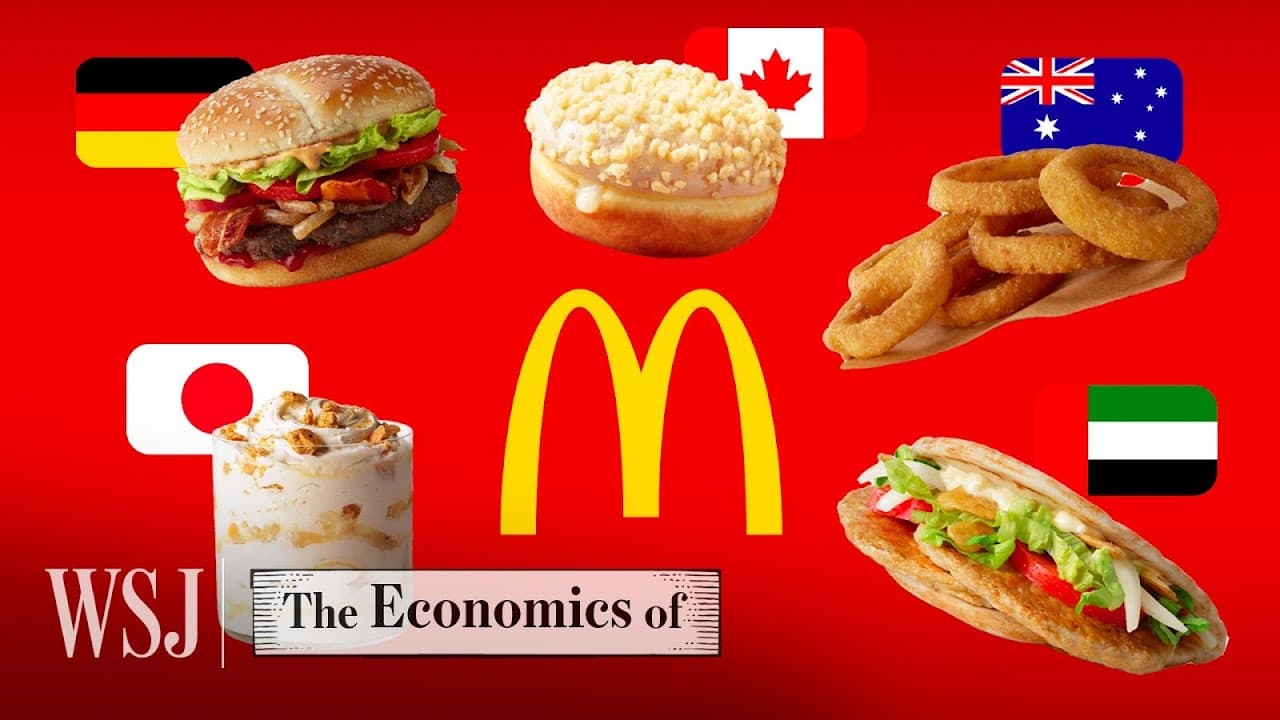
McDonald's customizes its menus for international markets, with around 30% of food sales coming from unique local items. This localization strategy allows the company to resonate with diverse cultures, evidenced by popular items like the McAloo Tikki in India and McSpaghetti in the Philippines. While some innovations succeed globally, others, like the McPlant in the US, do not.
Transcript
(upbeat music) - [Reporter] The McAloo Tikki burger, McPops, onion rings. If you don't recognize these items from your regular McDonald's menu, that's because you can't get them at a regular McDonald's in the US. They're exclusive to McDonald's in their respective countries. ♪ The all-new McAl... Read More
Key Insights
- McDonald's adapts its menu to local tastes, contributing to 30% of its food sales from unique international items.
- Localization is crucial for McDonald's, allowing it to cater to cultural preferences and increase international market penetration.
- The McAloo Tikki Burger in India and McSpaghetti in the Philippines are examples of McDonald's local menu adaptations.
- McDonald's operates over 40,000 restaurants worldwide, with a significant portion located outside the United States.
- Franchisees and licensees primarily manage McDonald's international locations, using local research to develop menu items.
- Some local items, like the McFlurry from Canada, have gained global popularity, showcasing successful menu transplants.
- Despite the success of some items, not all international menu experiments succeed, as seen with the McPlant in the US.
- McDonald's aims to streamline its menu offerings by reducing redundancies, while still maintaining local favorites.
Install to Summarize YouTube Videos and Get Transcripts
Explore YouTube Video Summarizer or Get YouTube Transcript Extractor
Questions & Answers
Q: How does McDonald's adapt its menu for different countries?
McDonald's adapts its menu by incorporating local flavors and cultural preferences into its offerings. This involves altering existing menu items to suit local tastes or creating entirely new products. For example, the McAloo Tikki Burger in India and McSpaghetti in the Philippines are tailored to meet local culinary preferences, enhancing customer connection.
Q: What role do franchisees play in McDonald's international operations?
Franchisees and licensees manage most of McDonald's international locations. They are crucial in crafting local menus as they conduct customer research and collaborate with local experts to develop menu items that appeal to regional tastes. This approach ensures that McDonald's offerings are culturally relevant and resonate with local consumers.
Q: Why is localization important for McDonald's global success?
Localization is vital for McDonald's as it allows the company to cater to diverse cultural preferences, thereby increasing its appeal in international markets. By offering unique menu items that reflect local tastes, McDonald's can attract a broader customer base, drive sales, and strengthen its brand presence globally.
Q: Can you give examples of successful McDonald's menu transplants?
Successful menu transplants include the McFlurry, which originated in Canada and gained global popularity, and the McSpicy, which started as a local variation in China and is now available worldwide. These items demonstrate how successful local adaptations can become global hits, enhancing McDonald's international appeal.
Q: What challenges does McDonald's face with international menu items?
While many international menu items succeed, some face challenges. For instance, the McPlant, tested in the US with a Beyond Meat burger, did not resonate with consumers. Such challenges highlight the difficulty of predicting market preferences and the need for continuous adaptation and experimentation in menu offerings.
Q: How does McDonald's plan to streamline its menu offerings?
To streamline offerings, McDonald's aims to reduce redundancies, such as having 70 different chicken sandwiches globally. The company is examining its menu to identify and eliminate overlaps while maintaining popular local items. This approach seeks to balance variety with operational efficiency and customer satisfaction.
Q: What impact did the BTS meal have on McDonald's sales?
The BTS meal, launched in collaboration with the South Korean boy band, significantly boosted McDonald's global sales by 40% compared to the previous year. Featuring sweet chili and Cajun sauces inspired by South Korea, the promotion also increased McNugget sales, showcasing the power of strategic partnerships in driving revenue.
Q: How does McDonald's compete with other fast-food chains internationally?
McDonald's competes by offering menu items that cater to local tastes and preferences, sometimes directly challenging other chains. For example, in some Middle Eastern countries, McDonald's offers fried chicken to compete with KFC. This strategy helps McDonald's maintain competitiveness and relevance in diverse international markets.
Summary & Key Takeaways
-
McDonald's international strategy involves tailoring menus to local tastes, making up 30% of its food sales with unique items. This localization helps McDonald's connect with diverse cultures and expand its global presence.
-
The fast-food giant has over 40,000 restaurants worldwide, with most located outside the US. Franchisees and local teams play a crucial role in developing menu items that resonate with local customers.
-
While some international menu items have become global hits, not all succeed. McDonald's continues to refine its offerings by reducing redundancies while preserving popular local items.
Read in Other Languages (beta)
Share This Summary 📚
Summarize YouTube Videos and Get Video Transcripts with 1-Click
Try YouTube Summary with ChatGPT & Claude or YouTube Transcript Generator
Explore More Summaries from The Wall Street Journal 📚






Summarize YouTube Videos and Get Video Transcripts with 1-Click
Try YouTube Summary with ChatGPT & Claude or YouTube Transcript Generator