How to Automate a Newsletter Agency With AI
TL;DR
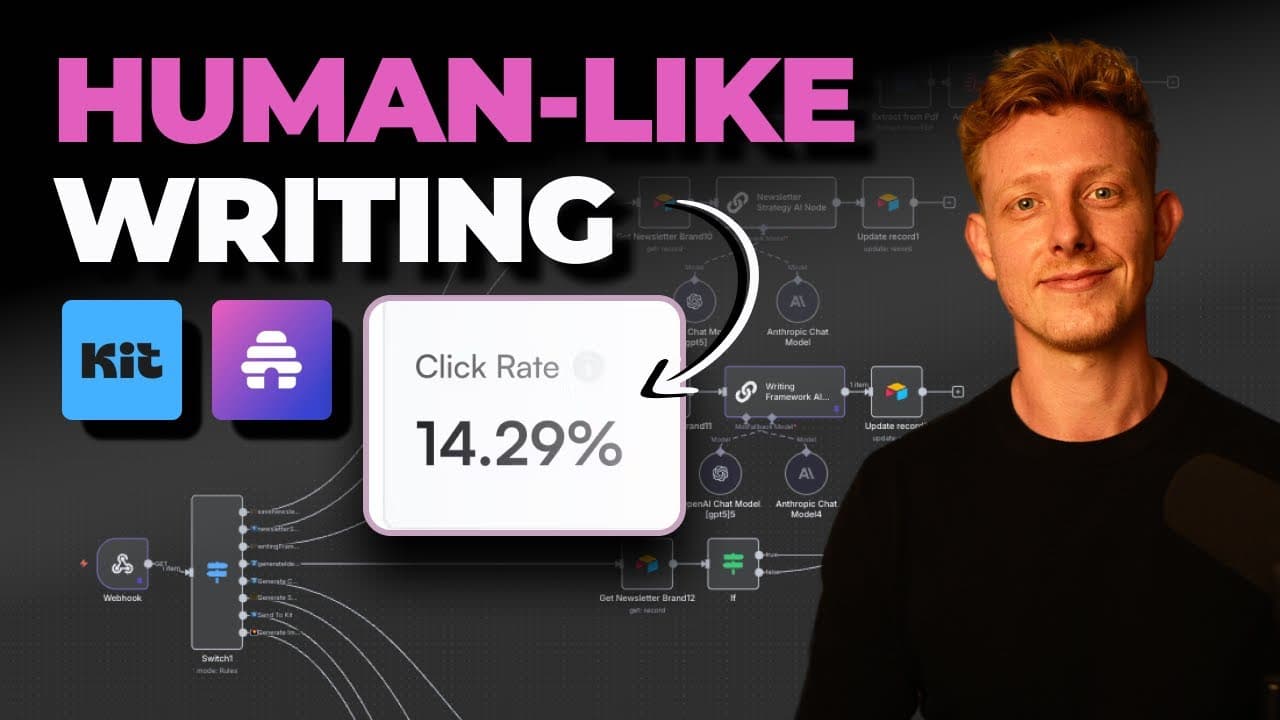
High-quality newsletter automation depends on detailed context, not a quick generic prompt. The system combines n8n and Airtable to capture brand strategy, audience needs, personal background, writing references, and image styles, then generates ideas, drafts, images, and delivery-ready content while keeping humans involved for review and adjustment.
Transcript
So in this video, I'll show you how we automated and productized an entire newsletter agency with NAD and Air Table. Now, anyone can throw in a quick prompt in ChachiPT or copy and paste an NAN template and get a newsletter in 30 seconds. But getting an actual highquality newsletter with real stories, personality, and a unique voice for each brand,... Read More
Key Insights
- Detailed context is the foundation of high-quality newsletter automation. The onboarding process gathers company information, target audience details, extra instructions, word limits, personal background, writing references, image references, and the chosen email integration before any newsletter is generated.
- The system is organized into four sections: brand onboarding, insight generation, newsletter and image creation, and delivery to major email marketing platforms. This structure turns a collection of AI tasks into a productized workflow that can support multiple companies or personal brands.
- Newsletter references are used to model tone, structure, and language patterns. Users upload PDF examples they like, and the system produces content for their own audience and brand while adapting stylistic elements from those references, even when the original creators work in another industry.
- The generated newsletter strategy defines messaging and positioning. It covers the target audience, value proposition, narrative, customer pain points, additional customer insights, and content pillars, giving later idea-generation and writing steps a consistent strategic foundation that humans can still revise.
- The writing framework is a detailed analysis of the supplied references. It captures structural formulas, language patterns, paragraph strategy, vulnerability, trust-building methods, and characteristic phrases, which helps the drafting process reproduce distinct styles more precisely than a single generic prompt.
- Newsletter ideas can originate in three ways: a manually supplied insight, a shared YouTube or blog link, or automatic generation. Because the system already has brand and audience context, it can turn source material into ideas intended to be relevant to that specific audience.
- Personal background is especially valuable when a newsletter comes from an individual. The system can draw on professional and personal details, such as the demonstrated sauna and workout routines, to create openings that resemble human stories while supporting the selected writing style.
- Human review remains part of the workflow. Users can adjust the generated strategy and framework, choose which automatically generated ideas deserve development, add their own insights or links, and compare outputs created from different reference styles before sending content through an integration.
Install to Summarize YouTube Videos and Get Transcripts
Explore YouTube Video Summarizer or Get YouTube Transcript Extractor
Questions & Answers
Q: How can an AI system automate a newsletter agency?
An AI system can automate a newsletter agency by connecting four stages in one workflow: onboarding each brand, generating relevant insights, turning selected ideas or sources into newsletters and images, and pushing finished content to major email marketing platforms. In the demonstrated setup, n8n handles the back-end automation while Airtable packages the process into a productized interface that can manage multiple brands.
Q: What information should newsletter automation collect during onboarding?
Newsletter onboarding should collect the brand or person’s name, what the company does, the intended audience, optional instructions such as a specific call to action, and a word limit. It can also include the author’s professional and personal background, reference newsletters, visual references for image styling, and the email marketing platform that will receive the completed content.
Q: How does the system reproduce a newsletter’s tone of voice?
The system reproduces tone by parsing uploaded PDF examples of newsletters the user likes and creating a detailed writing framework from them. That framework records structural formulas, language patterns, paragraph strategy, vulnerability, trust-building methods, and characteristic phrases. The automation then combines those stylistic patterns with the user’s brand, audience, strategy, personal context, and selected topic when drafting new content.
Q: Can newsletter references come from creators in another industry?
Newsletter references can come from creators who are not connected to the user’s industry. The demonstrated system separates style from subject matter, using the references to guide tone, structure, sentence patterns, and presentation while relying on the onboarded business and audience context for relevance. The resulting newsletter is therefore intended for the user’s target audience rather than the original creator’s audience.
Q: What does the generated newsletter strategy include?
The generated newsletter strategy includes messaging and positioning, the target audience, the value proposition, the intended narrative, audience pain points, additional customer insights, and content pillars. These elements guide both topic generation and newsletter drafting. The workflow also keeps a human involved, allowing the user to inspect and adjust the strategy instead of treating the generated report as a fixed final decision.
Q: How can the system generate newsletter ideas?
The system can generate newsletter ideas in three ways. A user can enter an original insight, provide a link such as a YouTube video or blog post, or ask the automation to create ideas without selecting a source. Because the workflow already contains information about the business, target audience, strategy, and writing approach, its ideas are generated according to that previously collected context.
Q: How does personal context improve an AI-written newsletter?
Personal context gives the system professional and personal background details that it can use inside the newsletter. In the demonstration, information about regular sauna visits, workouts, and the author’s location informed story-based openings. This is particularly useful for newsletters written in an individual’s name because it lets the draft connect the selected topic with details drawn from that person’s supplied background.
Q: Why is human review still needed in newsletter automation?
Human review is needed because the workflow generates strategies, frameworks, ideas, and drafts that users may want to refine. Users can adjust the strategy and content pillars, select promising ideas, enter their own insights, choose source links, compare different reference styles, and inspect the resulting newsletter before delivery. The demonstrated process uses automation for production while preserving deliberate decisions at important stages.
Summary & Key Takeaways
-
The system productizes a newsletter agency through four connected sections: onboarding brands, generating insights, writing newsletters and images, and sending content to major email marketing platforms. Its central goal is not merely fast production, but newsletters that contain relevant stories, personality, and a distinct voice for every company or personal brand.
-
Onboarding collects company details, audience information, instructions, word limits, personal background, newsletter references, image references, and the selected integration platform. The automation parses uploaded reference PDFs, then creates a newsletter strategy and detailed writing framework that guide positioning, content pillars, narrative choices, language patterns, paragraph structure, and tone.
-
Newsletter topics can begin with a manually entered insight, a YouTube or blog link, or ideas generated automatically by the system. Selected insights can become complete drafts immediately. The demonstration shows that identical source material produces noticeably different newsletters when each brand profile uses different writing references, while personal context supplies relevant stories and details.
Read in Other Languages (beta)
Share This Summary 📚
Summarize YouTube Videos and Get Video Transcripts with 1-Click
Try YouTube Summary with ChatGPT & Claude or YouTube Transcript Generator
Explore More Summaries from Ben AI 📚
Summarize YouTube Videos and Get Video Transcripts with 1-Click
Try YouTube Summary with ChatGPT & Claude or YouTube Transcript Generator