How to Build a DIY Peltier Cooler for Localized Cooling?
TL;DR
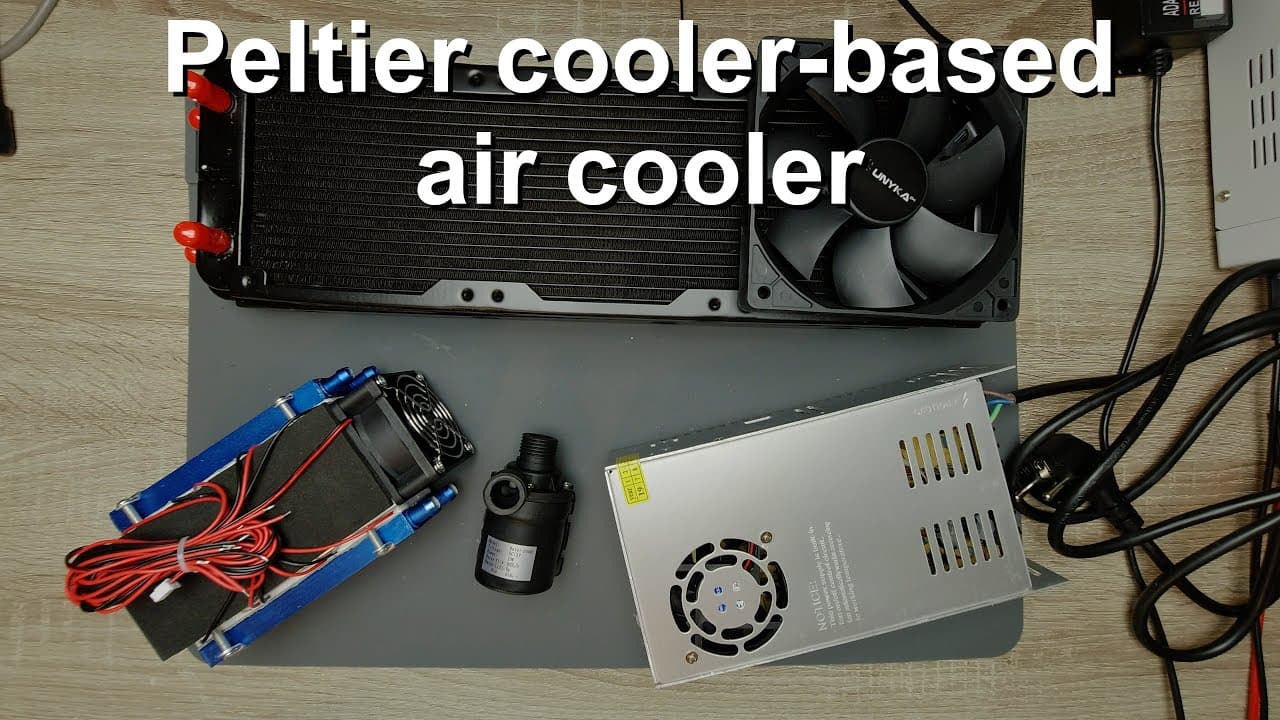
To build a DIY Peltier cooler, assemble Peltier modules with water cooling blocks and fans to create localized cooling. This system effectively reduces air temperature but is not adequate for cooling entire rooms due to its limited power and efficiency compared to traditional air conditioners, making it ideal for small enclosures. Expect higher operational costs and noise levels.
Transcript
welcome everyone in this video i'm going to try to build a patio cooler based air cooler not an air conditioner so we are not expecting to cool down rooms or houses with this tiny system but at least we are trying to build something which can blow cold air and at least locally can make the things colder or if you have a smaller enclosure there you ... Read More
Key Insights
- 👾 Peltier cooler systems are suitable for localized cooling but have limitations in larger space applications.
- ❓ A precise temperature gradient is necessary for optimal cooling performance from Peltier devices, which can be challenging to maintain.
- 😘 The DIY cooler utilizes a combination of water cooling and airflow to manage heat, yet still operates at a relatively low cooling efficiency.
- 😎 The power consumption of the DIY system often outweighs its cooling capabilities compared to conventional air conditioning.
- 😎 Ambient temperature and a stable airflow are crucial components for maximizing cooling effectiveness.
- 📽️ Experimentation with component configurations can yield varying results in performance, underlining the trial-and-error nature of DIY projects.
- 👱 The creator emphasizes the cost-effectiveness of purchasing traditional air conditioning over constructing DIY alternatives.
Install to Summarize YouTube Videos and Get Transcripts
Explore YouTube Video Summarizer or Get YouTube Transcript Extractor
Questions & Answers
Q: What type of cooler is being built in the video?
The video outlines the creation of a patio-style cooler that uses Peltier technology rather than conventional air conditioning methods, aiming to produce localized cooling. While the system is expected to cool some air, it is not designed to chill larger spaces.
Q: How does the Peltier cooler’s performance affect the cooling system?
The performance of the Peltier coolers is subject to the temperature gradient between their hot and cold sides. The creator reports that achieving optimal cooling power requires precise conditions and notes that the maximum theoretical performance is often not attainable, leading to less effective cooling.
Q: What components are involved in the cooler assembly?
The assembly features Peltier chips, water cooling blocks, independent pumps, and fans. Each component works collaboratively to draw heat away from the cold side of the Peltier modules and improve airflow through the system to cool down incoming air.
Q: How does the DIY cooler compare with traditional air conditioners?
The DIY patio cooler offers localized cooling but lacks the efficiency and cooling power of conventional air conditioners, making it unsuitable as a full house replacement. Traditional units provide far greater cooling capacity at lower operational costs.
Q: What challenges does the creator highlight during the testing phase?
Throughout the testing phase, the creator encountered issues with low airflow and limited cooling effect, making it challenging to achieve optimal temperature differentials. Higher currents and voltages were experimented with to enhance cooling but at the cost of increased power consumption.
Q: What conclusions does the creator draw about the system’s effectiveness?
The creator concludes that the cooler functions well for localized cooling but is not efficient for broader applications. They recommend caution in depending on such DIY units for significant cooling needs due to inefficiencies and potential noise issues.
Summary & Key Takeaways
-
The creator builds a portable cooler system based on Peltier technology, designed primarily for localized cooling rather than room temperature reduction.
-
The project involves multiple components including Peltier coolers, water cooling blocks, and fans, and aims for optimal thermal performance and efficiency.
-
Throughout the testing phase, the video details temperature measurements and emphasizes limitations in cooling capacity, alongside comparisons to traditional air conditioning systems.
Read in Other Languages (beta)
Share This Summary 📚
Summarize YouTube Videos and Get Video Transcripts with 1-Click
Try YouTube Summary with ChatGPT & Claude or YouTube Transcript Generator
Explore More Summaries from Curious Scientist 📚


![Building a coil winder [Part 6] - A few improvements thumbnail](/_next/image?url=https%3A%2F%2Fi.ytimg.com%2Fvi%2F3eyxG_g2iUA%2Fhqdefault.jpg&w=750&q=75)


Summarize YouTube Videos and Get Video Transcripts with 1-Click
Try YouTube Summary with ChatGPT & Claude or YouTube Transcript Generator