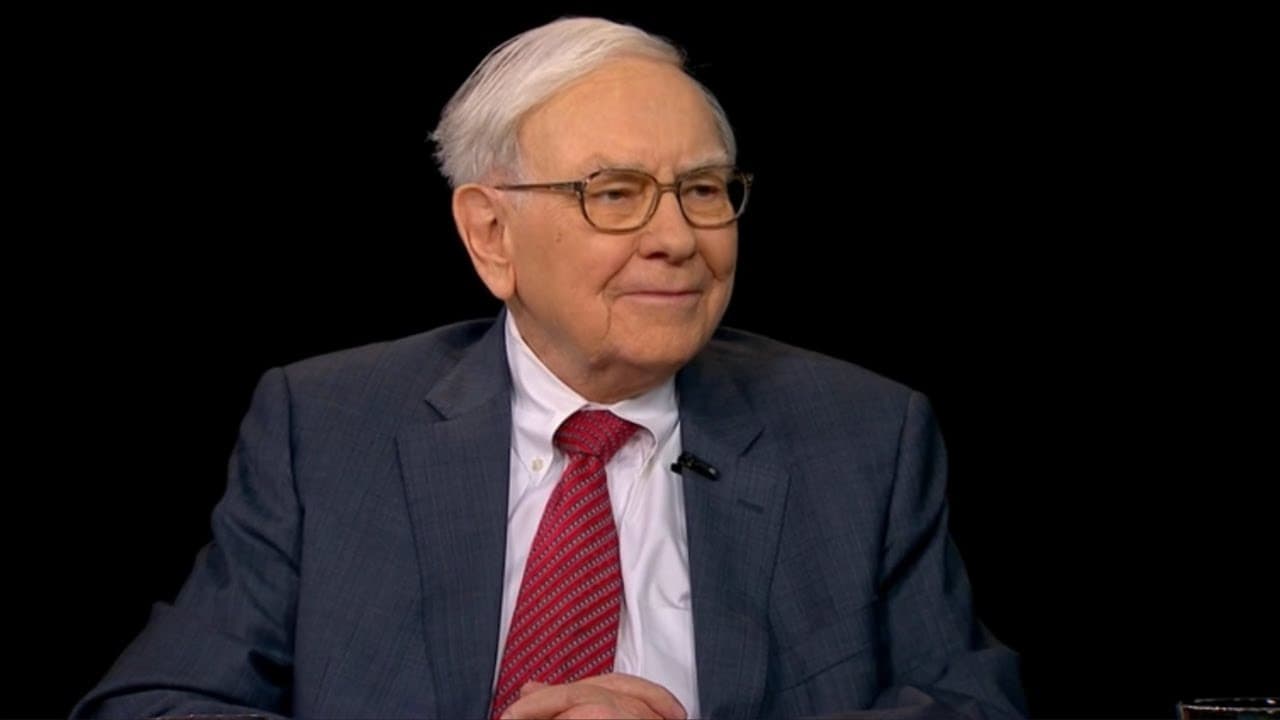
Warren Buffett | Charlie Rose | November 26, 2012
TL;DR
Very high earners should pay a minimum tax comparable to the rates borne by ordinary workers, with Buffett proposing 30 percent on income above $1 million and 35 percent above $10 million. He also argues that taxes do not deter attractive investments, the economy had improved since summer 2009, and meaningful work should make people eager to begin each day.
Transcript
warren buffett and carol loomis are here he's one of the world's most successful investors and a longtime friend of this program she is the legendary fortune magazine writer who has followed his career since he was a 35 year old hedge fund manager from omaha back in 1966 she couldn't even get his name right when carol loomis made the first mention ... Read More
Key Insights
- Buffett's minimum-tax proposal is 30 percent on income above $1 million and 35 percent on income above $10 million. He favors implementing this measure immediately instead of making it wait for comprehensive tax reform and spending agreements.
- Taxes do not prevent investors from pursuing exceptionally attractive opportunities, according to Buffett. He says he has never encountered an investor who would reject a strong chance to make money solely because taxes would be owed if the investment succeeded.
- The 400 highest taxpayers in 2009 had average incomes of $202 million, according to figures Buffett cites. Half paid effective rates below 20 percent, one quarter paid below 15 percent, and six of those taxpayers paid nothing.
- The tax system is not consistently progressive when payroll and income taxes are considered together. Buffett reports that three surveys of his office found his combined rate was considerably lower than the rate paid by every employee, despite their varying income levels.
- Capital gains should be taxed at least at 25 percent, and dividends should be treated as ordinary income, in Buffett's preferred system. He also supports greater progressivity and a minimum tax that cannot easily be avoided through sophisticated legal or lobbying strategies.
- The fiscal cliff would not cause lasting economic damage if leaders produced a solution promptly, according to Buffett. He believed people expected the government to act and said that passing the deadline would not cause him to sell his Berkshire Hathaway stock.
- The economy had been improving continuously since summer 2009, according to Buffett. He describes the recovery as slow because the burst bubble, Wall Street abuses, and problems across society created extensive damage, but he says the country remained on the mend.
- Tap dancing to work means being genuinely eager to begin working each morning. Buffett says he has never faced a day when he did not look forward to work, which largely consists of reading, thinking, talking on the telephone, and speaking with friends.
Install to Summarize YouTube Videos and Get Transcripts
Explore YouTube Video Summarizer or Get YouTube Transcript Extractor
Questions & Answers
Q: What minimum tax did Warren Buffett propose for wealthy earners?
Warren Buffett proposed a minimum tax of 30 percent on income exceeding $1 million and 35 percent on income above $10 million. He wanted Congress and the president to enact it immediately, potentially beginning January 1, rather than waiting until every issue involving tax reform and expenditure reductions could be negotiated and resolved together.
Q: Why did Buffett argue that taxes do not discourage good investments?
Buffett argued that an investor will not reject a highly attractive and dependable opportunity merely because taxes will be owed on the resulting profit. At age 82, he said he had never found an investor who behaved that way. His broader point was that higher rates for wealthy people would not eliminate their incentive to pursue profitable opportunities.
Q: What evidence did Buffett give that wealthy taxpayers can pay low rates?
Buffett cited the 400 highest taxpayers in 2009, who had average incomes of $202 million. He said half of them paid effective rates below 20 percent, one quarter paid below 15 percent, and six paid nothing. He used these figures to support a minimum tax that would apply regardless of available lawyers or lobbyists.
Q: How did Buffett compare his tax rate with his employees' rates?
Buffett said his office conducted surveys in three different years while employing roughly 16 to 21 people. Each survey combined payroll taxes and income taxes when comparing effective rates. In every case, Buffett's own rate was considerably lower than the rate paid by any employee, even though the employees earned various levels of income.
Q: How would Buffett change capital gains and dividend taxes?
Buffett said capital gains should be taxed at least at the 25 percent level and dividends should be treated as ordinary income. He also favored a more progressive overall system. Because wealthy taxpayers can use skilled lawyers and lobbyists to navigate the rules, he viewed a minimum tax as an essential safeguard against unusually low effective rates.
Q: What did Buffett expect to happen if the fiscal cliff deadline passed?
Buffett did not expect the fiscal cliff to cause much lasting damage because he believed people would assume that officials would find a solution promptly. He compared it with the debt-ceiling issue and said the world might view the country's behavior as foolish without expecting national suicide. He would not sell his Berkshire Hathaway stock merely because the deadline passed.
Q: How did Buffett describe the economic recovery after the bubble?
Buffett said the economy had been getting better since summer 2009 and noted that the stock market had produced positive returns for four straight years. He described the original downturn as the result of a tremendous bubble whose collapse affected society broadly and was magnified by abuses on Wall Street and elsewhere. Recovery was slow because the underlying problem was large.
Q: What does tap dancing to work mean for Warren Buffett?
For Buffett, tap dancing to work means being unable to wait to reach the office because work is the most exciting part of the day. He said there had never been a day when he did not look forward to it. His routine changes little on weekends because it primarily involves reading, thinking, telephone conversations, and talking with friends.
Summary
In this interview, Warren Buffett and Carol Loomis discuss topics such as tax reform, the state of the economy, Buffett's investment strategies, and their long-standing friendship. They also touch on Buffett's views on derivatives, the housing bubble, and the role of regulation in the financial industry.
Questions & Answers
Q: What is Buffett's opinion on tax reform for the wealthy?
Buffett believes that there should be a minimum tax for individuals earning over $1 million, with a rate of 30% for income between $1 million and $10 million, and 35% for income over $10 million. He argues that this is necessary because currently, high-income individuals often pay lower tax rates than middle-income earners.
Q: How does Buffett justify his stance on tax reform?
Buffett argues that the current tax system is not progressive enough, with some of the wealthiest individuals paying very low tax rates. He believes that those with high incomes should pay a rate comparable to their middle-income counterparts, rather than taking advantage of lower tax rates on capital gains and dividends.
Q: Do successful businessmen and women agree with Buffett's views on taxes?
While there are likely many successful individuals who agree with Buffett, it is not a unanimous opinion. Buffett acknowledges that not all wealthy individuals share his views on taxation.
Q: What impact does Buffett believe the fiscal cliff will have on the economy?
Buffett doesn't think the fiscal cliff will have a significant impact on the economy because he believes that lawmakers will find a solution before it becomes a serious problem. He compares it to the debt ceiling issue and argues that although the rest of the world may view the U.S. as "idiotic" at times, they do not believe the country will commit economic suicide.
Q: What is Buffett's outlook on the economy?
Buffett believes that the economy has been on the mend since 2009 and that it is gradually getting better. He points to the positive returns in the stock market over the past four years as evidence of the economic improvement.
Q: Why did Carol Loomis choose the title "Tap Dancing to Work" for her book?
Loomis explains that the title was chosen after several other options were considered, but her publisher thought it was a wonderful choice. Buffett has often referred to himself as "tap dancing to work" because he is always excited to start his day and looks forward to going to the office.
Q: What does Buffett mean when he says he "tap dances to work"?
Buffett means that he is always eager to go to work, and it is the most exciting part of his day. He has never had a day where he did not look forward to going to the office.
Q: How does Buffett assess the value of investments?
Buffett believes in investing in companies that he understands and whose value he can assess. He looks for enduring competitive advantages and companies with strong management teams. He also values the rationality and discipline he brings to investment decisions.
Q: Why does Buffett delegate the management of some investments to others?
Buffett delegates the management of some investments to others because he has full trust in their abilities and believes in giving them full authority. He does not want his own opinions or emotions to influence the decision-making process. He wants the responsible individuals to have complete control over the investments.
Q: How does Buffett assess potential acquisitions?
Buffett assesses potential acquisitions based on whether the companies approach Berkshire Hathaway with the intention of selling. He needs to gauge their willingness and desire to become part of Berkshire Hathaway before considering any further discussions.
Q: What are some of the mistakes Buffett has made in his career?
Buffett admits that he has made mistakes, including acts of omission where he failed to buy stocks that he knew he should have. He cites the example of Fannie Mae, which he did not buy and later regrets. However, he has also made successful investment decisions, such as selling Freddie Mac at the right time.
Q: How does Buffett evaluate the risks associated with derivatives?
Buffett acknowledges that he has had a checkered history with derivatives. While he has invested in some derivatives that were mispriced and turned out to be profitable, he has also experienced losses. He is cautious with derivatives and ensures he is fully aware of the risks involved in each transaction.
Q: What is Buffett's view on the housing bubble and the financial crisis?
Buffett believes that the housing bubble was a major factor in the financial crisis of 2008. He believes that the bubble burst had a domino effect on the economy as it rippled through various sectors. He also mentions that the executives in the industry did not fully understand the consequences of the bubble bursting and the extent of the risks involved.
Summary & Key Takeaways
-
Buffett proposes an immediate minimum tax for wealthy individuals rather than postponing action until comprehensive tax reform. He recommends 30 percent on income exceeding $1 million and 35 percent above $10 million, while arguing that attractive investment opportunities remain attractive even when investors must pay taxes on their gains.
-
His case rests on disparities within the tax system. Among the 400 highest taxpayers in 2009, whose average incomes were $202 million, half paid below 20 percent, one quarter paid below 15 percent, and six paid nothing. Buffett also says his own rate was lower than every office employee surveyed.
-
Buffett says the economy had been improving since summer 2009 after a severe bubble and widespread abuses created extensive damage. He expresses confidence that political leaders would eventually address the fiscal cliff. Carol Loomis also discusses their friendship, her collected articles, and Buffett's enduring enthusiasm for reading, thinking, investing, and working.
Read in Other Languages (beta)
Share This Summary 📚
Summarize YouTube Videos and Get Video Transcripts with 1-Click
Try YouTube Summary with ChatGPT & Claude or YouTube Transcript Generator
Explore More Summaries from Investor Archive 📚
Summarize YouTube Videos and Get Video Transcripts with 1-Click
Try YouTube Summary with ChatGPT & Claude or YouTube Transcript Generator