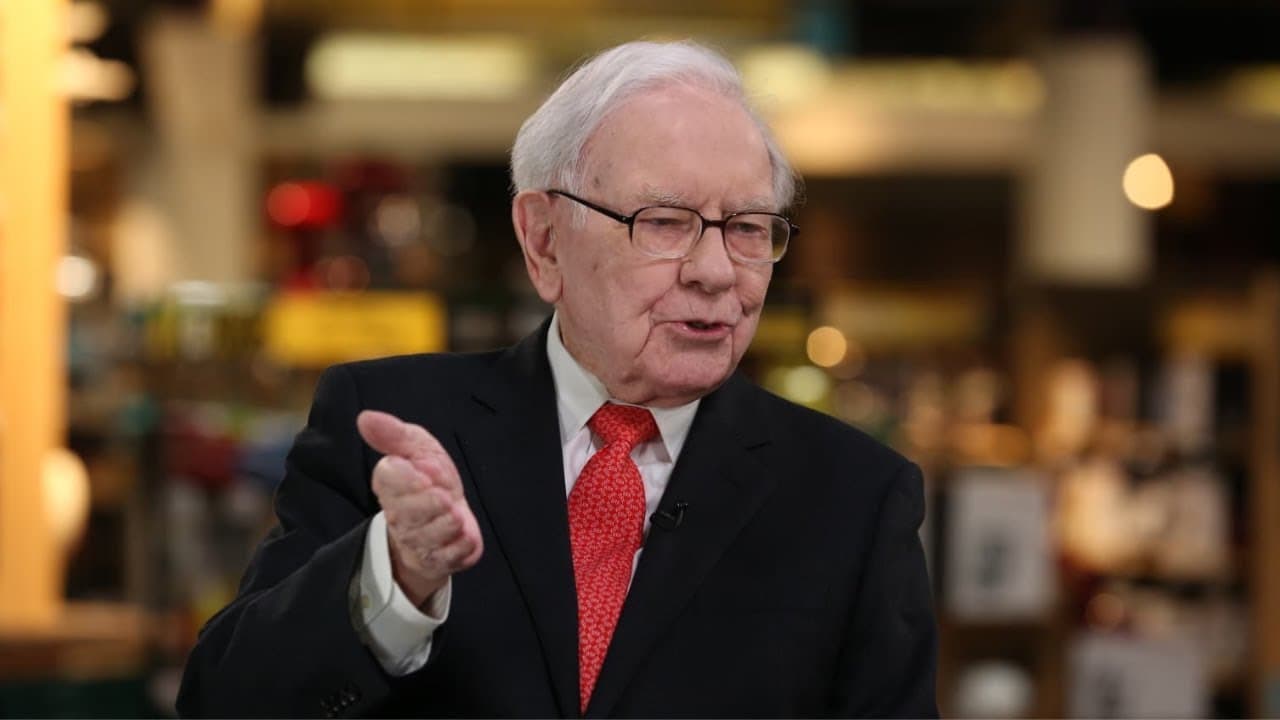
Warren Buffett: We Paid Too Much For Kraft | Feb 25, 2019
TL;DR
Berkshire Hathaway paid too much for Kraft, and its reported results included a $3 billion Kraft write-down. Buffett argues that Berkshire should be judged through long-term operating performance and stock results, not annual market fluctuations, because it owns major operating businesses and equities intended to be held for 10, 20, or more years.
Transcript
and our special guest this morning berkshire hathaway chairman and ceo warren buffett joining us uh just after writing his annual letter to shareholders and warren this is a big deal it's something that the investment community kind of waits on and sees as a must read because you spend so much time actually writing this yourself yeah too much when ... Read More
Key Insights
- Berkshire paid too much for Kraft, and its results included a $3 billion write-down related to the company. This outcome illustrates that even a long-term investor can overpay and later recognize that the recorded value of an investment or business cannot be supported.
- Market value became more relevant than book value because Berkshire had evolved into an overwhelmingly operating company rather than primarily holding stocks and bonds. Buffett said he hoped Berkshire would become even more oriented toward operating businesses, making the previous opening metric less informative over time.
- Buffett writes Berkshire's shareholder letter as if he were addressing his sisters after they had been away for a year. For the 2019 letter, he specifically imagined explaining what they should understand before deciding whether to sell some of their Berkshire shares.
- The five-groves framework groups Berkshire's assets into understandable categories, including non-insurance operating businesses, equities, insurance companies, cash and Treasury holdings, and businesses owned only partly. The structure helps shareholders assess broad sources of value without analyzing every subsidiary separately.
- Declining Berkshire businesses represent a very small part of total earnings, according to Buffett. He declined to identify them because naming a troubled operation would provide little analytical benefit while potentially discouraging the people who continued to work there and operate it.
- Berkshire Hathaway Energy and BNSF were two essential businesses that jointly earned about $8 billion after tax. That represented roughly one-third of Berkshire's $24 billion in operating earnings, demonstrating why Buffett characterized these companies as large and important redwoods within Berkshire's collection of assets.
- GAAP earnings were distorted by market movements after an accounting change required unrealized stock gains and losses to pass through reported income. Berkshire therefore reported $4 billion in GAAP earnings despite $24.8 billion in operating earnings, a $20.6 billion paper investment loss, and the Kraft write-down.
- Long-term stock performance matters more than results in any single year because Berkshire may hold investments for 10, 20, or more years. Buffett expected the portfolio to make money over time but said he had no idea whether its market value would rise or fall during the next year or two.
Install to Summarize YouTube Videos and Get Transcripts
Explore YouTube Video Summarizer or Get YouTube Transcript Extractor
Questions & Answers
Q: Why did Berkshire Hathaway write down Kraft?
Berkshire's results included a $3 billion write-down on Kraft, and Buffett admitted that Berkshire had paid too much for the company. The provided discussion does not specify a more detailed operational cause for the write-down. Its clear lesson is that the original price exceeded what the investment later justified, requiring Berkshire to reduce the value reflected in its results.
Q: Why did Berkshire stop emphasizing book value?
Berkshire stopped treating the annual percentage change in book value as its most relevant performance measure because the company had changed substantially. It had become overwhelmingly an operating company rather than a company centered mainly on stocks and bonds. Buffett therefore considered market value more meaningful over time, although he warned against drawing conclusions from any single year.
Q: How does Warren Buffett write his shareholder letters?
Buffett imagines that he is speaking directly to his sisters, Doris and Bertie, who are intelligent and have much of their investment in Berkshire but do not follow its business every day. He writes as if they have been away for a year and need a candid report. In this letter, he also imagined advising them before they sold shares.
Q: What are Berkshire Hathaway's five groves?
The five groves are broad groups used to make Berkshire easier to understand: non-insurance businesses it owns, its equity investments, its insurance companies, its Treasury and cash holdings, and businesses it owns only partly. Buffett preferred this framework because analyzing every individual company could obscure the overall forest, especially with dozens of businesses and nearly 390,000 employees.
Q: Why would Buffett not name Berkshire's declining businesses?
Buffett would not identify Berkshire's diseased or declining businesses because they represented a very small portion of earnings and naming them would add little analytical value. He was also concerned about employee morale. Publicly labeling a company as decaying could make its workers feel that their efforts were pointless, even though Berkshire intended to continue operating those businesses.
Q: How important are Berkshire Hathaway Energy and BNSF?
Berkshire Hathaway Energy and BNSF were among the company's most important operating assets. Together they produced about $8 billion in after-tax earnings and both set earnings records during the reported year. Buffett noted that $8 billion represented roughly one-third of Berkshire's approximately $24 billion in operating earnings, making the two businesses major contributors to overall performance.
Q: Why were Berkshire's GAAP earnings much lower than operating earnings?
Berkshire reported $24.8 billion in operating earnings but only $4 billion in GAAP earnings. The difference included a $20.6 billion paper loss on investment holdings and a $3 billion Kraft write-down. An accounting change required unrealized stock gains and losses to flow through reported income, allowing temporary market movements to create large swings in Berkshire's results.
Q: How should investors evaluate Berkshire's stock portfolio?
Investors should evaluate Berkshire's stock portfolio over about 10 years rather than focusing on a quarter or single year. Berkshire owned $173 billion of equities at year-end and could hold individual investments for 10, 20, or more years. Buffett expected them to make money over time but could not predict their direction during the next year or two.
Summary
Warren Buffett, Chairman and CEO of Berkshire Hathaway, discusses his annual letter to shareholders and the changes he made this year. He explains why he has shifted his focus from book value to market value as the most relevant metric. Buffett also introduces the concept of "the groves" to group Berkshire Hathaway's assets for easier evaluation. He addresses questions about the performance of Berkshire Hathaway's money managers, the compensation structure of top executives, and the future of Geico under new leadership. Buffett acknowledges the challenges faced by Kraft Heinz and the changing landscape of the packaged goods industry. He emphasizes the importance of interest rates in evaluating the market, discusses Berkshire Hathaway's cash pile, and explains his approach to buying and selling stocks based on changes in the underlying businesses. Buffett also touches on the impact of tariffs on investments and the potential implications of the trade talks with China.
Questions & Answers
Q: What prompted Warren Buffett to start writing his annual letter early this year?
Buffett started writing his annual letter early this year because he had a section in mind that he wanted to include, which he referred to as the "American tailwind." He explains that he wrote it in late summer and then worked on different sections throughout the year. Buffett also notes that he included both book value and market value metrics in this year's letter because he wanted to make the transition clear, and it happened to be a good year for the transition.
Q: Why did Warren Buffett change the most important metric for evaluating Berkshire Hathaway's performance?
Buffett explains that book value is no longer the most relevant figure for evaluating Berkshire Hathaway because the company has become more of an operating company than a company that holds stocks and bonds. He emphasizes that market value is now more relevant over time, although he acknowledges that book value can still be useful as a measure in certain situations. Buffett also mentions that he writes his letter with his sisters in mind, pretending he is reporting to them on their investment, which helps him clarify his message.
Q: How did Warren Buffett come up with the idea of dividing Berkshire Hathaway's assets into "groves"?
Buffett came up with the idea of grouping Berkshire Hathaway's assets into groves to make it easier to evaluate the company. He compares looking at individual assets like looking at trees in a forest, which can be overwhelming and distracting. By grouping assets into logical categories, Buffett believes it provides a clearer picture of the overall valuation of each grove. This approach allows investors to focus on the significant assets rather than getting lost in the details of every business.
Q: Why doesn't Warren Buffett want to name the specific businesses within Berkshire Hathaway that are in decline?
Buffett doesn't want to name the specific businesses in decline to maintain morale within the company. He points out that these companies represent a very small portion of Berkshire Hathaway's earnings, and mentioning them specifically would do more harm than good. Instead, he focuses on the larger, stronger businesses like Berkshire Hathaway Energy and Burlington Northern Santa Fe Railroad, which set records for after-tax earnings last year.
Q: How have Berkshire Hathaway's money managers Ted Weschler and Todd Combs performed since joining the company?
Weschler and Combs initially performed better than the S&P 500 index, but overall, they are slightly behind the index. However, Buffett highlights their contributions beyond just managing investments, such as their involvement in acquisitions and other business ventures. He expresses confidence in their abilities and emphasizes that they have done more work for Berkshire Hathaway beyond managing equities.
Q: How does Berkshire Hathaway structure the compensation for Greg Abel and Ajit Jain, the vice-chairmen responsible for managing various businesses?
The compensation structure for Greg Abel and Ajit Jain is disclosed in the proxy report. They each received $18 million last year, with a high percentage of that being base salary and the remainder as discretionary bonuses determined by Buffett. He explains that their compensation is not tied to the same formula used by most public companies, which allows for tax deductions. Buffett expresses the intention to have them more involved in the annual meeting and welcomes questions directed to them.
Q: Is Berkshire Hathaway planning to make any changes to the structure of the annual meeting to include Greg Abel and Ajit Jain on stage?
Buffett mentions that there may be a rearrangement of the annual meeting format in the future to include Greg Abel and Ajit Jain on stage. However, he also notes that it wouldn't happen every year but when it does, it would involve some changes to accommodate the new format.
Q: How does Warren Buffett evaluate bad news on a holding and determine whether to buy more or sell?
Buffett evaluates bad news on a holding by assessing whether the long-term valuation of the underlying business has changed. He looks for fundamentally good businesses that may be temporarily affected by bad news. If the long-term prospects of the business remain intact and the stock price is discounted, Buffett sees it as an opportunity to buy more. However, he notes that bad news on a fundamentally good business does not automatically make it more attractive. He also emphasizes the importance of considering the long-term valuation and the impact of interest rates on the decision.
Q: What impact have tariffs had on Berkshire Hathaway's companies and investments?
Buffett acknowledges that tariffs have had some impact on Berkshire Hathaway's companies but notes that it only represents a small percentage of their overall business. He acknowledges that tariffs can have an impact on specific businesses and industries, but he does not provide specific details about the extent of the impact.
Q: How has the trade talks with China affected Berkshire Hathaway's investments?
Buffett mentions that some of Berkshire Hathaway's investments have been affected by the trade talks with China but does not provide specific details. He notes that tariffs can impact certain industries and create challenges for businesses, but he does not elaborate on the overall impact on Berkshire Hathaway's investments.
Summary & Key Takeaways
-
Berkshire changed its primary performance emphasis from book value to market value because it had become overwhelmingly an operating company. Buffett said the transition was made during a year that did not make the new measure flatter him, and he framed the shareholder letter as guidance for his sisters considering whether to sell shares.
-
Buffett organized Berkshire into five groves so shareholders could evaluate logical groups instead of becoming lost in details about dozens of companies and nearly 390,000 employees. He acknowledged that a few businesses were declining but refused to identify them because they contributed very little to earnings and naming them could damage employee morale.
-
Berkshire produced $24.8 billion in operating earnings, while reported GAAP earnings were $4 billion after a $20.6 billion paper loss on investments and a $3 billion Kraft write-down. Buffett said stock performance should be evaluated across 10 years because annual mark-to-market changes reveal little about investments held for decades.
Read in Other Languages (beta)
Share This Summary 📚
Summarize YouTube Videos and Get Video Transcripts with 1-Click
Try YouTube Summary with ChatGPT & Claude or YouTube Transcript Generator
Explore More Summaries from Investor Archive 📚
Summarize YouTube Videos and Get Video Transcripts with 1-Click
Try YouTube Summary with ChatGPT & Claude or YouTube Transcript Generator