Warren Buffett: I Read 5-6 Hours A Day | January 26, 2015
TL;DR
Warren Buffett reads five to six hours a day, working through five daily newspapers, magazines, 10Ks, and annual reports, and credits that habit for his ability to judge an investment within two or three minutes. He argues no one has ever succeeded betting against America since 1776, and that a leader's reputation is guarded by never trading it for money.
Transcript
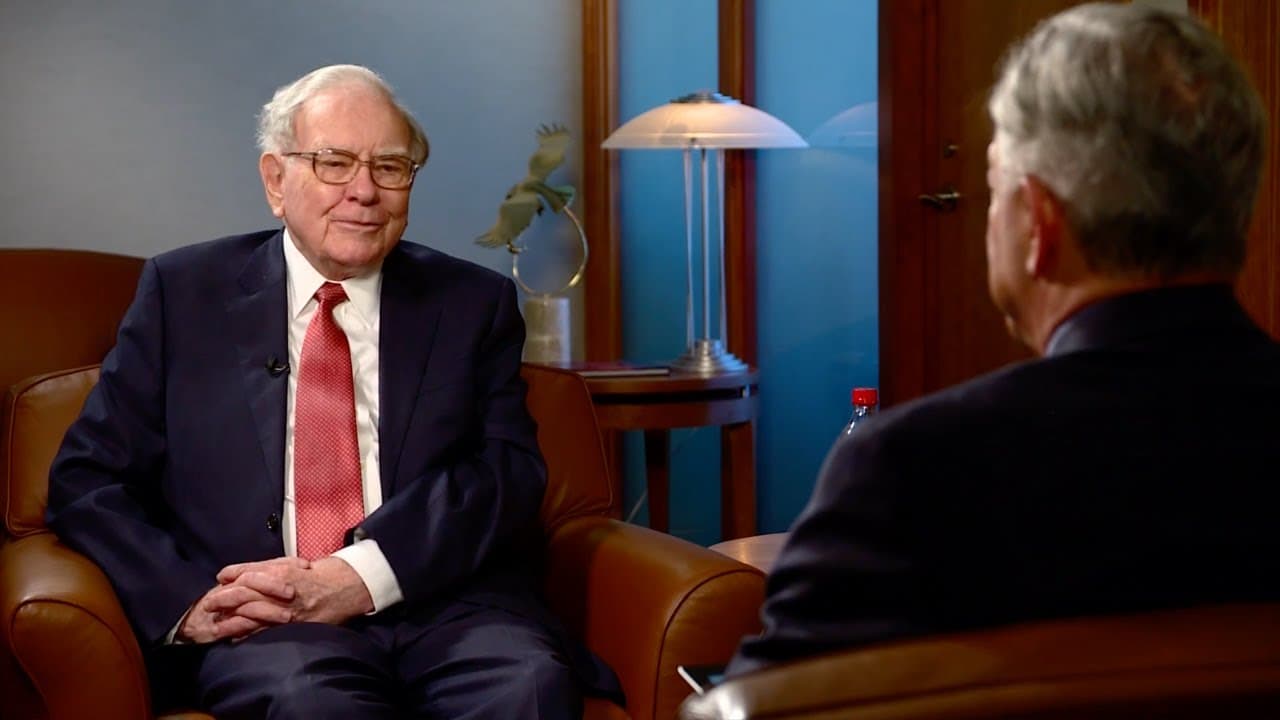
hi i'm jeff cunningham professor at arizona state university and i'm here this morning with legendary investor philosopher and ceo of berkshire hathaway warren buffett good morning warren good morning my first question for you i don't know if you've had a chance to google yourself but if you google warren buffett you get 25 million hits and my ques... Read More
Key Insights
- Buffett reads five to six hours a day, including five daily newspapers, magazines, 10Ks, and annual reports, and says he has always enjoyed reading, loving biographies in particular. This habit is central to how he keeps up with the world and his businesses.
- Mental filters let Buffett decide within two or three minutes whether an investment or business proposal interests him, so he does not waste time on the ones he rejects, even at the risk of appearing slightly rude.
- Public speaking was a learned skill, not instinct. Buffett was terrified of it in high school, avoided classes requiring it, then took a Dale Carnegie course for one hundred dollars after school and proposed to his wife during the course.
- Buffett has never been pessimistic about the United States. He wrote a New York Times op-ed in October 2008 telling people to buy stocks, and insists no one has succeeded betting against America since 1776.
- He bought his first stock in the spring of 1942 at age 11, when America was losing the war in the South Pacific, and stayed optimistic even before the Battle of Midway turned the tide.
- Reputation is a company's most protected asset. Buffett tells his roughly 70 CEOs that Berkshire has all the money it needs but not an ounce of reputation to spare, so they must never trade reputation for money.
- Buffett governs 330,000 employees through a page-and-a-half letter every two years rather than a 200-page manual, because long manuals invite loophole hunting while a short letter is hard to argue with.
- The Salomon crisis worsened because wrongdoing was not reported fast. Buffett's rule for bad news is get it right, get it fast, get it out, and get it over, since delay compounds the problem.
Install to Summarize YouTube Videos and Get Transcripts
Explore YouTube Video Summarizer or Get YouTube Transcript Extractor
Questions & Answers
Q: How many hours a day does Warren Buffett read?
Warren Buffett reads five to six hours a day, though he notes he does not read as fast now as when he was younger. His daily reading includes five daily newspapers, a fair number of magazines, 10Ks, annual reports, and many other things. He says he has always enjoyed reading and particularly loves reading biographies, and this habit is how he keeps up with the media and his businesses at Berkshire Hathaway.
Q: How does Warren Buffett decide whether to make an investment?
Buffett uses mental filters that let him know within two or three minutes whether he has an interest when someone calls him about a business or a securities investment. He does not waste time on the ones he has no interest in. He admits he sometimes worries about appearing rude because he can tell so quickly whether a conversation will lead somewhere or is just an hour or two of chatter.
Q: How did Warren Buffett overcome his fear of public speaking?
Buffett was terrified of speaking in public in high school and avoided any class that required it, both in high school and college. After getting out of school, realizing he had to talk to people, he signed up for a Dale Carnegie course and spent one hundred dollars, receiving a small diploma. He got his money's worth in another way too, because he proposed to his wife during the term of the course.
Q: Why is Warren Buffett so optimistic about the United States?
Buffett says no one has ever been a success betting against America since 1776, and he does not believe anyone will be in the future. He bought his first stock in the spring of 1942 at age 11, when America was losing the war, the Philippines had fallen, and the Battle of Midway had not yet turned things around, yet he was optimistic then and has been ever since. He believes the country is just getting started.
Q: What did Warren Buffett write in his October 2008 op-ed?
In an op-ed piece for the New York Times in October 2008, just as the world seemed to be falling apart during the financial crisis, Buffett wrote that the world would go through a difficult period but people should not worry because the country would come out fine on the other side. His advice was to buy stocks. He uses this to counter the impression that a 2009 annual report quote made him seem unduly pessimistic about the country.
Q: How does Warren Buffett communicate values to 330,000 Berkshire employees?
Berkshire's 330,000 employees work for about 70 CEOs who in turn report to Buffett, so his job is to make sure those roughly 70 CEOs send the right message. Every two years he writes them a very simple page-and-a-half letter rather than a 200-page manual, because long manuals make everybody look for loopholes while a short letter is hard to argue with. He tells them Berkshire's reputation is in their hands.
Q: What is Warren Buffett's advice for handling bad news as a CEO?
Buffett advises that when you find out about bad news, you correct it and, if necessary, report it to the authorities immediately. His rule is get it right, get it fast, get it out, and get it over. He cites the Salomon case, where wrongdoing by a trader named Mozer was known to supervisors in late April 1991 but not reported to the Federal Reserve promptly, so when Mozer acted again in mid-May the delay compounded into a terrible problem.
Q: What does Warren Buffett think is the biggest sin in journalism?
Buffett says the greatest sin journalists commit is refusing to give up a working hypothesis when it turns out to be incorrect or misleading. He describes quote shopping, where a reporter talks to him for 45 minutes hoping to get one quote that confirms a predetermined story while ignoring the other 43 minutes of context. He acknowledges the momentum, ego, and invested hours that push writers toward a bad story rather than abandoning a wrong hypothesis.
Summary
In this video, Jeff Cunningham interviews Warren Buffett, CEO of Berkshire Hathaway, discussing various topics including how Buffett maintains his positive image, his ability to communicate, his media routine, his expertise in processing information quickly, misconceptions about his views on the economy, dealing with frothy markets, how he sends a message to his employees about media scrutiny, advice for CEOs in the media hot seat, dealing with headlines that misrepresent stories, the question of whether journalists treat business results as a crime, educating journalists about business and boardrooms, the changing landscape of journalism and social media, Berkshire Hathaway's approach to social media, over-lawyering in communications, the role of great business editors, the future of journalism, advice for journalism students, and the annual Berkshire Hathaway meeting.
Questions & Answers
Q: How does Warren Buffett maintain a positive image despite his wealth and CEO position?
Buffett believes that as he gets older, people forgive him more easily, and he jokes that people will love him even more when he reaches George Burns's age and has a cigar in his mouth. He also mentions that being interviewed frequently and being able to communicate effectively with the public has helped shape his positive image.
Q: Did Warren Buffett naturally have the ability to communicate, or is it something he had to learn over the years?
Buffett admits that he had to learn how to speak in public as he was initially terrified of it. He avoided any classes that required public speaking in high school and college. However, he enrolled in a Dale Carnegie course after realizing the importance of being able to talk to people. Although he struggled speaking in public, he always enjoyed talking privately.
Q: How does Warren Buffett keep up with the media and information in the world and within Berkshire Hathaway?
Buffett mentions that he spends around five to six hours reading every day. He reads five daily newspapers, various magazines, 10-K reports, annual reports, and biographies. He loves reading and believes it is essential for staying informed and making informed investment decisions.
Q: Does Warren Buffett process information quickly?
Buffett explains that he has mental filters that help him determine his interest in an investment or business opportunity within two or three minutes. He can quickly assess whether it will lead to something substantial or if it's just a waste of time. He worries about appearing rude because he can tell almost instantly if something is worth pursuing or not.
Q: In 2009, Warren Buffett was perceived as pessimistic about the economy. How did he respond to this perception?
Buffett clarifies that he was not pessimistic about the country or the economy during that time. He actually wrote an op-ed piece for The New York Times in October 2008, suggesting that the world might face temporary difficulties but assured readers that the United States would come out fine in the end. He has always been optimistic about the country since buying his first stock in 1942.
Q: Has Warren Buffett ever felt that the stock market was too frothy?
Buffett acknowledges that there were a couple of times where the stock market appeared too frothy to him, but those instances were rare over his 50-year career. Even during those times, he believed that the country would surpass previous markers and continue to thrive. He maintains a long-term optimistic view in investing in America.
Q: How does Warren Buffett send a message to his employees about media scrutiny?
Buffett communicates with his employees through their managers. He writes a simple page-and-a-half letter every two years, emphasizing that their actions reflect the reputation of Berkshire Hathaway. He reminds them to judge their actions based on how they would appear on the front page of a local newspaper and to consider the impact on their families, neighbors, and friends. He urges them to maintain integrity and never sacrifice reputation for money.
Q: What advice does Warren Buffett have for CEOs who are on the media hot seat due to a similar situation like the Solomon incident?
Buffett advises CEOs to take immediate action when they become aware of bad news and to report it promptly to the appropriate authorities. He shares an example from the Solomon incident, highlighting the importance of correcting and reporting bad news as soon as possible. He stresses the need to deal with bad news swiftly while also avoiding unnecessary panic or overreacting.
Q: How does Warren Buffett suggest dealing with headlines that misrepresent the underlying story?
Buffett recognizes the challenge of headline writers who often create sensationalist headlines that misrepresent the full story. He believes that journalists should follow the facts and not let their initial hypothesis dictate the story. He encourages journalists to be objective, open-minded, and willing to correct their working hypothesis if it turns out to be incorrect or misleading.
Q: Why do journalists sometimes treat business results as a crime to be punished?
Buffett acknowledges that there have been individuals in the business world who have committed actions worthy of criminal prosecution. However, he cautions against applying criminality to every corporate mishap. He believes that the media often conflates corporate sins with individual crimes, resulting in a perception that business results are treated as crimes to be punished.
Q: How does Warren Buffett view the future of journalism in the era of social media and fast-paced news consumption?
Buffett acknowledges that the media landscape has changed drastically, with a preference for shorter, more entertaining content. He believes that long-form journalism, which he loves, may not be as prevalent in the future. However, he still believes there will be a market for in-depth journalism and independent publications that focus on quality reporting. Though these publications may not be as profitable, they will cater to a specific audience interested in more substantial content.
Q: How does Berkshire Hathaway deal with social media, and what is Warren Buffett's view on it?
Buffett explains that Berkshire Hathaway mostly ignores social media. They have a simple website, which has remained the same for the past 20 years. Instead, Buffett believes in communicating directly with shareholders through their annual report, which he personally writes. He values providing shareholders with comprehensive information and believes it is essential to communicate openly and honestly.
Q: How does Warren Buffett handle contracts and the issue of over-lawyering in communications?
Buffett prefers simple contracts and believes in a "one-page" approach. He shares an example of how a one-and-a-half-page contract with National Indemnity, which they bought for $8.6 million, later became the largest insurance company in the world. He encourages concise and straightforward contracts and believes that over-lawyering can complicate and slow down the business process.
Q: Who does Warren Buffett consider to be the greatest business editors throughout his observation of the industry?
Buffett mentions several notable editors he admires, such as Jim Michaels, the former editor of Forbes, who he describes as incredible at improving every story he touched. He also acknowledges the achievements of Barney Kilgore, who transformed The Wall Street Journal into a highly engaging newspaper focused on business. Buffett also mentions the renowned editor Ben Bradlee, though he notes that Bradlee was not a business editor but still an exceptional editor.
Q: Do you believe there will be a place for independent publications and excellent journalism in the future?
Buffett acknowledges that the landscape of journalism is changing rapidly, and shorter, more entertaining content tends to dominate. However, he believes there will always be a market for in-depth journalism and that there will be great editors in the future who will continue to produce excellent work. He emphasizes the importance of continuously learning about business and accounting to excel as a journalist.
Q: What advice does Warren Buffett have for journalism students?
Buffett mentions that if he weren't involved in his current line of work, he would want to be a journalist himself. He believes that journalism is fascinating and encourages students to observe the rule of not letting their hypothesis determine the story. He advises them to learn about accounting and business, as these are crucial aspects of reporting on business topics. He also highlights the importance of curiosity and diligence, as great stories are waiting to be written.
Q: How has the Berkshire Hathaway annual meeting become a media frenzy, and how does Warren Buffett maintain a common touch during the event?
Buffett explains that the annual meeting has grown significantly, with attendance reaching around 40,000 people. He believes that the meeting's popularity is because people enjoy the unique experience, which includes his speeches and the opportunity to hear from various Berkshire Hathaway managers. He mentions that he won't be playing the ukulele at the meeting, jokingly suggesting that's why people attend the event.
Summary & Key Takeaways
-
Jeff Cunningham of Arizona State University interviews Warren Buffett, CEO of Berkshire Hathaway. Buffett explains his information routine: he reads five to six hours a day, covering five daily newspapers, magazines, 10Ks, and annual reports, and mental filters let him judge an investment in two or three minutes.
-
Buffett recounts learning public speaking through a Dale Carnegie course that cost one hundred dollars, during which he proposed to his wife. He describes lifelong optimism about America, having bought his first stock in 1942 at age 11, and cites his October 2008 op-ed urging people to buy stocks.
-
On leadership, Buffett manages 330,000 employees via a short letter to about 70 CEOs, warning them to guard Berkshire's reputation. He discusses the Salomon scandal, his rule to disclose bad news fast, and his critique of journalists who quote-shop to confirm a fixed hypothesis.
Read in Other Languages (beta)
Share This Summary 📚
Summarize YouTube Videos and Get Video Transcripts with 1-Click
Try YouTube Summary with ChatGPT & Claude or YouTube Transcript Generator
Explore More Summaries from Investor Archive 📚
Summarize YouTube Videos and Get Video Transcripts with 1-Click
Try YouTube Summary with ChatGPT & Claude or YouTube Transcript Generator