How Corporate Sponsors Influence Health Creators
TL;DR
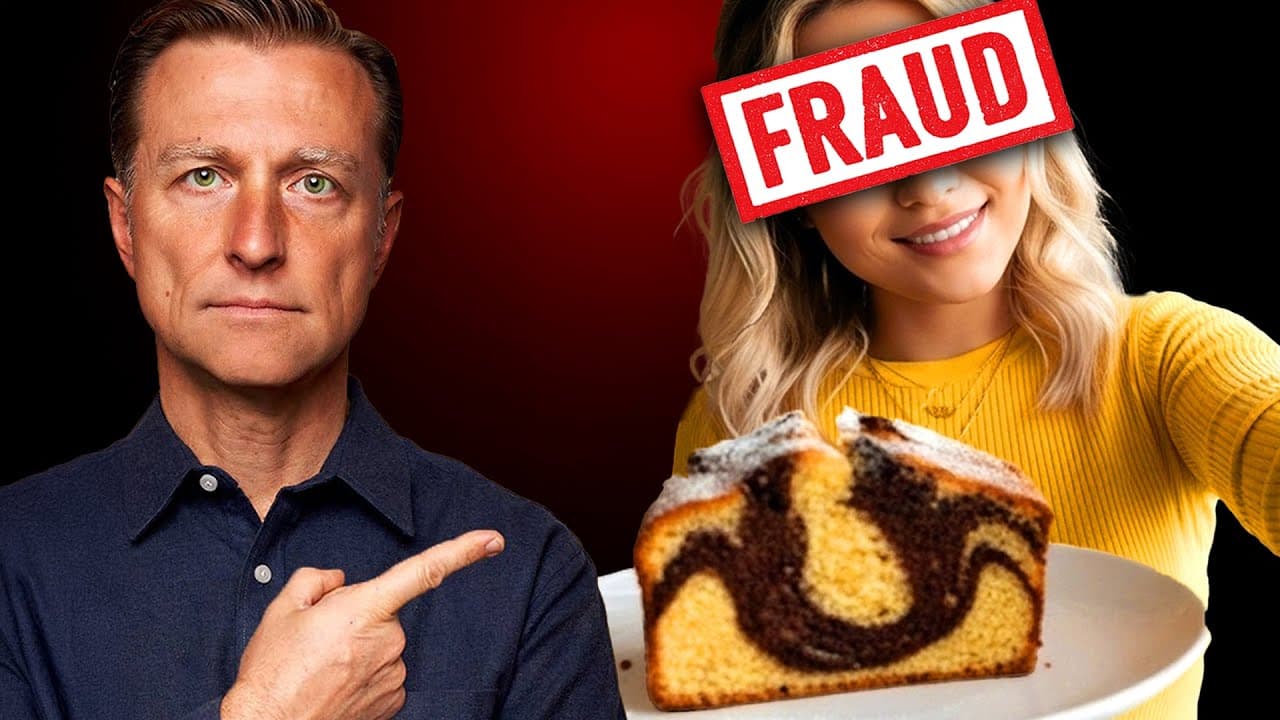
Corporate health marketing can operate through trusted social media influencers, with PR firms recruiting creators, shaping messages, and arranging paid posts. The central warning is to examine sponsorship disclosures, financial conflicts, repetitive framing, and whether advice consistently favors ultraprocessed foods or pharmaceutical products, because the transcript says 40% of influencers fail to disclose payments.
Transcript
Today we're going to discuss how big pharma and big food actually buy social media influencers. What if the people that you really trust online for health information were not actually giving you their independent opinion? What if I were to tell you that their opinions were really shaped by certain corporations, big pharma, big food. This includes ... Read More
Key Insights
- Corporate health marketing is described as borrowing an influencer's credibility when pharmaceutical or food companies lack public trust. The transcript argues that trusted creators can make a corporate message feel like independent health advice, especially when the financial relationship is difficult for viewers to identify.
- Influencer compensation is estimated in the transcript at about $20 to $25 per 1,000 views, with trusted creators potentially receiving an 8 to 12 times multiplier. These figures are presented as general estimates rather than documented payments for every creator or campaign.
- PR firms are described as intermediaries between corporations and influencers. According to the transcript, internal teams identify creators, hire and train them, and carefully craft messages so sponsored claims sound authentic rather than like conventional corporate advertising.
- Disclosure is legally expected under FTC rules, according to the transcript, yet more than 40% of influencers allegedly fail to identify paid relationships. The narrator says this makes sponsorships difficult to track because no comprehensive database covers payments to every type of influencer.
- FTC warning letters are presented as documented examples of disclosure concerns. The transcript says letters sent in November 2023 involved two trade groups and 12 registered dietitian nutritionists or other health influencers promoting aspartame safety or sugar-containing products without adequate disclosures.
- Institutional conflicts are portrayed as extending beyond individual creators. The transcript cites an investigation that reportedly uncovered 80,000 pages of correspondence involving the Academy of Nutrition and Dietetics and describes investments, corporate funding, employment relationships, and consulting ties connected to food and pharmaceutical companies.
- Message framing is identified as a more powerful tactic than direct promotion alone. The narrator argues that sponsored creators may repeat a narrow message, redirect attention from a product, or label competing health viewpoints as misinformation without supplying the underlying details.
- Audience evaluation is presented as a process of checking intent, disclosures, and funding. The transcript recommends asking whether an influencer repeatedly directs viewers toward fewer ultraprocessed foods and drugs, or instead defends products and industries that may benefit from the message.
Install to Summarize YouTube Videos and Get Transcripts
Explore YouTube Video Summarizer or Get YouTube Transcript Extractor
Questions & Answers
Q: How do pharmaceutical companies use social media influencers?
The transcript says pharmaceutical companies often work through PR firms instead of contacting influencers directly. Specialized teams reportedly find suitable creators, negotiate payment, train them, and craft messages that sound authentic. This arrangement allows a company to borrow the creator's established credibility while making corporate health messaging appear closer to an independent personal recommendation.
Q: Why do corporations pay trusted health influencers?
Corporations pay trusted health influencers because those creators possess credibility that the companies may lack, according to the transcript. The narrator connects this strategy to declining trust in pharmaceutical businesses and cites more than $126 billion in industry penalties since 2000. A familiar creator can deliver a sponsored claim through an audience relationship already built on perceived expertise and independence.
Q: How much can a social media health influencer earn per post?
The transcript estimates ordinary influencer compensation at roughly $20 to $25 per 1,000 views. It says creators with exceptional trust may receive an 8 to 12 times multiplier, potentially raising the rate to about $240 per 1,000 views. It also presents hypothetical post values of $250,000 to $500,000 for a trusted YouTube creator receiving 500,000 to 1.5 million views.
Q: What sponsorship disclosures are influencers expected to provide?
The transcript says FTC rules require influencers to disclose financial payments connected to sponsored content. It claims more than 40% do not disclose such relationships and notes that payments are difficult to trace when the creator is not covered by a dedicated database. The narrator also states that failure to disclose could result in a fine of about $50,000.
Q: What did the FTC warning letters to dietitians address?
The transcript says the FTC sent warning letters in November 2023 to the American Beverage Association, the Canadian Sugar Institute, and 12 registered dietitian nutritionists or other online health influencers. The letters concerned allegedly inadequate disclosures in Instagram and TikTok posts promoting aspartame safety or the consumption of sugar-containing products, including a post apparently funded by the American Beverage Association.
Q: How can viewers identify potentially sponsored health advice?
The transcript recommends examining whether payment is disclosed, searching for corporate funding relationships, and noticing repeated framing across a creator's content. It also suggests considering the apparent direction of the advice, such as whether it encourages fewer ultraprocessed foods and chemical drugs or repeatedly defends products that benefit pharmaceutical and food companies. These are warning signs, not proof of sponsorship.
Q: How can message framing influence health discussions online?
Message framing can shift attention away from a sponsor's product and toward a more favorable explanation. The transcript gives Coca-Cola messaging about obesity and energy balance as an example, saying influencers may emphasize exercise rather than sugary drinks. It also argues that repetitive myth-busting content can label alternative views as misinformation or dangerous without presenting detailed supporting evidence.
Q: What conflicts involving nutrition organizations does the transcript describe?
The transcript cites a US Right to Know investigation that reportedly obtained 80,000 pages of correspondence involving the Academy of Nutrition and Dietetics and food companies. It says the Academy and its foundation invested in ultraprocessed food and pharmaceutical companies, while leaders had employment or consulting relationships with major corporations. Named funding sources include Abbott Laboratories, Pepsi-Cola, Coca-Cola, Hershey's, and General Mills.
Summary & Key Takeaways
-
The transcript argues that pharmaceutical and food companies borrow the credibility of online health creators when public trust in corporations is weak. Rather than approaching creators openly, companies may use PR firms and specialized teams to recruit influencers, train them, shape campaign language, and make sponsored messages appear authentic to audiences.
-
Influencer compensation can rise sharply when a creator has strong audience trust. The transcript gives a baseline estimate of $20 to $25 per 1,000 views and describes an 8 to 12 times trust multiplier. It also presents hypothetical estimates showing that a highly trusted creator could earn hundreds of thousands of dollars from one post.
-
The proposed method for evaluating online health advice is to investigate disclosures, funding relationships, institutional investments, and repeated message framing. Examples involving dietitians, trade groups, pharmaceutical payments, sugar, aspartame, seed oils, and myth-busting content illustrate the narrator's broader claim that undisclosed sponsorships can influence apparently independent health recommendations.
Read in Other Languages (beta)
Share This Summary 📚
Summarize YouTube Videos and Get Video Transcripts with 1-Click
Try YouTube Summary with ChatGPT & Claude or YouTube Transcript Generator
Explore More Summaries from Dr. Eric Berg DC 📚
Summarize YouTube Videos and Get Video Transcripts with 1-Click
Try YouTube Summary with ChatGPT & Claude or YouTube Transcript Generator