How to Use NEPQ to Boost Sales by 10X
TL;DR
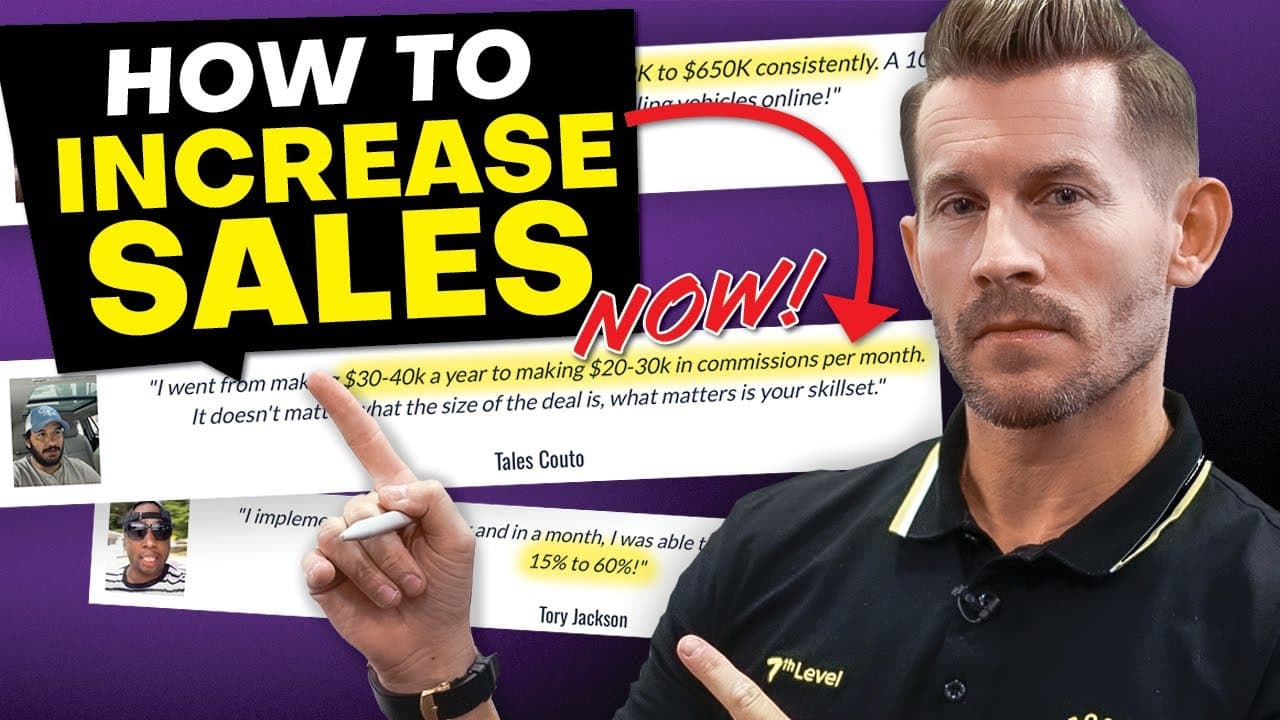
NEPQ, or Neuro-Emotional Persuasion Questioning, is a technique that helps salespeople reduce resistance and increase sales by understanding the prospect's nervous system, building emotional connections, and reframing questions. By shifting focus from price to value, NEPQ encourages prospects to persuade themselves to buy, ultimately leading to higher conversion rates.
Transcript
What if I told you that our clients have generated an extra 1.3 billion in sales using this one technique? It's called NEPQ. I'm going to break it down for you. This is important. You want to write this down if you want to sell, persuade, or influence more 100%. Okay, so NPQ, this is what it stands for. So my background, behavioral science, neuross... Read More
Key Insights
- NEPQ stands for Neuro-Emotional Persuasion Questioning, a method to enhance sales effectiveness.
- Understanding the brain and nervous system helps reduce prospects' resistance during sales conversations.
- Emotional connections are crucial as people buy based on emotion rather than logic.
- Framing your offer effectively is key to persuading prospects and securing sales.
- Reframing questions interrupts prospect patterns, leading to more honest and revealing responses.
- NEPQ questions aim to seed doubt, prevent objections, and build a gap between current and desired states.
- Deframing and reframing help shift prospects from cost-based to results-based thinking.
- Belief systems about salespeople influence prospect behavior; NEPQ helps change these perceptions.
Install to Summarize YouTube Videos and Get Transcripts
Explore YouTube Video Summarizer or Get YouTube Transcript Extractor
Questions & Answers
Q: How to reduce prospect resistance in sales?
Reducing prospect resistance involves understanding their nervous system and using techniques like NEPQ to manage it. By establishing an emotional connection and reframing questions, salespeople can lower defenses and encourage prospects to be more open to offers. This approach shifts focus from price to the value and results of the product or service, enhancing persuasion.
Q: What is the importance of emotional connection in sales?
Emotional connection is crucial in sales because people make purchasing decisions based on emotions rather than logic. Building an emotional connection helps prospects feel understood and valued, reducing their resistance and increasing the likelihood of a sale. NEPQ emphasizes the importance of emotional engagement to facilitate persuasion and drive sales.
Q: How can reframing questions improve sales outcomes?
Reframing questions disrupts the usual patterns that prospects expect from salespeople, leading to more genuine and insightful responses. By asking questions that focus on the prospect's needs and desires, salespeople can reveal hidden needs and shift the conversation from cost to value. This approach enhances self-persuasion and increases the chances of closing a sale.
Q: What are the four core purposes of NEPQ questions?
NEPQ questions serve four core purposes: seeding doubt about the prospect's current situation, preventing objections, building a gap between the current and desired states, and shifting prospects from cost-based to results-based thinking. These objectives help create a more persuasive sales conversation and encourage prospects to see the value in the offer.
Q: How does NEPQ change prospects' belief systems about salespeople?
NEPQ changes prospects' belief systems by deframing and reframing their perceptions. This process involves shifting their focus from viewing salespeople as low-status to recognizing the value and results they can provide. By altering these beliefs, NEPQ helps prospects become more receptive to sales pitches and reduces resistance.
Q: Why is framing an offer important in sales?
Framing an offer is important because it determines how prospects perceive the value of a product or service. Effective framing highlights the benefits and results rather than the cost, making the offer more appealing. NEPQ emphasizes framing as a key element of persuasion, ensuring that the offer aligns with the prospect's needs and desires.
Q: What role does self-persuasion play in NEPQ?
Self-persuasion is a critical component of NEPQ, where prospects convince themselves of the value of a product or service. By framing questions and offers effectively, salespeople can guide prospects to articulate their own reasons for purchasing, making the decision more compelling and reducing resistance. This approach enhances the overall effectiveness of the sales process.
Q: How does NEPQ help shift focus from cost to value?
NEPQ shifts focus from cost to value by reframing prospects' thinking to emphasize the results and benefits of a product or service. This involves asking questions that highlight the desired outcomes and addressing multiple problems that the product can solve. By focusing on value, NEPQ encourages prospects to see the offer as a solution rather than just an expense.
Summary & Key Takeaways
-
NEPQ is a sales technique focused on understanding and managing the prospect's nervous system to reduce resistance. By building emotional connections, salespeople can shift the focus from logic to emotion, which is crucial for closing deals. The method involves reframing questions to break prospect patterns and encourage self-persuasion.
-
Framing an offer effectively is essential for successful persuasion. By shifting from cost-based to results-based thinking, NEPQ helps prospects see the value in the offer. The technique is designed to seed doubt, prevent objections, and build a gap between the prospect's current situation and their desired outcome.
-
Changing belief systems about salespeople is part of the NEPQ process. By deframing and reframing, salespeople can alter prospects' perceptions, encouraging them to focus on the results of the product or service rather than its cost. This approach has been proven to significantly increase sales.
Read in Other Languages (beta)
Share This Summary 📚
Summarize YouTube Videos and Get Video Transcripts with 1-Click
Try YouTube Summary with ChatGPT & Claude or YouTube Transcript Generator
Explore More Summaries from Jeremy Miner 📚




Summarize YouTube Videos and Get Video Transcripts with 1-Click
Try YouTube Summary with ChatGPT & Claude or YouTube Transcript Generator