How to Build Better Websites with Claude Skills
TL;DR
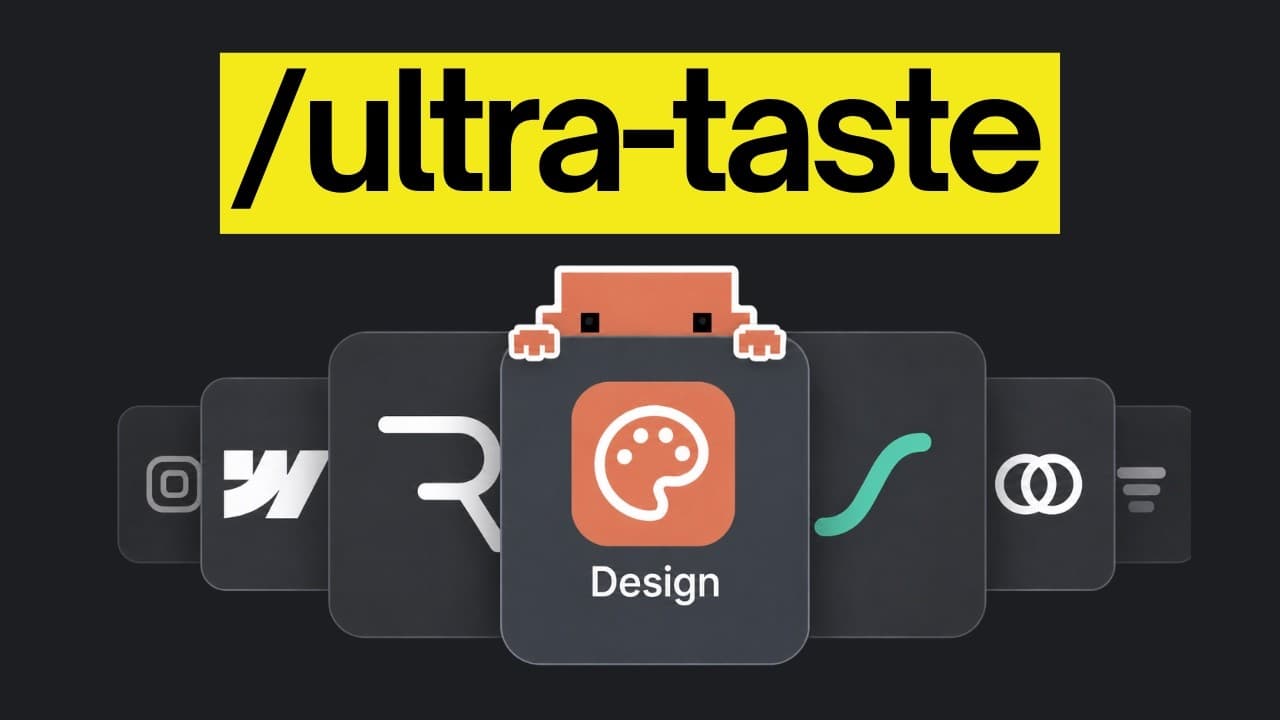
Use specialized design skills to steer Claude away from its recurring visual patterns and give it tested guidance for layout, motion, branding, conversion, and storytelling. Start with a design engineering skill, refine completed interfaces with a dedicated animation workflow, and choose focused systems for landing pages or awards-style experiences according to the site's purpose.
Transcript
There are a lot of skills out there that let you design beautiful websites with AI, and each one of them is different. But not all of them work. Some have an intensive workflow that seems impressive, and at the end of it, they still generate a site that looks like every other one. Only a few of them actually deliver. Now, you might think why you'd ... Read More
Key Insights
- Specialized design skills are reusable packages of tested workflows and principles that steer AI models away from their recognizable default patterns. Their value comes from adding focused design judgment rather than simply relying on a model's general ability to produce a functional interface.
- Claude skills can be added through Claude settings and then used inside Claude Design by typing a slash command and the skill name. The same installed skills can also support work in Claude Code, Codex, or another agent, according to the presentation.
- Emil Kowalski's collection contains nine skills that address different design concerns, including Apple-inspired principles and animation vocabulary. The design engineering skill is presented as a strong starting point because it gives Claude instructions for building polished interface components and incorporating motion into them.
- The animate skill is designed to refine a website after its initial design has been built. It examines how the interface works, decides which elements should move, and improves timing so scroll effects and smaller interactions feel synchronized, intentional, and appropriate to the experience.
- Small functional animations can materially improve how an application feels to use. In the restaurant-site example, motion appeared when users submitted a form and when graphics responded to hovering, adding feedback and interactivity beyond the larger scroll-based effects commonly used on landing pages.
- Conard Li's web design engineer skill prioritizes strong visuals and grounds its work in existing successful designs. It clarifies requirements, consults references, applies style recipes associated with sites such as Apple and Linear, and can score an existing design across several areas for repeated refinement.
- Elaya Design's landing-page skill treats a landing page as a focused conversion experience rather than a general homepage. It creates a consistent visual system for color, typography, and spacing, then structures the page around the single action visitors are intended to take.
- Meng To's awards-quality skill applies principles, techniques, and effects associated with recognized competition-winning websites. Its output emphasizes immersive scroll-based storytelling, subtle animated backgrounds, and a structured visual experience intended to go beyond the level Claude normally produces without specialized direction.
Install to Summarize YouTube Videos and Get Transcripts
Explore YouTube Video Summarizer or Get YouTube Transcript Extractor
Questions & Answers
Q: Why use design skills if Claude can already build websites?
Claude can already create workable designs, but the presentation argues that each model follows recurring visual patterns that become easy to recognize. Specialized skills steer the model away from those defaults by supplying tested principles, references, terminology, and workflows. This added direction can make a website more distinctive, intentional, and appropriate for its particular purpose.
Q: How do you use design skills in Claude Design?
Add the desired skill through Claude settings, then open Claude Design and invoke it by typing a slash followed by the skill name. Include a prompt describing the website you want to create. Some skills ask questions before generating anything so they can clarify the application, visual direction, requirements, and intended user action before beginning the design.
Q: Which Claude skill should you use to start a website design?
The presentation recommends Emil Kowalski's design engineering skill as a strong starting point. It contains instructions for creating attractive interface components and adding animation. After it is invoked, it asks questions about the application and then builds the initial design. A separate animation-focused skill can be applied afterward to refine movement and interaction details.
Q: How does the animate skill improve an existing website?
The animate skill reviews an already built website, understands how it functions, and determines which elements need motion and which should remain still. In the demonstrated result, it corrected animations that were unpolished or out of sync, aligned motion with scrolling, and made the overall experience feel more intentional through coordinated, context-sensitive effects.
Q: What kinds of small animations improve functional websites?
Small animations can provide feedback and make ordinary interactions feel more responsive. The restaurant-site example included animation when a form was submitted and graphics that appeared or reacted on hover. These details were less prominent than large landing-page effects, but together they made the functional interface feel more interactive and improved the experience of using it.
Q: How does Conard Li's web design engineer skill work?
Conard Li's web design engineer skill first works through the requirements until the desired direction is clear. It then looks at real designs because its process assumes good design builds on proven references. Its supporting material covers design evaluation, common failure patterns, and style recipes for sites such as Apple and Linear, with a strong focus on visual quality.
Q: How can an existing design be evaluated and refined with a skill?
Conard Li's web design engineer skill can inspect an existing design and score it across different areas. The designer can respond to that evaluation, refine the website, and run the skill again. Repeating this cycle provides a structured way to move the result toward a stronger score and closer alignment with the intended visual direction.
Q: What makes a landing-page design skill different from a general website skill?
Elaya Design's skill is built around the idea that a landing page has one primary job: encouraging visitors to take a specific action. It creates a visual system covering colors, typography, and spacing, keeps those choices consistent, structures content around the target action, and also addresses overlooked concerns such as making the website easier to find through search.
Summary & Key Takeaways
-
Specialized skills improve Claude-generated websites by supplying reusable workflows and design principles developed through practical experience. They can be added through Claude settings and invoked inside Claude Design, while also working with Claude Code, Codex, and other agents. Different skills focus on components, animation, visual systems, evaluation, or storytelling.
-
Emil Kowalski's design engineering skill helps establish attractive interface components and motion, while the separate animate skill evaluates an existing website and refines where movement belongs. In the examples, this second pass synchronized scroll effects and added small interactions around form submission and hover states, making functional experiences feel more deliberate and responsive.
-
Other systems serve narrower goals. Conard Li's web design engineer uses real references and repeatable scoring to improve visual quality. Elaya Design's landing-page skill organizes colors, typography, spacing, search considerations, and content around one desired action. Meng To's awards-quality skill emphasizes immersive scrolling, storytelling, polished effects, and competition-level design principles.
Read in Other Languages (beta)
Share This Summary 📚
Summarize YouTube Videos and Get Video Transcripts with 1-Click
Try YouTube Summary with ChatGPT & Claude or YouTube Transcript Generator
Explore More Summaries from AI LABS 📚

Summarize YouTube Videos and Get Video Transcripts with 1-Click
Try YouTube Summary with ChatGPT & Claude or YouTube Transcript Generator