How Does Alcohol Consumption Affect Your Health?
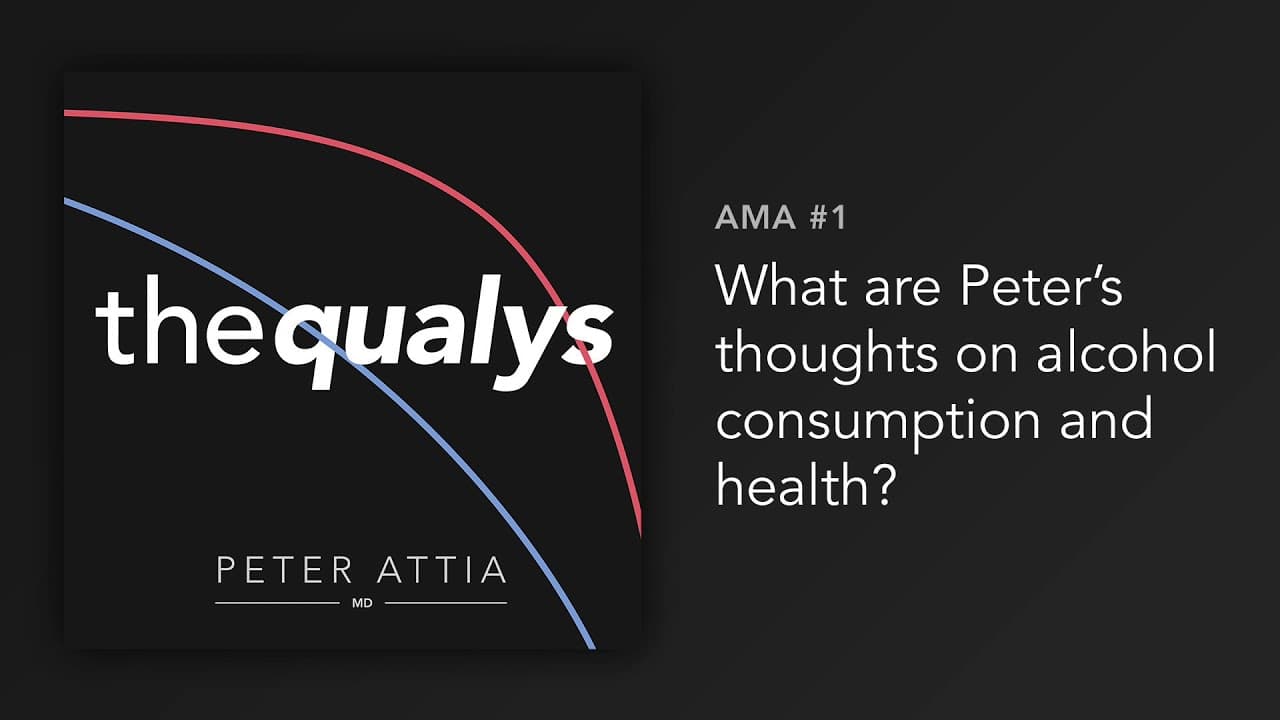
TL;DR
Ethanol provides no established direct health benefit and produces toxic byproducts during liver metabolism, although individual tolerance varies widely. Alcohol decisions should account for liver markers, reasons for drinking, effects on eating behavior, and sleep: Peter Attia reports that one evening drink does not affect his sleep, while two or more raise his resting heart rate substantially.
Transcript
Welcome to The Qualies, a subscriber-exclusive podcast. Qualies is just a shorthand slang for a qualification round, which is something you do prior to the race, just a little bit quicker. Qualies podcast features episodes that are short, eh, we're hoping for less than 10 minutes each, which highlight the best questions, topics, tactics, et cetera,... Read More
Key Insights
- Ethanol is a toxin whose physiological impact depends on both dose and individual susceptibility. A population contains people who are relatively unaffected by a given exposure and others who experience greater harm, so identical alcohol intake can produce different outcomes.
- Ethanol has no established direct benefit in the human body according to Attia. Its liver metabolism produces aldehyde, which is toxic, while its central nervous system effects include depression through GABA-related activity alongside the euphoria or excitement people may experience.
- A typical alcoholic drink contains about 15 grams of ethanol. Attia equates this roughly with one ounce of distilled spirits, a four-ounce glass of wine, or approximately 10 to 12 ounces of beer, depending on its alcohol content.
- Liver condition is an important consideration when evaluating alcohol intake. Attia uses ALT as a practical proxy, considers values below 20 normal in his practice, and questions whether patients near the laboratory upper limit of 42 may already have fatty liver.
- Individual alcohol tolerance can vary dramatically. Attia describes patients averaging eight to 12 drinks daily whose ultrasound, liver-function tests, coagulation studies, and other markers appeared normal, presenting them as genetic outliers rather than evidence that such consumption is generally safe.
- The reason for drinking is central to assessing its consequences. Attia recommends asking whether alcohol is consumed automatically, used to soothe another issue, or followed by unwanted behavior, including reduced dietary restraint and eating foods that would normally be avoided.
- Purpose-driven drinking is Attia's personal rule for limiting routine consumption. He generally avoids alcohol unless the beverage is exceptional and specifically desired, rather than drinking simply because it is available, as illustrated by his refusal to drink mediocre alcohol on airplanes.
- Red wine is not established as beneficial merely because of the French paradox or resveratrol. Attia argues that epidemiological interpretation is poor and that wine contains far less resveratrol than the high concentrations used in disputed, unreproduced longevity research.
Install to Summarize YouTube Videos and Get Transcripts
Explore YouTube Video Summarizer or Get YouTube Transcript Extractor
Questions & Answers
Q: How does alcohol consumption affect the body?
Alcohol affects both the liver and the brain. The liver uniquely metabolizes ethanol and produces aldehyde, a toxic byproduct. In the brain, ethanol acts through GABA-related central nervous system depression while also producing the buzz, euphoria, or apparent excitement people seek. Its overall impact depends on dose and varies across individuals because susceptibility to toxins follows a broad distribution.
Q: Does ethanol provide any direct health benefits?
Attia is not convinced that ethanol itself provides any direct benefit to the human body. He distinguishes that claim from saying every small serving is necessarily harmful. A person might experience relaxation or reduced emotional distress from one glass, but any possible benefit would come from that response, not from ethanol being inherently health-promoting, and must be weighed against potential drawbacks.
Q: How much ethanol is in a typical alcoholic drink?
A general serving of alcohol contains about 15 grams of ethanol. Attia describes this as roughly one ounce of distilled spirits, an appropriate four-ounce glass of wine, or around 10 to 12 ounces of beer, depending on alcohol content. Home-poured servings may be taller or larger, so the apparent number of glasses may understate the actual ethanol consumed.
Q: What liver tests matter when evaluating alcohol use?
Attia considers ALT, one of the transaminases, the best available proxy discussed here for assessing current liver function. His laboratory lists an upper normal limit around 42, but he personally considers an ALT below 20 normal. If a patient's result approaches the listed upper limit, he asks whether fatty liver is already present and whether ethanol or fructose may be contributing.
Q: Why do some people appear to tolerate more alcohol?
Responses to ethanol vary because toxins affect people across a probability distribution. Attia describes at least two patients who averaged eight to 12 drinks per day yet had normal liver ultrasounds, liver-function tests, coagulation studies, and other markers. He characterizes them as genetic outliers with remarkable tolerance, not as examples that establish a safe intake level for everyone else.
Q: Why can alcohol lead to unhealthy eating?
Alcohol can loosen the restraints that normally guide food choices. Attia reports that after a couple of drinks, he and many patients become more likely to eat foods they otherwise would avoid. This appetite dysregulation may become the practical problem with drinking even when direct liver injury is not evident, making downstream behavior an important part of evaluating personal alcohol use.
Q: Is red wine beneficial for cardiovascular health or longevity?
Attia does not consider red wine proven to benefit health. He attributes the belief partly to the French paradox, which he views as a poor epidemiological inference because many differences, including diet and smoking, complicate the comparison. He also rejects resveratrol as a convincing justification, since the cited longevity findings were not reproduced and wine contains only very small quantities of the compound.
Q: How does evening alcohol affect sleep and resting heart rate?
Based on tracking with an Oura Ring, Attia reports that one evening drink does not affect his sleep, while two or more have a profound effect. His resting heart rate rises by about 10 beats and takes much longer to reach its lowest resting level. He says resting heart rate should normally be achieved within the first third of the sleep cycle.
Summary & Key Takeaways
-
Ethanol is a toxin whose effects depend on dose and individual susceptibility. It is metabolized by the liver, produces aldehyde as a toxic byproduct, and affects both the liver and brain. A standard serving of spirits, wine, or beer generally contains about 15 grams of ethanol, despite differences in beverage volume.
-
Assessing alcohol use requires more than counting drinks. Attia considers liver function, particularly ALT, and looks for evidence of fatty liver while distinguishing possible contributions from ethanol and fructose. Some genetic outliers apparently tolerate very high intake without abnormal liver tests, but their unusual response should not define guidance for others.
-
The reason for drinking and its behavioral consequences may matter as much as direct physiology. Alcohol can loosen dietary restraint, encourage eating that would otherwise be avoided, and impair sleep at higher intake. Claims that red wine improves health are not convincing, though relaxation from one glass could possibly offer a net benefit for some people.
Read in Other Languages (beta)
Share This Summary 📚
Summarize YouTube Videos and Get Video Transcripts with 1-Click
Try YouTube Summary with ChatGPT & Claude or YouTube Transcript Generator
Explore More Summaries from Peter Attia MD 📚


Summarize YouTube Videos and Get Video Transcripts with 1-Click
Try YouTube Summary with ChatGPT & Claude or YouTube Transcript Generator