Why Was Texting Military Plans on Signal Illegal?
TL;DR
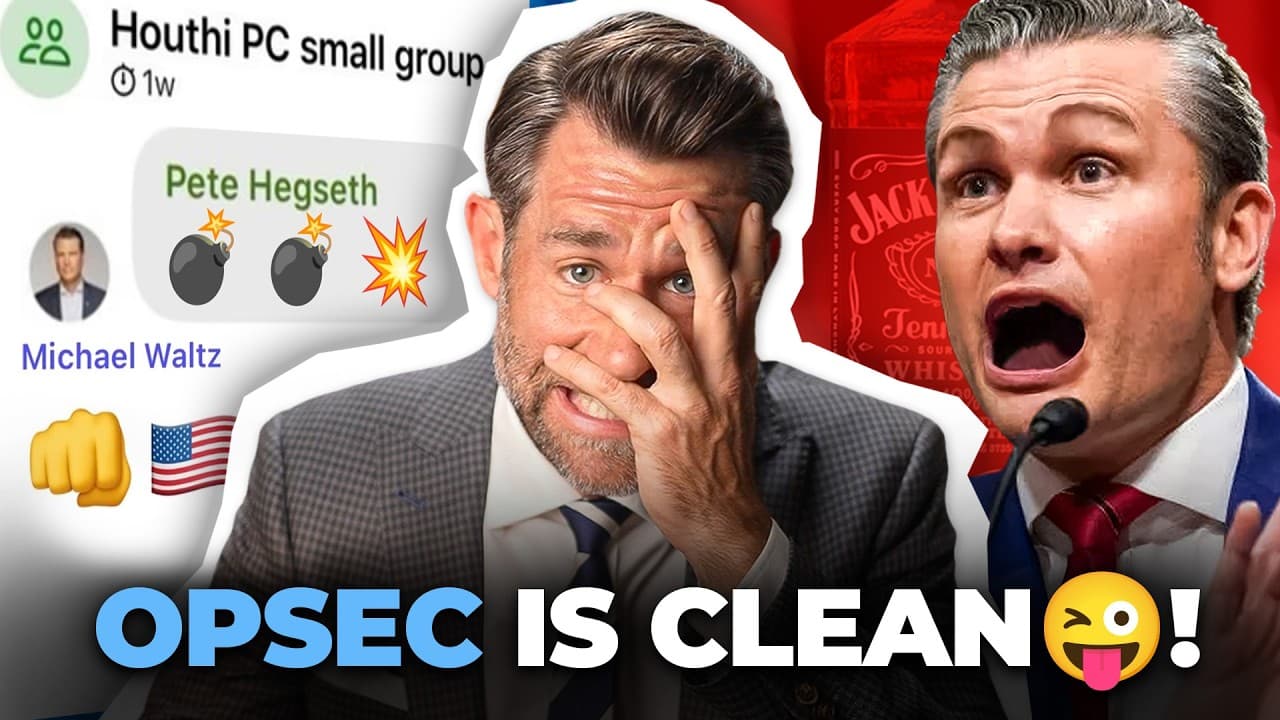
Texting military plans on Signal is illegal because it involved the accidental inclusion of a journalist in a chat about sensitive operations, potentially violating the Espionage Act. Signal is not authorized for government communications about classified information, and using it raises serious security concerns. This incident underscores the need for stricter adherence to protocols when handling national defense information.
Transcript
- Look, we've all been there. You're trash talking a friend, but you accidentally send the text straight to them. Instead of texting your boss goodbye, you say, I love you. Then you accidentally send all your active war plans to the editor-in-chief of the Atlantic. Whoopsie! Luckily, that party didn't make national security, the cornerstone of thei... Read More
Key Insights
- The accidental inclusion of a journalist in a Signal chat led to the exposure of sensitive military plans, highlighting severe lapses in operational security.
- Signal, while popular for privacy, is not approved for transmitting classified information, raising concerns about its use for government communications.
- The Espionage Act could have been violated due to the gross negligence in handling national defense information by top officials.
- Federal Records Act violations may also have occurred due to the use of Signal's message deletion feature, which contravenes record retention laws.
- The incident underscores the dangers of using unsecured communication channels for sensitive discussions, potentially risking national security.
- Comparisons were drawn to the Hillary Clinton email controversy, questioning the consistency in handling such breaches.
- The Trump administration's response to the breach was criticized as inadequate, with potential legal repercussions for involved officials.
- The situation raises broader questions about the secure handling of national defense information and accountability for breaches.
Install to Summarize YouTube Videos and Get Transcripts
Explore YouTube Video Summarizer or Get YouTube Transcript Extractor
Questions & Answers
Q: What led to the exposure of sensitive military plans?
The exposure occurred when a journalist was mistakenly added to a Signal chat by national security officials discussing military plans, highlighting a severe breach of operational security and negligence in handling sensitive information.
Q: Why is the use of Signal problematic for government communications?
Signal is not approved for transmitting classified information due to its vulnerabilities and lack of compliance with federal records retention laws, making its use for government communications a significant security risk.
Q: What legal issues could the officials face due to this breach?
Officials involved could face charges under the Espionage Act for gross negligence in handling national defense information and failing to report the unauthorized disclosure, as well as violations of the Federal Records Act.
Q: How does this incident compare to the Hillary Clinton email controversy?
The incident draws parallels to the Clinton email controversy, with similar allegations of mishandling sensitive information, raising questions about consistency in legal and public responses to such breaches.
Q: What are the potential consequences of using unsecured channels for sensitive discussions?
Using unsecured channels like Signal for sensitive discussions risks unauthorized access to national defense information, potentially endangering national security and violating federal laws designed to protect such information.
Q: What was the Trump administration's response to the breach?
The Trump administration's response was criticized as inadequate, with officials downplaying the severity of the breach, despite the potential legal repercussions and the serious nature of the security lapse.
Q: Why is record retention important for government communications?
Record retention is crucial for transparency and accountability in government operations, ensuring that historical records are preserved for public scrutiny and compliance with legal requirements, which was compromised in this incident.
Q: What broader questions does this incident raise?
The incident raises broader questions about the secure handling of national defense information, the adequacy of current security protocols, and the accountability mechanisms for breaches, emphasizing the need for reform and stricter adherence to security standards.
Summary & Key Takeaways
-
A Signal chat involving high-ranking officials mistakenly included a journalist, exposing sensitive military plans, and raising serious legal and security concerns.
-
The use of Signal for discussing classified information violated federal laws, with officials potentially facing charges under the Espionage Act.
-
The incident highlights the need for stricter adherence to security protocols to prevent unauthorized disclosures of national defense information.
Read in Other Languages (beta)
Share This Summary 📚
Summarize YouTube Videos and Get Video Transcripts with 1-Click
Try YouTube Summary with ChatGPT & Claude or YouTube Transcript Generator
Explore More Summaries from LegalEagle 📚





Summarize YouTube Videos and Get Video Transcripts with 1-Click
Try YouTube Summary with ChatGPT & Claude or YouTube Transcript Generator