Can Trump Legally Serve a Third Term as President?
TL;DR
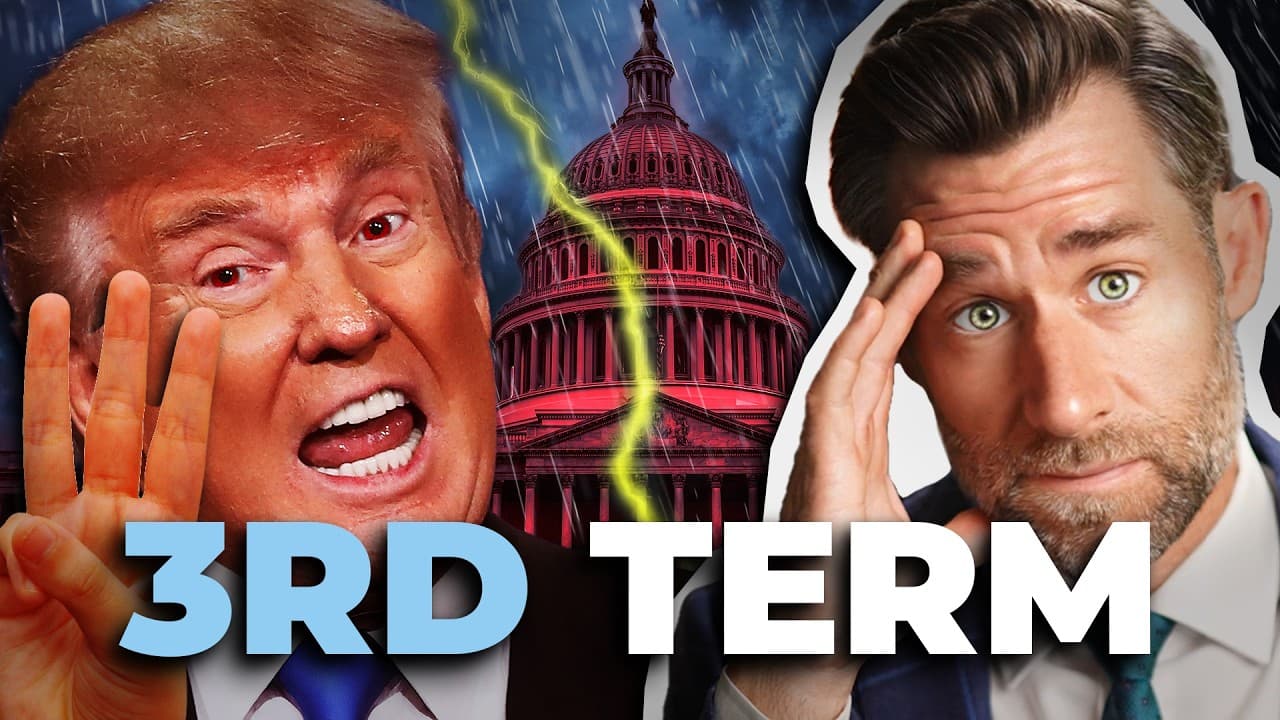
Donald Trump cannot legally serve a third term as President due to the 22nd Amendment, which restricts individuals to two terms. However, some argue there's a loophole allowing a third term if not elected directly. This theory is largely dismissed by legal experts as contrary to the amendment's intent.
Transcript
So, we're doing third terms now. Yes. Last week, the media dropped a story that they considered an absolute bombshell. Donald Trump says he hasn't ruled out running for a third term. Now, it seems like we've been through this before on this channel, and I didn't expect to have to relitigate this question quite so soon. So, everyone listen up. The C... Read More
Key Insights
- The 22nd Amendment limits a person to two terms as President of the United States.
- Legal scholars debate a potential loophole in the 22nd Amendment regarding non-elective means to assume the presidency.
- The framers of the Constitution initially did not set term limits for the presidency.
- Franklin D. Roosevelt was the only U.S. President to serve more than two terms.
- The 12th Amendment prevents someone ineligible to be President from serving as Vice President.
- Legal experts largely agree that the 22nd Amendment's intent was to limit Presidents to two terms.
- The concept of 'lawyer brain' highlights legal arguments that may overlook practical or historical context.
- Political headlines can shape public perception of constitutional debates and presidential eligibility.
Install to Summarize YouTube Videos and Get Transcripts
Explore YouTube Video Summarizer or Get YouTube Transcript Extractor
Questions & Answers
Q: How does the 22nd Amendment limit presidential terms?
The 22nd Amendment limits an individual to being elected as President of the United States no more than twice. This means a person can serve a maximum of two terms, totaling eight years, unless they assumed the presidency as Vice President and served less than two years of the prior President's term.
Q: What historical events led to the 22nd Amendment?
The 22nd Amendment was ratified following Franklin D. Roosevelt's unprecedented four terms as President. His extended presidency during the Great Depression and World War II led to concerns about the concentration of power, prompting Congress to pass the amendment to prevent future Presidents from serving more than two terms.
Q: Is there a legal loophole for a third presidential term?
Some legal scholars suggest a loophole exists in the 22nd Amendment, allowing a third term if not elected directly. However, this interpretation is widely dismissed as it contradicts the amendment's intent to limit Presidents to two terms, aiming to prevent any form of extended tenure in office.
Q: Can a former President become Vice President?
The 12th Amendment prevents someone who is ineligible to be President from serving as Vice President. This means a two-term President, barred from re-election by the 22nd Amendment, is also ineligible to serve as Vice President, ensuring they cannot ascend to the presidency again through succession.
Q: What role did Franklin D. Roosevelt's presidency play in term limits?
Franklin D. Roosevelt's four-term presidency highlighted the potential for extended executive power, leading to concerns about democracy and the balance of power. This prompted Congress to propose the 22nd Amendment, ensuring future Presidents could not serve more than two terms, thus preserving democratic principles.
Q: How do legal interpretations of the 22nd Amendment differ?
Legal interpretations of the 22nd Amendment vary, with some suggesting a loophole for non-elective means of assuming the presidency. However, the majority of legal scholars and historical analyses agree that the amendment's purpose is to restrict Presidents to two terms, preventing any extension of executive power.
Q: What are the constitutional requirements to become President?
To become President of the United States, an individual must be a natural-born citizen, at least 35 years old, and have resided in the U.S. for at least 14 years. Additionally, amendments such as the 14th and 12th impose further restrictions, such as barring insurrectionists from office and disqualifying ineligible individuals from the vice presidency.
Q: How does media coverage influence public perception of presidential eligibility?
Media coverage plays a significant role in shaping public perception of presidential eligibility by framing the debate around constitutional amendments and potential loopholes. Different political biases in media outlets can lead to varied interpretations, influencing how audiences perceive the legality and possibility of a third presidential term.
Summary & Key Takeaways
-
The 22nd Amendment to the U.S. Constitution limits a person to two terms as President. Legal experts argue that while there is theoretical debate over a loophole for non-elective means of assuming the presidency, the amendment's intent is clear in preventing more than two terms.
-
Historical precedents, such as Franklin D. Roosevelt's four terms, prompted the ratification of the 22nd Amendment. This amendment was designed to prevent any future President from serving more than two terms, maintaining a balance of democratic choice and power limitation.
-
Legal interpretations of the 22nd Amendment vary, with some suggesting a loophole for assuming office without election. However, most legal scholars agree that the framers did not intend to create such a loophole, aiming instead to restrict the presidency to two terms.
Read in Other Languages (beta)
Share This Summary 📚
Summarize YouTube Videos and Get Video Transcripts with 1-Click
Try YouTube Summary with ChatGPT & Claude or YouTube Transcript Generator
Explore More Summaries from LegalEagle 📚






Summarize YouTube Videos and Get Video Transcripts with 1-Click
Try YouTube Summary with ChatGPT & Claude or YouTube Transcript Generator