How Does Added Sugar Affect the Brain and Heart?
TL;DR
Frequent added sugar intake can keep blood glucose elevated, promote inflammatory signaling, and contribute to advanced glycation end products that stiffen collagen around the heart and blood vessels. Even glucose at the high end of the normal range is associated with brain atrophy and vascular dementia risk, while exercise helps muscles remove glucose from the bloodstream.
Transcript
lots of people that listen to the podcast will probably have a good indication of well where's my body weight at and I probably go to the gym and I do all the rest of the stuff what else is happening how else can I motivate myself to pick the healthier option even if I know that my waistline isn't going to be the determining factor for this I'm not... Read More
Key Insights
- Blood glucose at the high end of the normal range is associated with increased atrophy in the hippocampus and amygdala compared with glucose at the lower end of that range. These brain regions contribute to learning, memory, and emotional regulation, although the cited findings are associative.
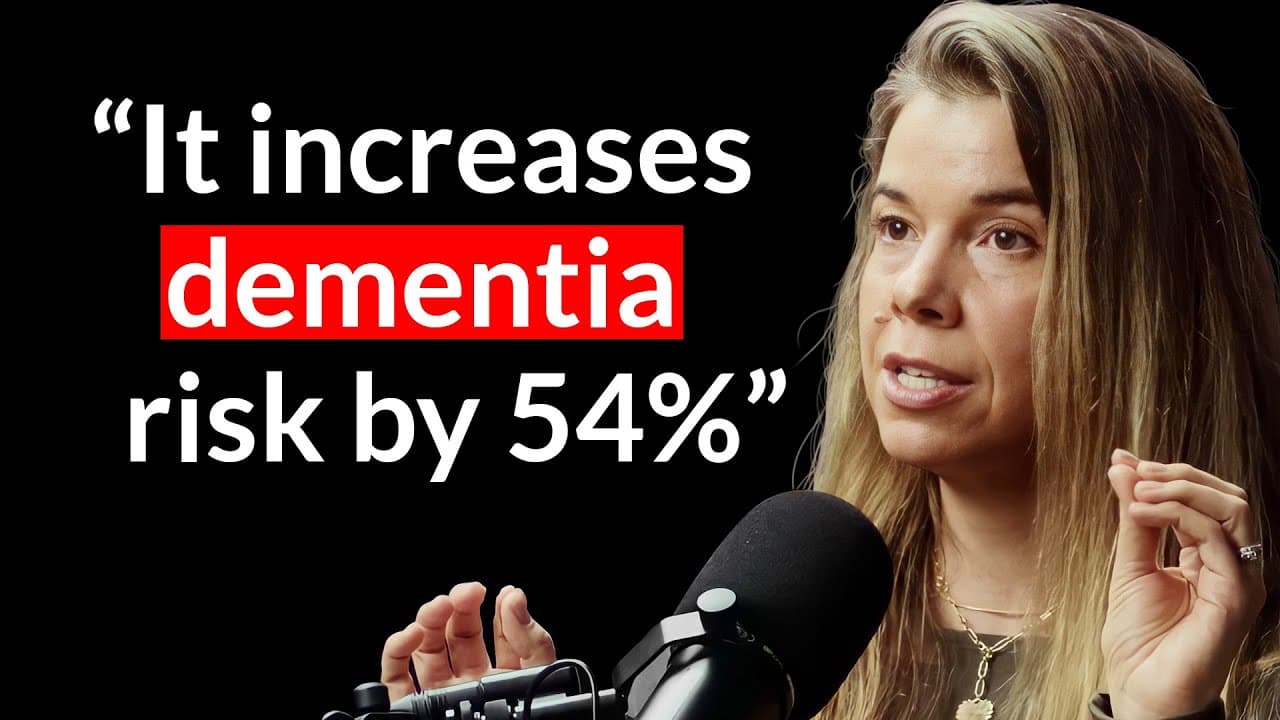
- Higher blood glucose is associated with a 54% increased risk of vascular dementia in the research discussed. The clip presents this as an association rather than proof that glucose alone directly causes dementia, but it identifies sustained glucose exposure as a concern for long-term brain health.
- Exercise helps muscles take up circulating glucose by bringing glucose transporters to the muscle surface. This creates pathways that allow glucose to enter muscle rather than remain in the bloodstream or move toward adipose tissue, making physical activity important for glucose disposal.
- Advanced glycation end products form when glucose reacts with substances such as proteins, lipids, and DNA. When this reaction affects long-lived collagen around the heart and blood vessels, it changes the protein's properties and contributes to tissue stiffness associated with cardiovascular aging.
- A 20-ounce sugar-sweetened beverage consumed regularly by men was linked to a 100% increase in inflammatory markers after three weeks in the study described. The example illustrates how added sugar can produce measurable inflammation even before the discussion reaches long-term cardiovascular or neurological outcomes.
- Inflammatory molecules can cross the blood-brain barrier and influence brain function. The transcript says this corrects an older belief that such molecules could not enter the brain, and it connects their presence with immediate changes in mood, cognition, and the foggy feeling associated with immune activation.
- Inflammation can redirect tryptophan metabolism away from serotonin and toward kynurenine. Because serotonin supports cognition, executive function, and mood, this shift may reduce those functions while promoting immune activity and producing quinolinic acid, a neurotoxin associated with depression.
- EPA can blunt an inflammatory response linked to depressive symptoms in the experimental example discussed. Healthy people given lipopolysaccharide developed inflammation and depressive symptoms, while blunting that response with EPA, an omega-3 fatty acid, prevented the depressive mood described in the clip.
Install to Summarize YouTube Videos and Get Transcripts
Explore YouTube Video Summarizer or Get YouTube Transcript Extractor
Questions & Answers
Q: How does added sugar affect the brain?
Added sugar can promote higher blood glucose and inflammation, both of which are linked in the clip to poorer brain health. Glucose at the high end of the normal range is associated with greater atrophy in the hippocampus and amygdala. Inflammatory molecules can also cross the blood-brain barrier, affect mood, and alter metabolic pathways involved in cognition and executive function.
Q: Can normal blood glucose levels still affect brain health?
Blood glucose within the normal range may still matter because people at its higher end showed more atrophy in the hippocampus and amygdala than people at its lower end in the studies discussed. These areas contribute to learning, memory, and emotional regulation. The evidence described is associative, so it does not establish that higher normal glucose directly caused the observed atrophy.
Q: How can excess glucose stiffen the heart and blood vessels?
Excess circulating glucose can react with proteins, lipids, and DNA through the reaction described in the clip. This process forms advanced glycation end products. When glucose modifies long-lasting collagen around the heart and lining the blood vessels, the collagen's properties change and become stiffer, contributing to age-related stiffening of cardiovascular tissues and potentially affecting cardiovascular disease risk.
Q: How does exercise help control circulating glucose?
Exercise causes more glucose transporters to move to the muscle, opening pathways that let glucose enter muscle tissue. This helps dispose of glucose where it can be used rather than allowing it to remain in the bloodstream or move toward adipose tissue. Without sufficient exercise, circulating glucose persists longer and has more opportunity to participate in damaging glycation reactions.
Q: Why can sugar-related inflammation affect mood?
Sugar-related inflammation can affect mood because inflammatory molecules are able to cross the blood-brain barrier. The clip cites an experiment in which healthy people injected with lipopolysaccharide developed substantial inflammation and depressive symptoms, unlike those given saline. It also explains that inflammation changes tryptophan metabolism, potentially reducing serotonin production and generating compounds associated with depression.
Q: What happens to tryptophan during inflammation?
Inflammation redirects tryptophan away from its conversion into serotonin and toward kynurenine metabolism. Serotonin is described as supporting cognition, executive function, and mood. The alternative pathway helps activate immune responses because the body behaves as though it is confronting a pathogen. Kynurenine can then be metabolized into quinolinic acid, which the clip identifies as a neurotoxin associated with depression.
Q: Can a sugar-sweetened drink increase inflammation?
A study discussed in the clip found that men consuming a 20-ounce sugar-sweetened beverage had a 100% increase in inflammatory markers after three weeks. This example supports the claim that added sugar can substantially activate inflammation. Those inflammatory molecules may then enter the brain, influence mood and cognition, and produce a foggy feeling resembling the mental effects of illness.
Q: Why might sugar reduce short-term mental performance?
Sugar may provide a brief high, but the clip argues that the effect fades quickly and can be followed by impaired mental performance. Added sugar promotes inflammation, and immune activation can create brain fog similar to feeling sick. Inflammation may also divert tryptophan away from serotonin production, affecting cognition, executive function, and mood when clear thinking is needed.
Summary & Key Takeaways
-
Added sugar can raise blood glucose toward the high end of the normal range even when a person does not have diabetes. Studies discussed in the clip associate this range with greater atrophy in brain regions involved in learning, memory, and emotional regulation, as well as a higher risk of vascular dementia.
-
Exercise helps move circulating glucose into muscle by bringing glucose transporters to the muscle and opening pathways for uptake. Without enough activity, glucose remains in the bloodstream, where it can react with proteins, lipids, and DNA. The resulting advanced glycation end products can change collagen and make cardiovascular tissues stiffer.
-
Sugar-related inflammation can influence the brain because inflammatory molecules can cross the blood-brain barrier. Inflammation may alter mood and redirect tryptophan away from serotonin production toward kynurenine metabolism, which can produce the neurotoxin quinolinic acid. This process may impair cognition, executive function, mood, and short-term mental performance.
Read in Other Languages (beta)
Share This Summary 📚
Summarize YouTube Videos and Get Video Transcripts with 1-Click
Try YouTube Summary with ChatGPT & Claude or YouTube Transcript Generator
Explore More Summaries from FoundMyFitness Clips 📚






Summarize YouTube Videos and Get Video Transcripts with 1-Click
Try YouTube Summary with ChatGPT & Claude or YouTube Transcript Generator