Why Has Iran's Oil Wealth Failed Its People?
TL;DR
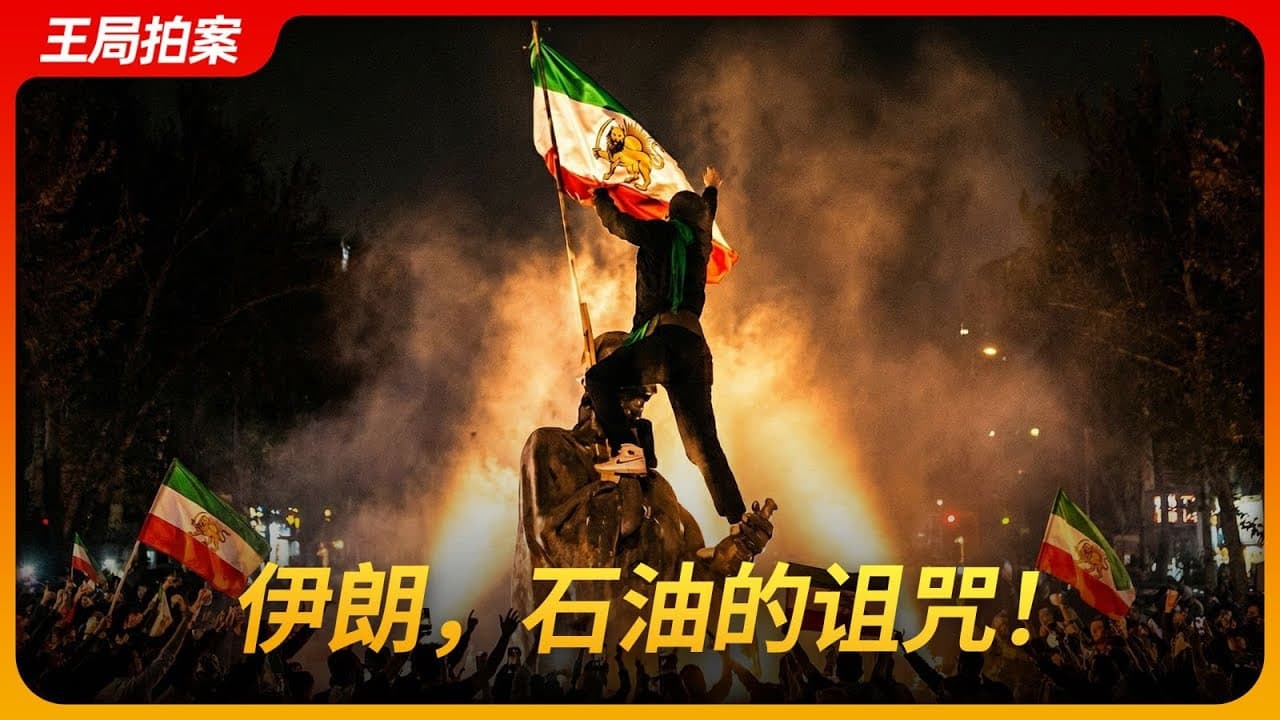
Iran’s vast oil wealth has not produced broad prosperity because, according to the analysis, dependence on resource income weakened economic diversification while sanctions, currency collapse, inflation, and theocratic repression deepened the crisis. The unrest described began with merchants seeking exchange-rate stability, then rapidly expanded into nationwide protests over food prices, political rule, and Khamenei’s leadership.
Transcript
What you're looking at right now is footage from yesterday, January 13th, on the streets of Tehran, Iran's capital. Tens of thousands of protesters took to the streets chanting slogans like down with the dictator and Khamenei, get out. Everyone knows who Khamenei is in Iran. He's the supreme religious leader. Iran is a theocracy and the ultimate ru... Read More
Key Insights
- Iran’s protest movement reportedly began with an economic strike on December 28, when merchants at Tehran’s Aladdin Market stopped trading because rapid currency depreciation made it impossible to price imported phones and replace inventory without losing money.
- Iran’s currency crisis is illustrated by the gap between an official exchange rate of about 40,000 rials per US dollar and a street rate that moved from roughly 1 million to 1.42 million rials per dollar.
- Food inflation is identified as a central cause of public anger, with the transcript reporting a 72 percent increase in food prices over the preceding year and saying that many ordinary Iranians could no longer afford adequate food.
- The protest demands expanded rapidly from stabilizing the exchange rate to securing food and opposing dictatorship. The transcript says demonstrations reached nearly 100 Iranian cities within 24 hours, showing that commercial grievances had become a broader political uprising.
- Iran’s political system is described as a theocracy in which Supreme Leader Khamenei holds final authority. Consequently, slogans demanding his removal represented a direct attack on both the country’s political leadership and the religious legitimacy claimed by the regime.
- The government response is described as increasingly violent after January 2, with security forces firing on protesters. The transcript says Khamenei called demonstrators traitors on January 8, after which large-scale clashes and reported gunfights occurred between protesters and the Revolutionary Guard.
- Iran’s information controls are presented as a major source of uncertainty about the uprising. Conflicting outside accounts describe either a regime approaching collapse or a government restoring control through mass repression, while Starlink receivers allegedly became targets of official searches.
- The resource curse is presented as the central explanation for Iran’s long-term economic weakness. The analysis argues that easy revenue from abundant oil can discourage innovation and diversification, leaving a resource-dependent economy vulnerable to sanctions, political failure, and external shocks.
Install to Summarize YouTube Videos and Get Transcripts
Explore YouTube Video Summarizer or Get YouTube Transcript Extractor
Questions & Answers
Q: Why did the latest protests in Iran begin?
The unrest described in the transcript began on December 28 with a strike by merchants at Tehran’s Aladdin Market, a center for mobile phones and imported electronics. Rapid depreciation of the rial made replacement inventory costlier almost immediately after each sale, making ordinary commerce unsustainable. The merchants initially demanded exchange-rate stability, but their strike quickly inspired wider protests over food costs, dictatorship, and political repression.
Q: How did currency depreciation hurt Iranian merchants?
Currency depreciation prevented merchants from setting prices that would cover the cost of replacing their goods. The transcript gives an example in which a phone sold for 10 million rials might cost 11 million to replace, while the next replacement could rise to 15 million. Even repeated price increases could not keep pace, so sellers risked losing purchasing power with every transaction and could no longer operate normally.
Q: How severe was Iran’s inflation and exchange-rate crisis?
The transcript reports that one US dollar was worth about 1.42 million rials on the street, compared with roughly 1 million rials a year earlier and an official rate of about 40,000 rials. It also states that food prices rose by 72 percent over the preceding year. These conditions reduced purchasing power, disrupted business planning, and left many people unable to afford food.
Q: How did economic protests become political protests?
The initial strike focused on stabilizing the exchange rate, but support spread rapidly beyond Tehran’s electronics merchants. People began demanding food and chanting against dictatorship, while some directly called for Khamenei to leave. According to the transcript, protests appeared in nearly 100 cities within 24 hours. This expansion transformed a specific commercial dispute into a nationwide challenge to economic management and theocratic authority.
Q: How did Iranian authorities respond to the protests?
According to the transcript, Iranian authorities began firing on demonstrators on January 2. On January 8, Khamenei described the protesters as traitors and characterized the events as riots or unrest, after which the Revolutionary Guard was ordered to show no mercy. The account says large-scale confrontations and gunfights followed, with protesters badly outmatched and many people killed, including a reported 16-year-old victim.
Q: Why is reliable information about the Iranian unrest difficult to obtain?
Reliable assessment is difficult because Iran tightly restricts news and access to the global internet. The transcript describes a national firewall, dependence on externally provided VPN services, and official efforts to locate hidden Starlink receivers. Consequently, outside reports conflict sharply. Some portray the government as close to collapse, while others suggest that extensive security-force violence has suppressed demonstrations and stabilized the regime.
Q: What does the resource curse mean in Iran’s case?
The resource curse is described as the paradox in which abundant natural resources provide easy income but weaken incentives for innovation, diversification, and broader modernization. The analysis argues that Iran rose because oil generated wealth but also declined because dependence on oil obstructed long-term development. When sanctions, political conflict, or currency instability disrupted that system, the economy lacked sufficient alternative sources of resilience and prosperity.
Q: Why does the analysis compare Iran with Saudi Arabia?
The comparison highlights different outcomes among neighboring oil-rich states. The transcript says Iran holds roughly 100 billion barrels of oil reserves, yet its 2024 GDP was estimated at about $436.9 billion and per capita income at $5,778. Saudi Arabia’s GDP was presented as roughly $1 trillion to $1.2 trillion, with per capita income around $30,000 to $35,000, illustrating Iran’s weaker economic performance.
Summary & Key Takeaways
-
The account says the latest unrest began on December 28, when merchants at Tehran’s Aladdin Market closed their businesses after severe currency depreciation made normal pricing and restocking impossible. Their economic demand for exchange-rate stability quickly attracted broader support, and demonstrations reportedly spread to nearly 100 cities within 24 hours.
-
The protests evolved from complaints about inflation and food affordability into a direct challenge to Iran’s theocratic system. According to the transcript, authorities opened fire beginning January 2, while Khamenei labeled protesters traitors on January 8 and ordered the Revolutionary Guard to suppress the unrest without mercy.
-
The analysis presents Iran as a case of the oil or resource curse. Despite holding roughly 100 billion barrels of oil reserves, Iran remained much poorer than neighboring Saudi Arabia by the cited GDP and income estimates. Dependence on natural resources allegedly obstructed diversification, innovation, modernization, and durable economic development.
Read in Other Languages (beta)
Share This Summary 📚
Summarize YouTube Videos and Get Video Transcripts with 1-Click
Try YouTube Summary with ChatGPT & Claude or YouTube Transcript Generator
Explore More Summaries from 王志安 📚

Summarize YouTube Videos and Get Video Transcripts with 1-Click
Try YouTube Summary with ChatGPT & Claude or YouTube Transcript Generator