How Travelers Uses AI to Handle Insurance Claims
TL;DR
Travelers uses an AI claim assistant to guide customers through first notice of loss, answer coverage and deductible questions, create claims in legacy systems, and initiate services such as body shop or rental car scheduling. The company expanded its pilot from eight states to nationwide availability within two months, supported by cross-functional testing, responsible AI governance, and continuous evaluation.
Transcript
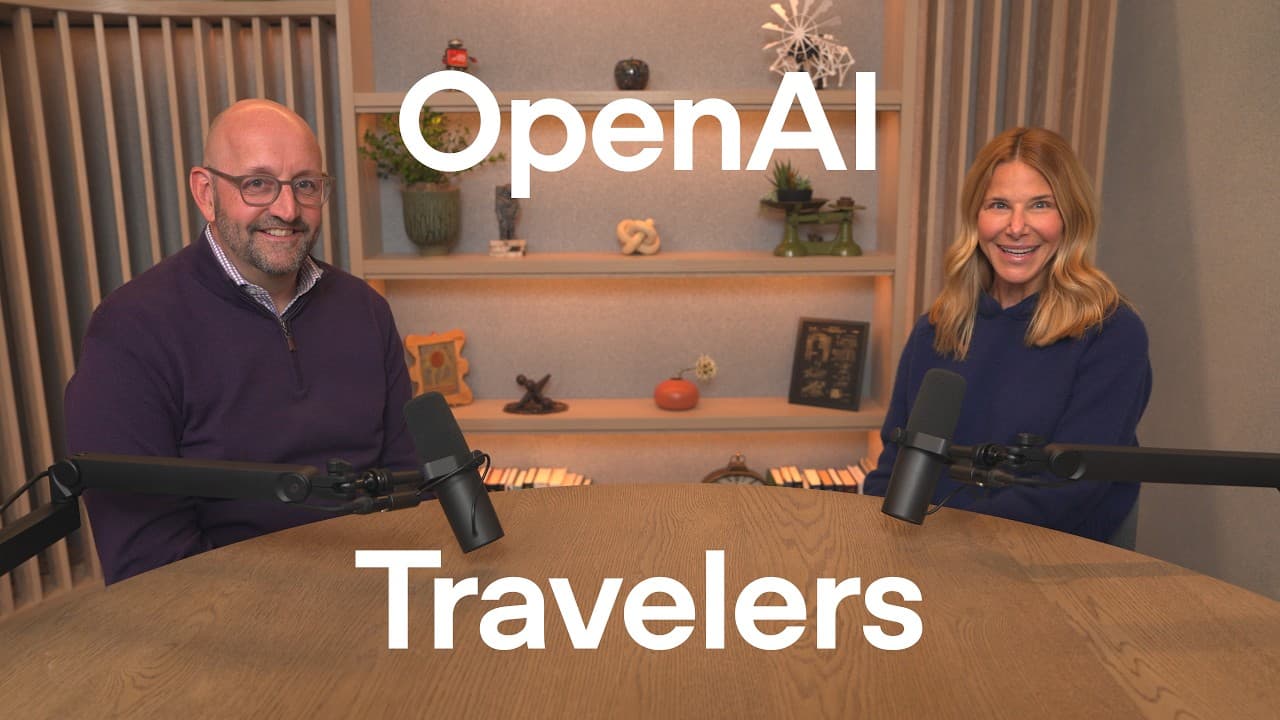
Well, hi everybody. I am thrilled to be joined today by Eric Rowan, who's the senior vice president and chief information officer at Travelers Insurance. Eric, great to see you. >> Great to see you, Denise. >> So, let's start out at the highest level. So, maybe just tell us a little bit about your role at Travelers Insurance, what you look after, a... Read More
Key Insights
- First notice of loss sets the tone for the entire claim process because customers may be stressed, uncertain about filing, and seeking immediate guidance after an accident or storm. Accurate information collected at this stage enables subsequent claim activities to proceed more smoothly.
- Travelers handles about 1.5 million claims annually, making claim intake a high-volume workflow with relevance across its lines of business. The company began with auto physical damage while expecting the underlying capability to scale to other insurance lines.
- The AI claim assistant gives callers an optional way to file a claim without waiting for a contact center specialist. This capability is particularly useful when events such as hurricanes generate concentrated call volumes that are difficult to address through staffing alone.
- Multiple AI agents work together without being apparent to the customer. They interpret intent, clarify questions, collect required information, establish the claim in Travelers' legacy system, and initiate services such as body shop appointments or rental car scheduling.
- The loss consultation agent helps customers decide whether to file by addressing questions about applicable coverage, deductibles, possible pricing effects, fault, and whether to approach Travelers or another insurer. A contact center specialist remains available whenever the customer requests one.
- AI development at Travelers uses a cross-functional operating model involving data engineers, software engineers, data scientists, legal professionals, architects, and subject matter experts. The resource balance shifted from roughly 80% technology work in traditional development to approximately 50% technology and 50% business participation.
- Continuous evaluation replaces a conventional sequence of requirements, development, user acceptance testing, and launch. Business participants work directly with prompts, evaluations, agents, observability, and LLM judges, enabling the team to test, learn, and implement changes daily rather than meeting only periodically.
- Travelers expanded the AI claim assistant from an eight-state pilot to nationwide deployment within two months. Its controls combine an established responsible AI framework, technology governance, and three claim laws prioritizing correct payment, customer experience, and operational efficiency in that order.
- More videos from this channel:
- More from this channel: OpenAI
Install to Summarize YouTube Videos and Get Transcripts
Explore YouTube Video Summarizer or Get YouTube Transcript Extractor
Questions & Answers
Q: What is first notice of loss in insurance claims?
First notice of loss is the opening stage of the claim process, when a customer contacts an insurer after an event such as an accident or storm. The customer may ask whether a claim should be filed and how to proceed. Collecting accurate and timely information at this point supports triage, assignment to a claim professional, and services such as body shop scheduling.
Q: Why did Travelers apply AI to first notice of loss?
Travelers chose first notice of loss because it is both operationally critical and high volume. The company receives about 1.5 million claims each year, and the workflow crosses its lines of business. Claim intake requires structured information, but customer questions and required explanations vary, making adaptive, non-deterministic agents useful for guiding each caller through the filing decision and process.
Q: How does the Travelers AI claim assistant work?
Callers are offered the choice to interact with the AI claim assistant. Multiple agents then work together seamlessly to listen, identify intent, explain relevant information, collect claim details, and guide the customer through filing. The system can create the claim in Travelers' legacy system and initiate activities such as scheduling a body shop or rental car. Human assistance remains available on request.
Q: What questions can the loss consultation agent answer?
The loss consultation agent addresses questions customers commonly have before filing. It can help clarify which coverage may apply, what the customer's deductible is, what effect filing may have on pricing, and what to consider when fault is uncertain. It can also help customers consider whether to file with Travelers or proceed through another insurance company.
Q: How does Travelers handle sudden increases in claim calls?
Travelers uses the AI claim assistant as an optional channel for callers, which helps address periods when many claims arrive within a short time. A hurricane, for example, can create demand that is difficult to match with contact center staffing and may produce longer hold times. The assistant can immediately begin guiding participating customers while preserving access to contact center specialists.
Q: How did AI change Travelers' software development model?
Traditional software development at Travelers was described as roughly 80% technology work and 20% business work, with requirements gathered before later user acceptance testing. AI development shifted that balance to approximately 50% technology and 50% business participation. Business specialists became directly involved in evaluations, LLM judges, prompts, testing, and daily iterations alongside technical, legal, architectural, and data teams.
Q: What governance principles guide Travelers' claims AI?
Travelers combines its established responsible AI framework with its technology governance process and three claim laws. The first law is to pay what is owed on every claim. The second is to provide a strong customer or agent experience without violating the first. The third is to operate efficiently and effectively without compromising either of the higher-priority laws.
Q: How did Travelers expand its AI claim assistant nationwide?
Travelers moved from a pilot in eight states to nationwide deployment within two months. The company supported that expansion through cross-functional collaboration, iterative testing, evaluations, LLM judges, and a mission control concept used for testing, the pilot, and production. Leadership and contact center personnel were also shown how the agents and observability worked, building familiarity with the system.
Summary & Key Takeaways
-
Travelers selected first notice of loss because it shapes the rest of the claim process and affects about 1.5 million claims annually. Accurate, timely intake supports triage, assignment to claim professionals, and self-service options, while adaptive AI agents can address the varied questions customers ask when deciding whether to file.
-
Customers calling Travelers can choose to interact with an AI claim assistant instead of waiting for a contact center specialist. Multiple agents listen for intent, provide explanations, collect structured information, create the claim in a legacy system, and initiate related services. Customers retain the option to request a human specialist at any time.
-
Travelers treated AI as a new operating model requiring equal participation from technology and business teams. Engineers, data scientists, legal staff, architects, and subject matter experts jointly developed evaluations and LLM judges. Existing responsible AI and technology governance, combined with three claim laws, supported rapid expansion from eight states to nationwide deployment.
Read in Other Languages (beta)
Share This Summary 📚
Summarize YouTube Videos and Get Video Transcripts with 1-Click
Try YouTube Summary with ChatGPT & Claude or YouTube Transcript Generator
Explore More Summaries from OpenAI 📚





Summarize YouTube Videos and Get Video Transcripts with 1-Click
Try YouTube Summary with ChatGPT & Claude or YouTube Transcript Generator