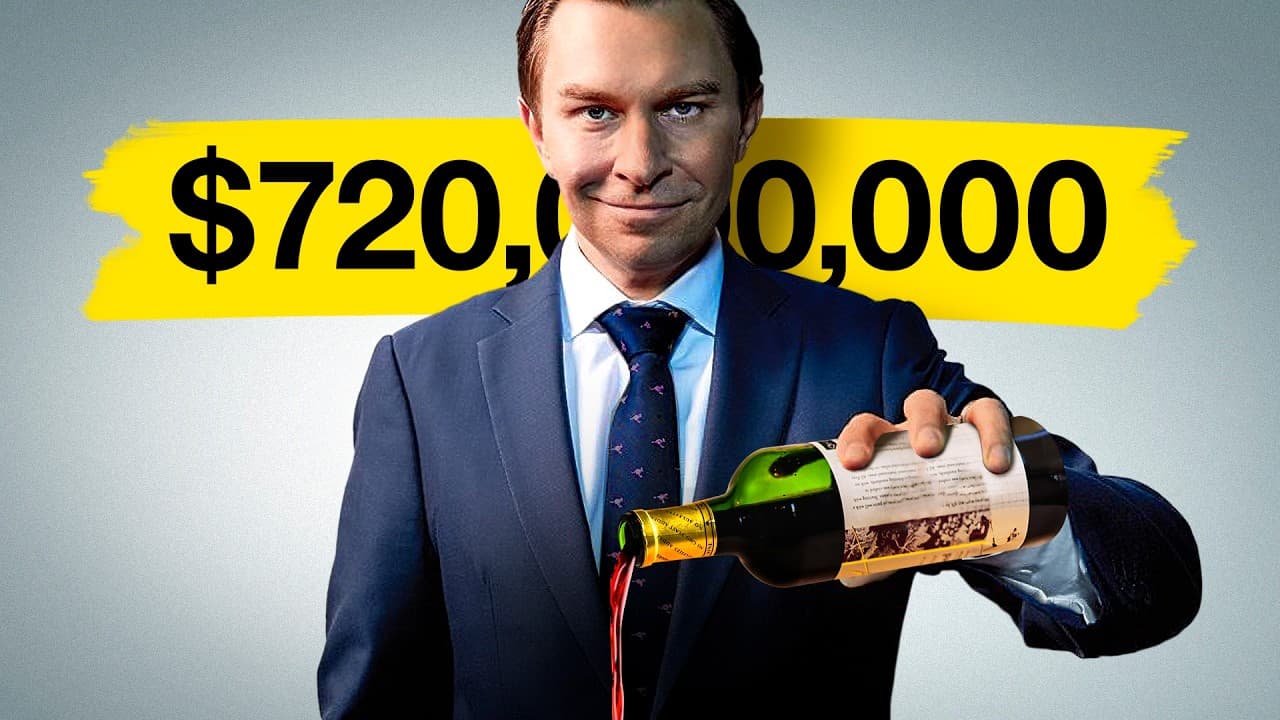
The David Sinclair $720,000,000 Train Wreck!
TL;DR
Harvard Professor David Sinclair allegedly scammed pharmaceutical giant GSK out of $720 million by publishing misleading studies on Resveratrol and is now using a similar strategy with a different molecule.
Transcript
this is the story of how Harvard Professor David Sinclair got away with $720 million and is using the same strategy to do it again today there have been some recent developments in The Saga which is why I'm doing this video now and I'll let you know about those developments at the end of the video The Story begins in 1999 where lab partner of David... Read More
Key Insights
- ✡️ David Sinclair allegedly scammed GSK out of $720 million by publishing misleading studies on Resveratrol.
- 👍 Sinclair protected himself through incompetence and lab errors, making it challenging for GSK to prove intentional deception.
- 🥺 GSK's attempts to replicate Sinclair's results were unsuccessful, leading to the shutdown of their research division.
Install to Summarize YouTube Videos and Get Transcripts
Explore YouTube Video Summarizer or Get YouTube Transcript Extractor
Questions & Answers
Q: How did David Sinclair protect himself from GSK's attempts to get their money back?
Sinclair created plausible deniability by not performing initial experiments correctly and making amateur mistakes, making it difficult for GSK to prove he intentionally tricked them.
Q: Did Resveratrol actually activate the satuan1 enzyme as claimed by Sinclair?
No, it was revealed that Sinclair's results were nothing more than lab errors caused by a fluorescent dye mixed with Resveratrol, and subsequent studies confirmed this.
Q: Did GSK test Resveratrol in clinical trials?
Yes, GSK conducted trials using micronized Resveratrol, but they had to be terminated due to severe side effects, and the research was discontinued.
Q: What is David Sinclair's current venture?
Sinclair is now promoting a proprietary blend of NMN, a different molecule, and using a similar strategy to what he did with Resveratrol.
Summary & Key Takeaways
-
In 1999, David Sinclair's lab partner showed that overactivating the enzyme CO2 in yeast could extend lifespan by 30%.
-
Sinclair published studies claiming that Resveratrol extended the lifespan of worms, flies, and mice, which led to GSK purchasing his company for $720 million.
-
GSK later discovered that Sinclair's results were not reproducible and could not get their money back as Sinclair had protected himself through incompetence and lab errors.
Read in Other Languages (beta)
Share This Summary 📚
Summarize YouTube Videos and Get Video Transcripts with 1-Click
Try YouTube Summary with ChatGPT & Claude or YouTube Transcript Generator
Explore More Summaries from Dr Brad Stanfield 📚
Summarize YouTube Videos and Get Video Transcripts with 1-Click
Try YouTube Summary with ChatGPT & Claude or YouTube Transcript Generator