Is Taurine Effective for Anti-Aging?
TL;DR
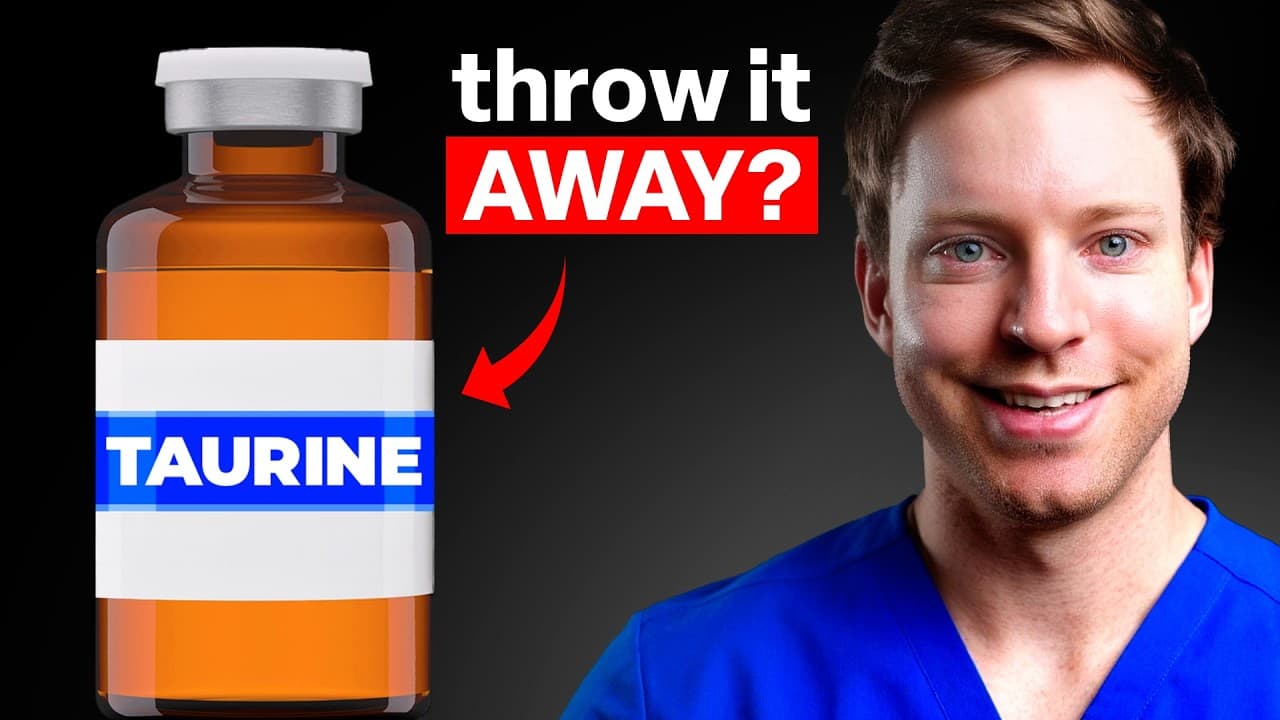
Recent studies challenge the idea that taurine supplements can extend lifespan by preventing age-related decline in taurine levels. While taurine showed lifespan benefits in animals, human data is inconsistent. Taurine levels do not consistently decrease with age, undermining the hypothesis that supplements can combat aging. Further research is needed to understand taurine's effects.
Transcript
Two years ago, a breakthrough study yielded exciting evidence that torine could help combat aging. But a study just published casts serious doubt about those earlier results. And this is actually a great thing, as I'll explain. So, is it time to throw away your torine supplements in the garbage? Well, let's take a look at what this new study tells ... Read More
Key Insights
- Taurine is an amino acid found in the brain, heart, and muscles, playing roles in energy metabolism and nervous system support.
- Previous studies suggested taurine supplementation could extend lifespan in worms and mice, leading to interest in its anti-aging potential.
- New research challenges the claim that taurine levels decline with age, which was a basis for its proposed anti-aging benefits.
- Cross-sectional studies indicated taurine declines with age, but longitudinal studies show stable or increasing levels over time.
- The new study used data from the Baltimore Longitudinal Study of Aging, revealing no consistent decline in taurine with age.
- Taurine's effects on markers of aging like muscle strength and body weight were inconsistent, questioning its anti-aging claims.
- Some human studies suggest taurine may improve parameters related to metabolic syndrome, but evidence quality varies.
- Taurine is generally considered safe, but more long-term studies are needed to confirm its potential health benefits.
Install to Summarize YouTube Videos and Get Transcripts
Explore YouTube Video Summarizer or Get YouTube Transcript Extractor
Questions & Answers
Q: How do taurine levels change with age?
Recent studies indicate that taurine levels do not consistently decline with age. Longitudinal data from the Baltimore Longitudinal Study of Aging shows stable or increasing taurine levels over time, contradicting earlier cross-sectional studies that suggested a decline. This finding challenges the hypothesis that taurine supplementation can combat aging by addressing age-related taurine decline.
Q: Can taurine supplements extend lifespan?
While early studies suggested taurine supplementation could extend lifespan in worms and mice, recent research challenges this idea for humans. The new findings show no consistent decline in taurine levels with age, undermining the theory that supplements can extend lifespan by preventing age-related decline. More research is needed to understand taurine's effects on human longevity.
Q: What are the potential health benefits of taurine?
Taurine may offer health benefits related to metabolic syndrome, including improved blood pressure, cholesterol, and insulin sensitivity. However, the quality of evidence varies, with some studies lacking critical information. Long-term studies are needed to validate these effects and determine taurine's role in promoting health and reducing disease risk.
Q: Is taurine safe for consumption?
Taurine is generally considered safe for consumption, with studies using doses between 1 g and 6 g per day showing no significant adverse effects. However, due to varying study quality and short durations, further long-term research is necessary to confirm its safety and efficacy, particularly in relation to specific health outcomes.
Q: What is the difference between cross-sectional and longitudinal studies?
Cross-sectional studies analyze data from a group of individuals at a single point in time, often leading to conclusions about trends like age-related changes. Longitudinal studies, however, track the same individuals over time, providing more accurate insights into how variables, such as taurine levels, change with age. Longitudinal data is generally more reliable for understanding long-term trends.
Q: Why did early studies suggest taurine could extend lifespan?
Early studies suggested taurine could extend lifespan based on experiments with worms and mice, where supplementation increased lifespan significantly. These findings led to the hypothesis that taurine supplementation could combat aging by preventing age-related decline. However, recent human studies challenge this notion, showing stable taurine levels with age.
Q: What are the limitations of current taurine research?
Current taurine research is limited by varying study quality, short durations, and inconsistent findings across different species. While some studies suggest health benefits, the evidence is mixed, and more long-term, high-quality research is needed to confirm taurine's effects on health and longevity, particularly in human populations.
Q: What should individuals consider before taking taurine supplements?
Before taking taurine supplements, individuals should consider the current evidence, which is mixed and primarily based on short-term studies. While taurine is generally safe, its long-term effects and efficacy in promoting health and longevity remain uncertain. Consulting with a healthcare professional is recommended to weigh potential benefits against risks based on individual health needs.
Summary & Key Takeaways
-
Recent findings suggest taurine levels do not decline with age, contradicting earlier studies that proposed taurine supplementation as an anti-aging strategy. Longitudinal data shows stable or increasing taurine levels, undermining the theory that supplements can extend lifespan by addressing age-related decline. Despite potential benefits in metabolic health, taurine's role in aging remains uncertain.
-
The new study analyzed data from the Baltimore Longitudinal Study of Aging and found no consistent decline in taurine levels with age. This challenges the hypothesis that taurine supplements can slow aging by preventing age-related decline. While taurine showed benefits in animal studies, human data is inconsistent, necessitating further research.
-
Taurine's potential health benefits include improved metabolic parameters, but the evidence is mixed. While some studies suggest taurine may help with blood pressure and cholesterol, the quality of evidence varies. Long-term studies are needed to validate these effects and determine taurine's role in promoting health and longevity.
Read in Other Languages (beta)
Share This Summary 📚
Summarize YouTube Videos and Get Video Transcripts with 1-Click
Try YouTube Summary with ChatGPT & Claude or YouTube Transcript Generator
Explore More Summaries from Dr Brad Stanfield 📚



Summarize YouTube Videos and Get Video Transcripts with 1-Click
Try YouTube Summary with ChatGPT & Claude or YouTube Transcript Generator