How to Build a Healthy Plate With Harvard's Guide
TL;DR
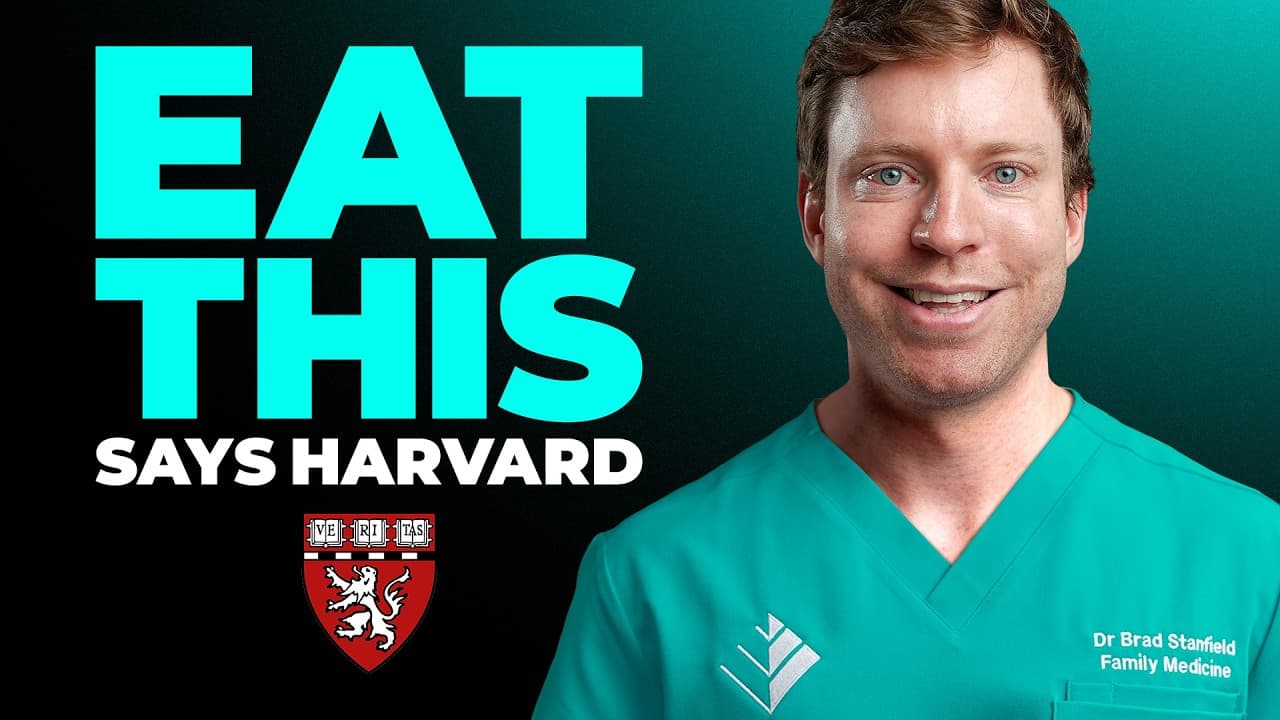
Build a healthy plate by prioritizing vegetables, fruits, whole grains, healthy proteins, and healthy fats rather than treating every grain, protein, or fat as equivalent. Harvard’s guide favors fatty fish, chicken, beans, legumes, and nuts while advising against red and processed meats; the presenter personally targets 1.2 grams of protein per kilogram of ideal body weight daily. Read on for the guide’s practical portions and protein evidence.
Transcript
When I talk to my patients at the clinic, I see this problem all of the time. They feel overwhelmed with conflicting information about a healthy diet. What they're looking for is a simple evidence-based guide to know what to put on their plate. And that's what the food pyramid was supposed to be, but it was a bit of a mess, and it was finally aband... Read More
Key Insights
- The 1992 food pyramid is an inadequate practical guide because its largest section emphasizes grains without clearly distinguishing whole grains from refined bread, cereal, rice, and pasta. Its illustration could therefore suggest that refined carbohydrates should form the foundation of a healthy diet.
- Dietary fats are not a single harmful category because the transcript distinguishes healthy fats from unhealthy fats. Grouping every fat and oil with sweets at the pyramid's top wrongly implies that all should be minimized as strongly as donuts and candy.
- Protein sources are not nutritionally interchangeable because Harvard's plate directs people toward fatty fish, chicken, beans, legumes, and nuts while advising them to avoid red and processed meats. The older pyramid obscured these differences by combining many protein foods into one category.
- MyPlate is easier to apply than serving-based guidance because it translates dietary balance directly into visible portions of a meal. It divides the plate among fruit, vegetables, grains, and protein, while presenting dairy separately in a cup beside the plate.
- Harvard's Healthy Eating Plate improves the MyPlate graphic by placing essential distinctions directly on the image instead of relying on accompanying fine print. It specifically labels the protein section as healthy protein, enlarges it somewhat, and makes the grains section somewhat smaller.
- Muscle preservation is a major reason to consider more protein because muscle loss can begin in the 30s and accelerate with aging, illness, and bed rest. The transcript states that muscle mass can decline by as much as 50% between ages 40 and 80.
- A protein target near 1.3 grams per kilogram of ideal body weight captures most lean-mass benefits described in a newer meta-analysis. Increasing intake up to that point had a large effect, while benefits above it were more modest, although resistance-trained individuals continued to gain.
- Higher-protein diets can support weight management because trials with equal total calories found stronger reductions in body weight and fat mass than standard diets. The higher-protein groups also gained lean body mass, which matters because significant weight loss is accompanied by some muscle loss.
Install to Summarize YouTube Videos and Get Transcripts
Explore YouTube Video Summarizer or Get YouTube Transcript Extractor
Questions & Answers
Q: How do you build a healthy plate using Harvard’s guide?
Build meals around vegetables, fruits, whole grains, healthy proteins, and healthy fats. Choose proteins such as fatty fish, chicken, beans, legumes, and nuts while avoiding red and processed meats. Harvard’s plate also makes the protein section somewhat larger and the grains section somewhat smaller than MyPlate.
Q: How does Harvard’s Healthy Eating Plate improve MyPlate?
Harvard’s guide places important distinctions directly on the diagram instead of leaving them in accompanying information. It labels the protein section as healthy protein, makes it somewhat larger, and reduces the grains section somewhat. It also identifies preferred protein sources and advises avoiding red and processed meats.
Q: What foods count as healthy protein in Harvard’s guide?
The healthy protein choices named are fatty fish, chicken, beans, legumes, and nuts. Harvard’s guide contrasts them with red and processed meats, which it advises people to avoid.
Q: What did the 1992 food pyramid get wrong?
The pyramid made grains its foundation without clearly prioritizing whole grains and grouped fats and oils with sweets. It also treated very different protein sources as interchangeable and recommended two to three dairy servings without good supporting evidence. Its serving-based format was difficult to translate into an actual meal.
Q: How much protein does the presenter aim to eat each day?
The presenter personally targets 1.2 grams of protein per kilogram of ideal body weight daily. The evidence discussed suggests that most lean-mass benefits are captured at roughly 1.3 grams per kilogram, with more modest additional effects above that level.
Q: Why might older adults need more protein?
Muscle loss can begin in the 30s and accelerate with aging, illness, and bed rest. Muscle mass may decline by as much as 50% between ages 40 and 80. An international expert group cited recommends 1 to 1.2 grams of protein per kilogram of ideal body weight daily for healthy people over 65.
Q: Does eating more than 1.3 grams of protein build more muscle?
A newer meta-analysis found a significant inflection point near 1.3 grams of protein per kilogram of ideal body weight daily. Lean body mass increased substantially as intake approached that amount, but additional effects were much more modest above it. People performing resistance training continued to gain beyond 1.3 grams.
Q: Can a higher-protein diet help with weight management?
Trials with equal total calories found stronger reductions in body weight and fat mass with higher-protein diets than with standard diets. The higher-protein groups also gained lean body mass, which matters because significant weight loss is accompanied by some muscle loss.
Summary & Key Takeaways
-
The 1992 food pyramid offered a memorable image but gave grains excessive prominence, failed to prioritize whole grains, grouped beneficial and harmful fats together, and treated very different protein sources as interchangeable. Its serving-based recommendations were also difficult to translate into the actual composition of a meal.
-
MyPlate improved dietary guidance by showing fruit, vegetables, grains, and protein as portions of a plate, with dairy beside it. Harvard's Healthy Eating Plate adds important distinctions directly to the graphic, including an emphasis on healthy protein choices and a somewhat larger protein section paired with a smaller grains section.
-
Protein needs involve tradeoffs among muscle preservation, weight management, and concerns about cancer. Evidence discussed in the transcript supports higher intake for maintaining lean mass, especially with age, while gains become more modest beyond roughly 1.3 grams per kilogram of ideal body weight daily for most people.
Read in Other Languages (beta)
Share This Summary 📚
Summarize YouTube Videos and Get Video Transcripts with 1-Click
Try YouTube Summary with ChatGPT & Claude or YouTube Transcript Generator
Explore More Summaries from Dr Brad Stanfield 📚



Summarize YouTube Videos and Get Video Transcripts with 1-Click
Try YouTube Summary with ChatGPT & Claude or YouTube Transcript Generator