Why Longevity Science Fails and What Works
TL;DR
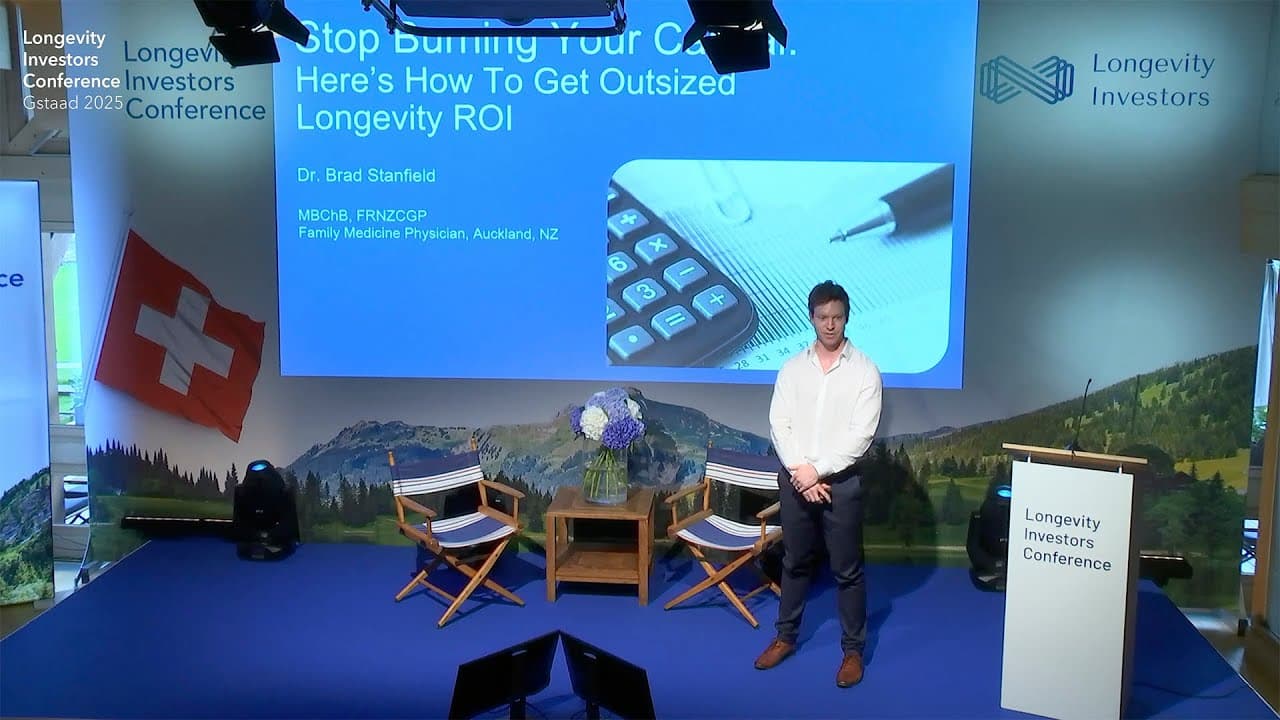
Longevity science fails when major investment follows exciting single-lab findings before they have been independently reproduced. GSK spent $720 million on resveratrol research it could not replicate, while the Interventions Testing Program addresses this problem by running the same mouse experiment in three laboratories using genetically diverse animals. Read on to see which prominent interventions failed testing and which produced stronger results.
Transcript
So, I wanted to use this opportunity to let you know about four medication classes that I think should be on your radar. Two of which I'm routinely prescribing to my patients in the clinic. And we're seeing some pretty awesome results. And then I want to talk about some skincare devices that have got the potential to uh reverse the signs of skin ag... Read More
Key Insights
- Longevity research is vulnerable to a recurring pattern in which an exciting discovery from one laboratory attracts substantial investment before its reproducibility has been established, leading to financial losses and damage to the field's credibility when later experiments fail.
- Resveratrol became a prominent longevity candidate because early single-cell research and a famous mouse study suggested activation of SIRT1 could provide major health benefits, but GSK could not reproduce the research after acquiring its rights for $720 million.
- Egg precursor cell technology promised potential infertility treatments and a longer female fertility window, but years of unsuccessful development were followed by an investor lawsuit, an SEC fraud settlement involving the company's CEO, mergers, acquisitions, and the company's eventual collapse.
- The Interventions Testing Program is designed to improve reproducibility by conducting the same mouse experiment simultaneously in three laboratories, allowing researchers to treat consistent positive findings as a stronger scientific foundation for later development and possible human trials.
- Genetically diverse mice are used by the Interventions Testing Program because results from a varied population may, in theory, translate to humans more effectively than results obtained from inbred mouse strains, although successful mouse findings still do not establish human benefits.
- Fisetin showed no lifespan extension or other reported benefits in the Interventions Testing Program, suggesting that senolytic research still needs to determine which senescent cells should be removed and how their removal can be accomplished effectively before scaling to human studies.
- Nicotinamide riboside showed no lifespan extension or other reported benefits in the cited mouse testing, while human clinical studies of NAD precursors have produced mixed results, supporting the argument that NAD metabolism research needs stronger preclinical foundations.
- SGLT2 inhibitors have benefits beyond blood sugar control in the examples presented, including reduced hospitalization and cardiovascular death in heart failure patients and slower decline in chronic kidney disease, while canagliflozin extended male mouse lifespan by 14% in preclinical testing.
Install to Summarize YouTube Videos and Get Transcripts
Explore YouTube Video Summarizer or Get YouTube Transcript Extractor
Questions & Answers
Q: Why do promising longevity treatments often fail?
Promising treatments often fail because major investment and development begin before the original laboratory finding has been reproduced. The pattern described is an exciting discovery from one lab, an influx of capital, and a later realization that other researchers cannot replicate the result.
Q: What happened to the resveratrol longevity research?
Early single-cell research and a prominent mouse study suggested that resveratrol could activate SIRT1 and deliver significant health benefits. GSK bought the research rights for $720 million but could not replicate the findings despite spending years and additional capital, making the investment a total loss.
Q: What went wrong with egg precursor cell technology?
The technology promised infertility treatments and a longer fertility window by injecting stem cells into ovaries. A company founded in 2011 could not reproduce the initial findings or make the technology work; an investor lawsuit, an SEC fraud settlement involving its CEO, mergers, acquisitions, and the company's collapse followed.
Q: How does the Interventions Testing Program improve reproducibility?
The Interventions Testing Program runs the same mouse experiment simultaneously in three different laboratories. It also uses genetically diverse mice, so consistent positive findings provide a stronger scientific foundation and may, in theory, translate to humans more effectively than results from inbred strains.
Q: Why is reproducibility important in preclinical medicine?
Reproducibility shows whether an early result is dependable enough to support further investment, drug development, and human trials. When Amgen attempted in 2012 to replicate 53 foundational preclinical cancer studies, only six were reproducible, revealing how weak initial evidence can undermine later programs.
Q: Does fisetin extend lifespan as a senolytic treatment?
Fisetin produced no lifespan extension or other reported benefits in the Interventions Testing Program. The result indicates that senolytic research still needs to establish which senescent cells should be removed and how to remove them effectively before scaling to human studies.
Q: Does nicotinamide riboside improve longevity?
Nicotinamide riboside produced neither lifespan extension nor other reported benefits in the cited mouse testing. Human clinical studies of NAD precursors have also produced mixed results, supporting the need for a stronger preclinical foundation.
Q: Which interventions produced stronger lifespan results in the Interventions Testing Program?
Canagliflozin extended male mouse lifespan by 14% in the cited testing. Rapamycin repeatedly extended lifespan in both sexes, producing increases of 17% to 25%, which supports further investigation without establishing human benefits.
Summary & Key Takeaways
-
Longevity science can waste money and credibility when exciting findings from a single laboratory attract investment before independent replication. Resveratrol research led GSK to spend $720 million, while egg precursor cell technology contributed to investor litigation and corporate collapse after the original findings could not be turned into reliable treatments.
-
The Interventions Testing Program offers a stronger foundation by testing the same molecules simultaneously in three laboratories and using genetically diverse mice. This structure makes positive results more likely to be reproducible and potentially more relevant to humans than findings obtained from a single laboratory or from inbred mouse strains.
-
Program results challenge popular interventions while identifying stronger candidates. Fisetin and nicotinamide riboside produced neither lifespan extension nor other reported benefits in the cited tests. Canagliflozin extended male mouse lifespan by 14%, while rapamycin repeatedly increased male and female mouse lifespan by 17% to 25%, supporting further investigation.
Read in Other Languages (beta)
Share This Summary 📚
Summarize YouTube Videos and Get Video Transcripts with 1-Click
Try YouTube Summary with ChatGPT & Claude or YouTube Transcript Generator
Explore More Summaries from Dr Brad Stanfield 📚




Summarize YouTube Videos and Get Video Transcripts with 1-Click
Try YouTube Summary with ChatGPT & Claude or YouTube Transcript Generator