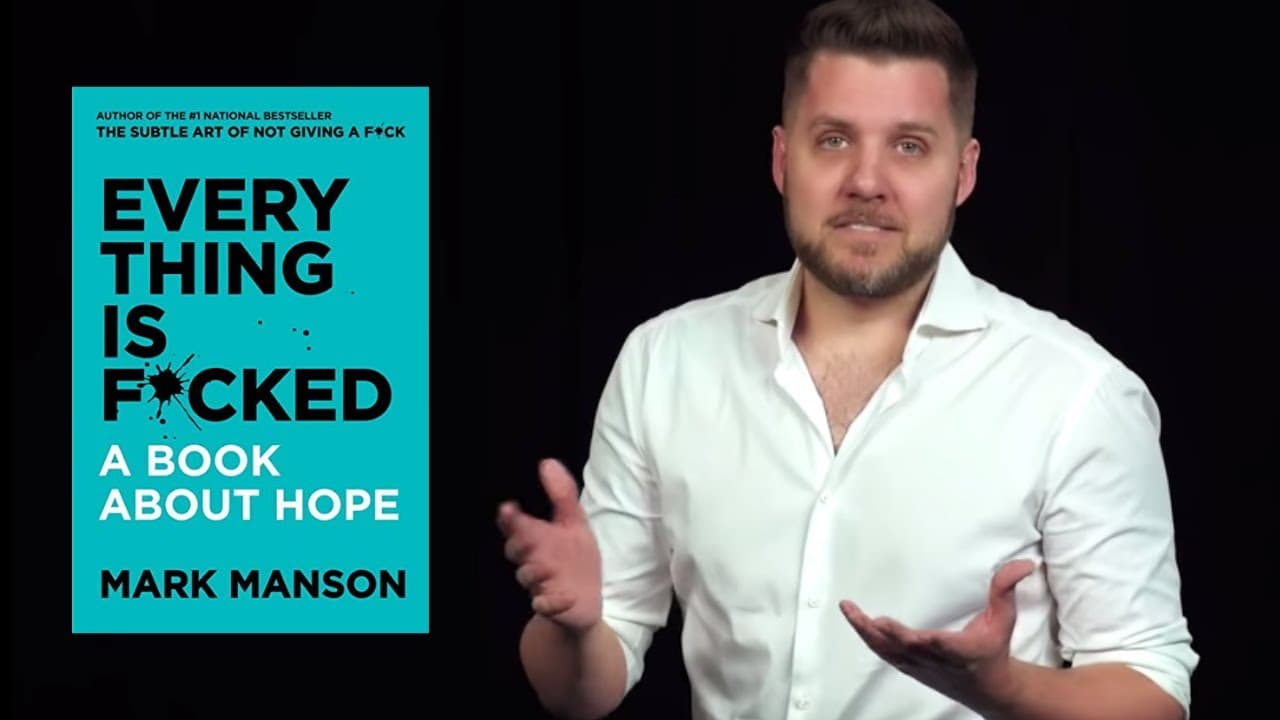
What Is Everything Is F*cked: A Book About Hope About?
TL;DR
Everything Is F*cked: A Book About Hope examines why people feel that society is collapsing even when material conditions are better than ever. The author connects modern hysteria to difficulty creating hope, the uncomfortable truth of human insignificance, illusions of self-control, and religious attitudes toward politics, business, sports, and media. Read on for the book's account of hope's value, complexity, and darker possibilities.
Transcript
I called the book everything is because if you look at the world today we live in kind of a very strange period where by every material metric the world is better than it's ever been we're living longer we're healthier or wealthier we have more technology recurring diseases and stuff like it's actually better to be alive than it has been at any oth... Read More
Key Insights
- Material progress does not reassure: Better material conditions do not automatically produce a calmer understanding of the world. The author places longer lives, better health, greater wealth, more technology, and progress against recurring diseases beside widespread political and social panic. The contrast suggests that people's sense of decline cannot be explained by material conditions alone.
- Technology can intensify perception: The book begins from the gap between what people see through modern technology and what they see outside their windows. Twitter can make an apocalypse appear close even when ordinary surroundings seem fine. The central investigation therefore concerns how modern life and technology shape a feeling of crisis, not whether every visible condition is actually worsening.
- Hopelessness exposes the core question: The uncomfortable truth strips away easy reassurance by emphasizing humanity's tiny scale and brief existence within the universe. From that perspective, personal actions may seem unable to matter. The question, "Why do anything?" is not treated as abstract decoration, but as a place where the author believes many of people's deepest personal problems begin.
- Purpose must fit limited time: The proposed basis for hope is not cosmic importance or permanence. It is a reasonable account of what someone can do with the small amount of time they are alive. Affecting one's own life or another person's life positively can provide an answer to insignificance without requiring the person to deny mortality.
- Hope begins before decisions: Questions about purpose are presented as the starting point for decisions throughout life. Asking what one is here for establishes the vision through which choices acquire significance. Hope therefore functions as more than a passing positive feeling, because it helps organize what a person considers worth doing during a limited life.
- Exposure complicates hopeful visions: People are continually shown awful events and hear repeated claims that the world and society are going to hell. The author argues that this environment makes forming a personal vision of hope more difficult. The challenge is not simply the existence of bad events, but the way constant exposure shapes expectations about everything else.
- The book investigates desire: The stated aim is not necessarily to hand readers a hopeful message. Instead, the author examines why people feel such a deep need to find and preserve hope. This distinction matters because investigating the desire makes room to question its assumptions, psychological mechanisms, and possible consequences rather than automatically declaring every hopeful belief beneficial.
- Hope includes a dark side: Hope is usually approached as a universally good thing that everyone should want. The author disputes that uncomplicated view and seeks a more honest analysis. A hopeful framework can be sustained by delusion or attached to damaging commitments, so its presence alone does not establish that a person or society is moving in a healthy direction.
- Control supports personal hope: People need to feel that they control their actions and lives in order to generate hope for themselves. The difficulty is that many do not possess as much control as they need to believe. This mismatch creates a psychological dilemma in which the mind persuades itself that its influence is greater than it really is.
- Self-deception needs examination: The author describes the sense of control as partly built from little lies people tell themselves. Psychological research is said to show this self-imposed delusion repeatedly. Because some illusion appears unavoidable, the book focuses on understanding where it comes from and maximizing it in a healthy way, while remaining conscious of its distortions.
- Religion cannot be separated: Religion is uncomfortable for the author to write about and potentially uncomfortable for readers, but it remains essential to the subject because it supplies hope for much of the planet. The discussion treats religion not as a side issue but as a major example of how people locate meaning, importance, and reasons to invest their time.
- Secular commitments can become religious: Even atheists and agnostics must place faith in some moral or ethical code and believe that something deserves time and attention without having evidence for its importance. In that abstract sense, the author calls everyone somewhat religious. Religious attitudes can then migrate into politics, business, sports, and media, producing strife and conflict.
Install to Summarize YouTube Videos and Get Transcripts
Explore YouTube Video Summarizer or Get YouTube Transcript Extractor
Questions & Answers
Q: What is Everything Is F*cked: A Book About Hope about?
Everything Is F*cked: A Book About Hope investigates why modern people feel surrounded by decline despite unprecedented material progress. It begins with human insignificance and asks how anything can matter during a brief life. It then examines purpose, the desire for hope, illusions of self-control, and religion. The book also connects religious attitudes toward politics, business, sports, and media with contemporary conflict.
Q: Why does modern life feel so bad when material conditions are better?
The author says material measures and public perception tell sharply different stories. People live longer, are healthier and wealthier, have more technology, and have made progress against recurring diseases, yet political and social hysteria remains intense. Twitter can make an apocalypse appear imminent even when conditions outside seem fine. The book investigates how modern life and technology create and reinforce that mismatch.
Q: What is the uncomfortable truth in the book?
The uncomfortable truth is that human beings appear cosmically insignificant and remain alive for only a tiny period. That perspective makes it hard to rationalize why any individual action matters, especially because everyone and everyone they love will die. The author believes deep personal problems often arise when people become stuck in this question. Hope begins by developing a reasonable answer to it.
Q: How does a person build hope and purpose?
A person starts by asking what they are here for and what can matter during their limited time alive. They then consider how they can affect their own life or somebody else's life positively. This creates a vision that answers the challenge of insignificance without claiming that life lasts forever. The author presents this answer as a foundation for decisions throughout life.
Q: Why does the author say hope has a dark side?
People often assume hope is universally good and should always be protected. The author argues that the desire for hope is more complicated because it can depend on self-imposed delusions and misplaced beliefs. Those unnoticed distortions can pull people toward ugly and damaging paths. For that reason, the book analyzes hope honestly instead of merely trying to give it to readers.
Q: How is self-control connected to hope?
People need to feel some control over their actions and lives to create hope for themselves. In reality, many have less control than their minds need them to believe. The mind resolves this tension by convincing itself that it possesses more control than it does. Understanding the interplay of thoughts and emotions can help people maximize that necessary illusion in a healthier way.
Q: Why does the book discuss religion when analyzing hope?
The author considers religion impossible to exclude because it is a source of hope for most people on the planet. Religion gives people objects of faith and structures for deciding what is important and worthy of attention. Even atheists and agnostics rely on moral or ethical codes that they treat as significant. The discussion therefore uses religion to examine how hope and value are organized.
Q: How can politics, business, sports, and media become religious?
The author argues that every society organizes itself around beliefs about what matters. As traditional religion recedes in influence, people can approach politics, business, sports, and media with a more religious attitude. They invest faith, importance, time, and attention in those domains even without evidence proving their ultimate worth. Becoming aware of this transfer matters because the author identifies it as a source of present strife and conflict.
Summary & Key Takeaways
-
The modern-life paradox: By every material metric the author mentions, people are living longer, becoming healthier and wealthier, gaining more technology, and confronting recurring diseases more effectively. Yet political and social life appears filled with hysteria, while Twitter can make the apocalypse seem imminent. This contradiction inspired Everything Is F*cked: A Book About Hope. The book investigates why modern life and technology generate the impression that everything is deteriorating even when the world immediately outside may appear fine.
-
Beginning without any hope: An honest investigation of hope starts in a very dark place that the author calls the uncomfortable truth. On a cosmic scale, human beings appear insignificant and exist for such a tiny period that it becomes difficult to explain why anything they do matters. Everyone will die, including the people they love. The author argues that many deep personal problems emerge when people become trapped in the resulting question of why they should do anything at all.
-
Purpose as an answer: Building hope means developing a reasonable response to the uncomfortable truth rather than pretending the question does not exist. A person must ask what they are here for, what can matter during their small amount of time alive, and how they might positively affect their own life or somebody else's. Finding purpose and forming a vision for life begin with those questions. The author presents that search for an answer as a starting point underlying decisions made throughout life.
-
Hope has complications: Constant exposure to awful events makes creating a hopeful vision more difficult in the modern world. The author's goal is not necessarily to give readers hope, but to investigate the deep desire to find it. People commonly treat hope as universally good, something everyone naturally wants and wants to preserve. The book challenges that simple treatment by arguing that hope also has a dark side, so any useful account must examine both the desire itself and the damage it can enable.
-
Control, belief, and conflict: Hope requires people to feel some control over their actions and lives, even though they often possess less control than they imagine. The mind responds by creating self-imposed delusions that can become damaging when left unexamined. The book then connects hope with religion, moral commitments, and faith in what deserves attention. As traditional religion recedes, the author sees politics, business, sports, and media receiving increasingly religious attitudes, contributing to modern strife and conflict.
Read in Other Languages (beta)
Share This Summary 📚
Summarize YouTube Videos and Get Video Transcripts with 1-Click
Try YouTube Summary with ChatGPT & Claude or YouTube Transcript Generator
Explore More Summaries from Mark Manson 📚
Summarize YouTube Videos and Get Video Transcripts with 1-Click
Try YouTube Summary with ChatGPT & Claude or YouTube Transcript Generator