How to Build Minecraft Traps That Kill Real Players
TL;DR
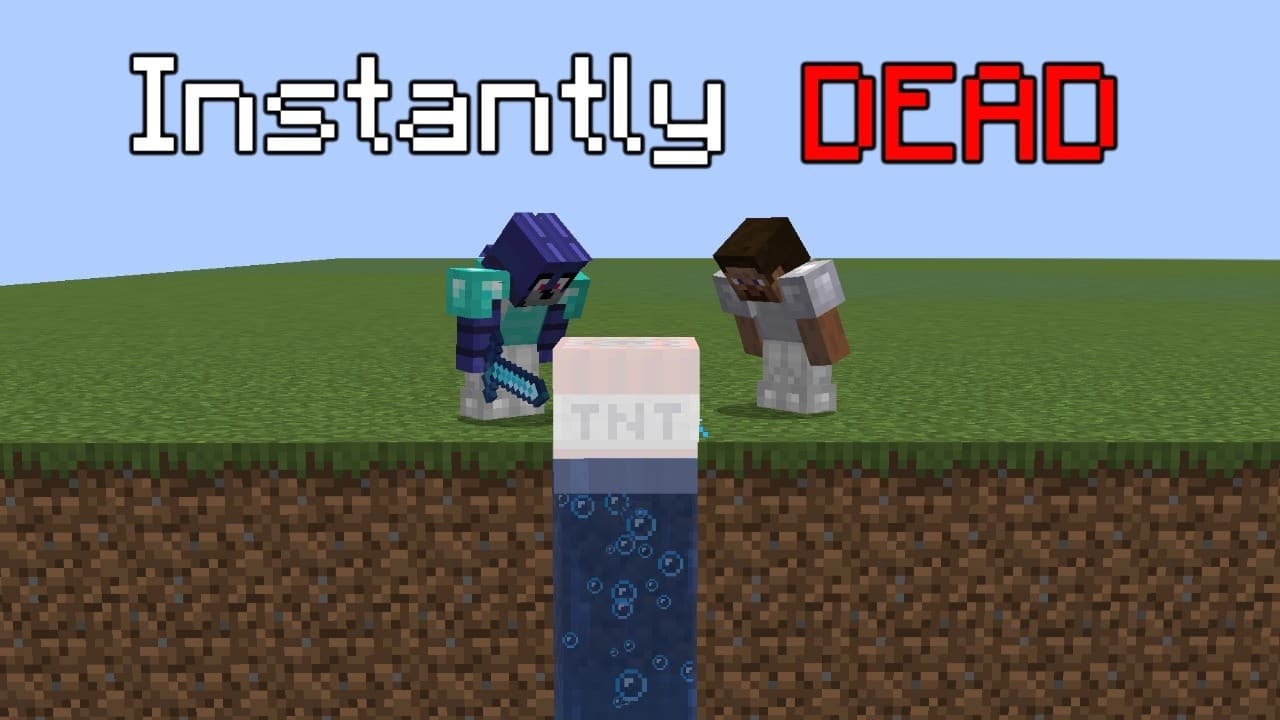
Three redstone traps get tested on live Hoplite players: a slime block launcher hidden in a tree that opens a 2x5 floor hole via one lever, a bubble column TNT launcher that shoots explosives to the surface with almost no reaction time, and a piñata trap where you get stuck in a cobweb on purpose so enemies look up while a hidden hole opens beneath them.
Transcript
Launching stuff in Minecraft is honestly really fun. But it got me thinking. Would there be any way I could use these mechanics to make some traps? Yes. As a matter of fact, I ended up making three cool traps that I plan to use on real players. The first trap is an insane slime block launcher hidden in a tree. The second trap is this 2 billion IQ b... Read More
Key Insights
- A single lever can drive two separate redstone mechanisms at once. In the tree trap, the lever both launches the slime blocks that break through the leaves and pulls open a 2x5 hole in the floor, so one input produces the entire kill sequence.
- Slime block launchers work as traps because the victim gets no warning. As the creator describes it, you are just running and all of a sudden, boom, you are dead, which is what makes the hidden tree launcher effective against unsuspecting players.
- Trap consistency is a real problem in live play. In one attempt all three targeted players somehow lagged at the same moment and none of them got pushed, and the creator suspected the server rather than the redstone design.
- Positioning the victim matters as much as the mechanism. The teammate had to hug the left wall to bait targets into the correct spot, which means the trap only works when the bait player controls where the fight happens.
- The bubble column TNT launcher works by sending TNT upward so it explodes right at the surface. Because the explosive arrives already at head level, players have essentially no time to react once the lever is pulled.
- Timing is the main failure mode of the TNT launcher. The creator pulled the lever slightly wrong and lost kills that should have landed, saying both targets would have died with correct timing, and the mistake cost the creator's own life.
- The piñata trap relies on misdirection rather than surprise alone. Getting stuck in the cobweb on purpose makes enemies look up while they hit you, so they miss both the hole opening beneath them and the teammates closing in from behind.
- Traps require a coordinated team, not a solo player. One person baits and holds attention while another waits on the lever, and communication like calling out the moment to pull is what turns a built mechanism into an actual kill.
Install to Summarize YouTube Videos and Get Transcripts
Explore YouTube Video Summarizer or Get YouTube Transcript Extractor
Questions & Answers
Q: How does the hidden tree slime block launcher trap work?
The trap is built inside a tree with redstone concealed in it. When the lever is pulled, it does two things at once: it sends slime blocks outward, breaking through the leaves and launching anything in the way, and it also connects all the way down to pull open a 2x5 hole in the floor. A player running past gets launched with no warning. The creator credits the design to a friend named Shadow.
Q: What is the bubble column TNT launcher trap in Minecraft?
It is a trap where a lever releases TNT into a bubble column, which carries the TNT upward so it detonates right at the surface where players are walking. Because the explosive arrives already at the player's level, targets have essentially no time to react. The creator demonstrates it from the enemy perspective: you are walking around minding your business and then it goes off. Its main weakness is that the lever timing must be exact.
Q: What is the piñata trap and why is the cobweb important?
The piñata trap is a slime block launcher hidden under the surface that is also connected to a 2x2 pole, so shooting yourself up opens a hole at the same time. A cobweb sits in the middle. The method is to get stuck in the cobweb on purpose so enemies start hitting you and look upward. While they are focused on swinging up at you, they do not see the hole opening beneath them and they also do not see teammates approaching from behind.
Q: Why do Minecraft traps fail against real players?
The main failure causes shown are timing errors and server lag. With the TNT launcher, pulling the lever slightly too early or too late means the explosion misses, and the creator says both targets would have died if the timing had been correct. With the slime launcher, one attempt failed when all three targeted players somehow lagged at the same moment and none of them got pushed. A player also broke the trap during one attempt.
Q: How many people do you need to run these traps?
These traps are built and executed as a team effort rather than solo. One player baits enemies into position while another waits at the lever and pulls on command. In the video the creator works with teammates including Shadow, who designed the first trap, plus Parker, Minpinwin, and Invictable. Communication matters: calls like get ready and pull are what synchronize the bait with the mechanism firing.
Q: What server are these Minecraft traps tested on?
The traps are tested in live games on Hoplite, listed in the description as hoplite.gg. The creator builds each trap inside an actual match alongside teammates, then baits real players into it, rather than testing only in a controlled world. This is why consistency problems show up: real opponents are geared, can break the trap, and sometimes have totems or a mace, and server conditions can affect whether the push registers.
Q: How do you bait players into a trap in Minecraft?
Baiting means deliberately drawing enemies to the exact spot where the trap fires. The creator fights near the trap, drinks a regen potion in front of opponents, breaks a team's star and runs away, and calls out positioning like hugging the left wall so pursuers follow the intended path. The goal is to group multiple chasers together so a single lever pull catches several at once, which is how the triple kill in the video happened.
Q: What Minecraft server hosting discount is offered in this video?
The video is sponsored by Pine Hosting. The creator says a server can be had for $3, and using code Jude gets 30% off, bringing it to around $2 and change. The sponsor is presented as easy to set up in a few minutes, with support for adding mods and switching versions, and hosting for other games as well. The description links to pine.host/judelow1 with the same 30% off code.
Summary & Key Takeaways
-
The first trap is a slime block launcher concealed inside a tree, designed by a friend named Shadow. A single lever both fires the slime blocks outward through the leaves and simultaneously pulls open a 2x5 hole in the floor below, so a player running past is launched and dropped without warning.
-
The second trap is a TNT bubble column launcher. Pulling a lever sends TNT up a bubble column so it detonates right at the surface, leaving targets almost no time to react. Timing is the hard part: pulling too early or too late wastes the TNT and lets geared players escape the blast.
-
The third trap is the piñata trap, a slime block launcher hidden under the surface that also opens a 2x2 hole. A cobweb sits above it, and the player deliberately gets stuck so enemies swing upward at them, missing both the opening hole and the teammates approaching from behind.
Read in Other Languages (beta)
Share This Summary 📚
Summarize YouTube Videos and Get Video Transcripts with 1-Click
Try YouTube Summary with ChatGPT & Claude or YouTube Transcript Generator
Explore More Summaries from JudeLow 📚

Summarize YouTube Videos and Get Video Transcripts with 1-Click
Try YouTube Summary with ChatGPT & Claude or YouTube Transcript Generator