What Are Safer Alternatives to Traditional Marine Pesticides?
TL;DR
Safer alternatives to traditional marine pesticides, like the COI developed by Roman Haas, provide effective anti-fouling solutions without the chronic toxicity associated with older agents such as tributyl tin oxide. These new chemicals are acutely lethal to target organisms, degrade quickly in the environment, and minimize ecological harm, making them a sustainable choice for preventing organism accumulation on ships and pipes.
Transcript
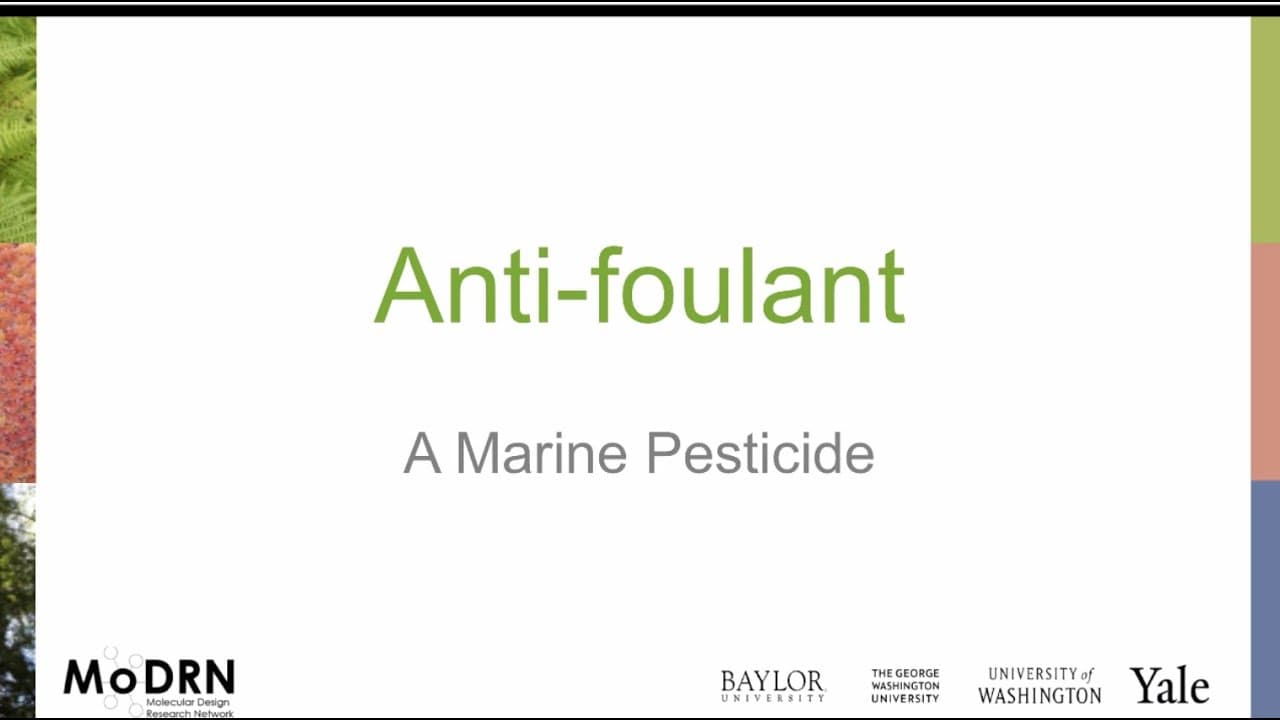
there are a wide range of places where green chemical design has taken place this is just a small sampling and I'll try to talk through just a few of them before we as we wrap up this is he called c9 it's an anti column it's a marine pesticide there used to be a company based in Philadelphia called the Roman Haas company since been bought out by Do... Read More
Key Insights
- 💚 Green chemical design has transformed the landscape of marine pesticides by providing effective and environmentally friendly solutions.
- ⚓ Anti-fouling agents are crucial for preventing the accumulation of organisms on ship surfaces, reducing maintenance costs, and minimizing ecological impacts.
- 😆 Traditional anti-fouling agents like tributyl tin oxide have raised concerns due to their toxic effects on marine life and long-lasting presence in the environment.
- 🚨 COI, invented by Roman Haas, has emerged as a superior alternative, boasting acutely lethal effects on target organisms and negligible chronic toxicity.
- 😘 COI exhibits a shorter half-life, low bioavailability, and significantly reduced environmental impact compared to traditional anti-fouling agents.
- 💚 The green chemistry approach aims to develop chemicals that degrade rapidly, pose limited hazards, target only specific organisms, and exhibit minimal bioaccumulation.
- 🇬🇱 The recognition of green chemical design through awards like the Presidential Green Chemistry Challenge highlights its importance and impact on the industry.
Install to Summarize YouTube Videos and Get Transcripts
Explore YouTube Video Summarizer or Get YouTube Transcript Extractor
Questions & Answers
Q: What is the purpose of anti-fouling agents in marine applications?
Anti-fouling agents are used to prevent the attachment of undesired organisms like algae, seaweed, barnacles, and diatoms on ship surfaces and cooling pipes, minimizing maintenance costs, and improving operational efficiency.
Q: What are the environmental concerns associated with traditional anti-fouling agents?
Traditional anti-fouling agents like tributyl tin oxide have long-term toxicity, accumulating in the marine environment and harming various organisms from snails to whales. The bio concentration factor and chronic toxicity raise significant environmental concerns.
Q: What makes COI an ideal anti-fouling agent?
COI, developed by Roman Haas, is a winning solution in the green chemistry field. It is acutely lethal to target organisms, eliminating algae and other unwanted growth, but it has no chronic toxicity and a short half-life. It also exhibits low bioavailability and breaks down rapidly.
Q: What distinguishes COI from other anti-fouling agents?
COI offers a dramatically different toxicity profile compared to traditional anti-fouling agents. With a low predicted environmental concentration and no-effect concentration, it minimizes the impact on the environment while effectively fulfilling its intended purpose.
Summary & Key Takeaways
-
Anti-fouling agents are essential for preventing the accumulation of algae, seaweed, barnacles, and other organisms on the surface of ships and pipes, reducing maintenance costs and harmful environmental impacts.
-
Traditional anti-fouling agents such as tributyl tin oxide have long-lasting toxicity and negative effects on marine life.
-
The invention of COI (Four or Five Tiger OH2 and Octal Isophthalate) by Roman Haas has provided an ideal solution with acutely lethal effects on target organisms but no chronic toxicity or significant environmental impact.
Read in Other Languages (beta)
Share This Summary 📚
Summarize YouTube Videos and Get Video Transcripts with 1-Click
Try YouTube Summary with ChatGPT & Claude or YouTube Transcript Generator
Explore More Summaries from YaleCourses 📚
Summarize YouTube Videos and Get Video Transcripts with 1-Click
Try YouTube Summary with ChatGPT & Claude or YouTube Transcript Generator