Why Is Bottled Water More Popular Than Tap?
TL;DR
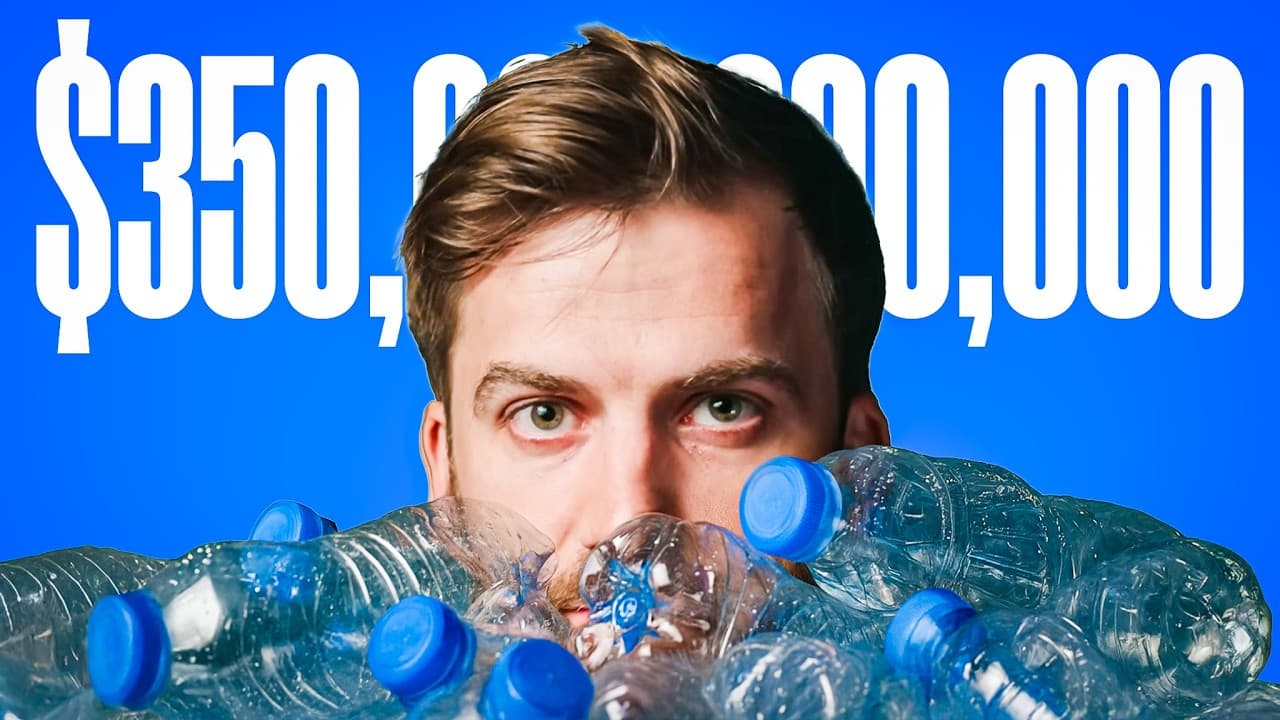
Most American tap water is safe, highly tested, and dramatically cheaper than bottled water, yet distrust of public water systems helped bottled brands flourish. Highly publicized contamination cases, disappearing fountains, and corporate marketing shifted public perception, even though some bottled products are filtered tap water sold at a massive markup and blind tasting may not reveal a meaningful advantage.
Transcript
(cork pops) - Wow, that was fun. (upbeat music) (water pouring) I paid $200 for this bottle of water. I can't believe I did that. Why did I spend $200 on this? Anyway, we have a lot of bottles of water around us right now, more than I've ever seen in one room in my entire life. That's because I'm currently on a quest to figure out what the deal is ... Read More
Key Insights
- American tap water is generally safe for most people, although its condition varies geographically and the meaning of safety involves nuance. Experts interviewed for the investigation described it as among the most tested and safest products an American is likely to consume during an ordinary day.
- Public distrust of tap water grew after several highly publicized contamination cases. Even though these incidents did not establish that all American tap water was unsafe, they weakened confidence in public water infrastructure and helped bottled water appear safer or more desirable to many consumers.
- The decline of public water fountains made free drinking water less accessible and less culturally prominent. Reduced investment in public infrastructure, contamination outbreaks at fountains, and warnings about fountain hygiene transformed them from celebrated civic amenities into neglected functional requirements in schools, offices, and similar spaces.
- Bottled water expanded partly because Americans began drinking less soda and milk and more water. Beverage corporations saw a commercial opportunity because they already operated large facilities that could bottle products and distribute them throughout the country while scrutiny of sugary beverages was increasing.
- Some bottled water is filtered tap water packaged and sold at a substantial premium. The investigation says bottled water can cost roughly 2,500 times as much as tap water, or around 2,000 times as much even after excluding the bottle, cap, and other production costs.
- Blind tasting does not guarantee that expensive bottled water will outperform tap water. In the presented test, the host preferred the sample later revealed to be tap water, despite tasting without knowing the identities of the samples and initially describing all of them as essentially tasting like water.
- The global bottled water business generates about $352 billion in sales and uses roughly half a trillion plastic bottles. Its scale shows how corporations successfully commercialized a universal human need by combining packaging, filtration, distribution, branding, advertising, and promises about purity, health, or natural origins.
- Consumer perception can matter as much as measured water safety. Bottled-water brands benefited when people lost faith in taps and fountains, even though interviewed experts supported clean public tap water and one water sommelier said tap water was the water they mostly drank personally.
Install to Summarize YouTube Videos and Get Transcripts
Explore YouTube Video Summarizer or Get YouTube Transcript Extractor
Questions & Answers
Q: Is American tap water generally safe to drink?
American tap water is generally safe for most people, according to every expert interviewed for the investigation. One expert described it as among the most tested and safest products a person in America consumes during a typical day. However, safety varies geographically, and the investigation notes that the definition of safe contains nuance, including a possible gap between what is legally permitted and what is actually safe.
Q: Why did Americans begin distrusting tap water?
Distrust grew after several highly publicized cases of contamination in American household water systems. Contamination outbreaks associated with public fountains also damaged confidence, while parents warned children that fountain fixtures were unhygienic. These experiences and stories shaped public perception even though experts said tap water is safe for most Americans. The resulting skepticism created favorable conditions for corporations selling packaged water as a cleaner-looking alternative.
Q: How did the decline of water fountains increase bottled water use?
Public fountains once represented clean, free, and abundant water provided through shared infrastructure. They also became significant symbols in the civil rights movement because access to them mattered. Later reductions in public infrastructure, combined with contamination incidents and hygiene concerns, made fountains less prominent and less trusted. When refill stations are unavailable, including in places such as airports, consumers may have little practical choice except purchasing bottled water.
Q: Is bottled water sometimes just filtered tap water?
Some bottled water begins as tap water and receives additional filtration before being placed in a bottle and sold. The packaging, branding, transportation, and marketing can make it appear fundamentally different from municipal water, but its source may still be a public water supply. The investigation presents this practice as a central reason to question what consumers are actually buying when they pay a large premium for bottled products.
Q: How much more expensive is bottled water than tap water?
The investigation says bottled water can be sold for approximately 2,500 times the cost of tap water. Even after removing the costs associated with the bottle, cap, and other production components, the price difference is described as around 2,000 times. As another comparison, the host says one Fiji bottle costs as much as refilling that same bottle with tap water for the next nine years.
Q: Why did beverage companies enter the bottled water market?
Americans drank large quantities of soda and milk during the 1980s and 1990s, then increasingly switched to water as concerns about drinking sugary products all day gained attention. Companies that produced soda saw an opportunity because they already owned major bottling and distribution facilities. Pepsi launched Aquafina in 1994, Coke introduced Dasani a few years later, and Nestle also participated in the growing market.
Q: Can people taste the difference between bottled and tap water?
The blind taste test presented in the investigation suggests that brand, price, and packaging may not reliably predict preference. The host tasted several unidentified samples, said they largely tasted like water, and selected one as the favorite. That sample was revealed to be tap water. The result does not prove that nobody can detect differences, but it demonstrates how expectations can be separated from actual taste through blind testing.
Q: How large is the global bottled water industry?
The global bottled water industry is described as producing about $352 billion in sales and using roughly half a trillion plastic bottles. Bottled water was once a niche product but became mainstream after corporate expansion during the 1990s. Its scale reflects a major transformation in how people obtain a universal necessity, shifting consumption from public fountains and household taps toward branded, packaged, and commercially distributed products.
Summary & Key Takeaways
-
Bottled water became mainstream as Americans reduced their consumption of sugary drinks and grew more skeptical of public fountains and household tap water. Highly publicized contamination incidents contributed to that distrust, while reduced investment in public infrastructure made free water less convenient and visible, creating an opening for packaged alternatives.
-
Pepsi launched Aquafina in 1994, Coke introduced Dasani a few years later, and Nestle also entered the expanding market. These corporations already had facilities capable of bottling and distributing beverages. Some bottled water is tap water processed through additional filtration, packaged, branded, and sold for vastly more than municipal water.
-
American tap water is generally safe and ranks among the most tested products people consume, according to experts interviewed for the investigation. Safety can still vary by location, and legal standards do not necessarily settle every concern. Consumers should distinguish documented local conditions from the broader perception that bottled water is inherently cleaner.
-
Key Insights_new_placeholder
Read in Other Languages (beta)
Share This Summary 📚
Summarize YouTube Videos and Get Video Transcripts with 1-Click
Try YouTube Summary with ChatGPT & Claude or YouTube Transcript Generator
Explore More Summaries from Johnny Harris 📚




Summarize YouTube Videos and Get Video Transcripts with 1-Click
Try YouTube Summary with ChatGPT & Claude or YouTube Transcript Generator