How Did the US Take Control of the Philippines?
TL;DR
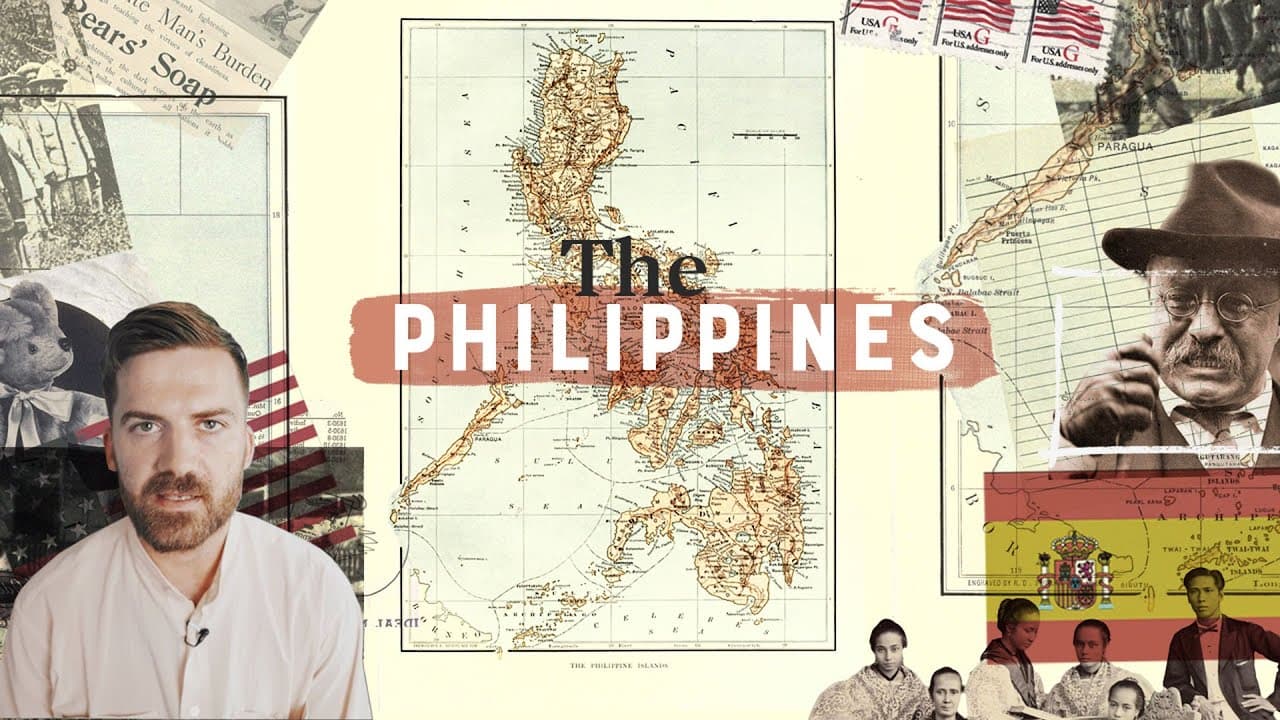
The United States took control of the Philippines by entering its war against Spain in 1898, sidelining Filipino revolutionaries, and participating in a staged battle that let American forces claim Manila. The account attributes the takeover to commercial ambitions in Asia, Pacific strategy, racial attitudes, and the desire to present an American conquest rather than recognize Filipino independence. Read on to understand how an alliance became imperial rule.
Transcript
(Johnny breathes heavily) (soft music) - There is a cluster of 7,000 islands that looks like one of the most beautiful places on earth. People have been living here for over 30,000 thousand years, traveling between these islands, trading with each other and with the region, and developing religion, identity, and culture. It eventually became a coun... Read More
Key Insights
- The Philippine islands supported human communities for more than 30,000 years, with people traveling, trading, and developing religion, identity, and culture before European conquest. The account identifies an earlier country called Ma’I and presents colonization as the suppression of an established society, not the development of an empty territory.
- Spanish rule deeply influenced the Philippines through religion, language, culture, surnames, and the country’s name. The name refers to King Philip, while common surnames cited in the account include Reyes, Del Rosario, De la Cruz, and De los Santos, showing how colonial influence became embedded in everyday identity.
- The US debate over expansion intensified near the end of the 1800s, when some political figures wanted territory beyond the mainland. Commercial access to Asia and strategic advantage in the Pacific are presented as underlying interests, while liberation supplied the publicly acceptable justification for military intervention.
- The Spanish-American conflict began in 1898 after an American vessel exploded in Cuba, an event described as probably accidental. Unethical journalism blamed Spain, while Theodore Roosevelt and other advocates of war pushed the president toward intervention under the stated purpose of liberating Cubans from Spanish rule.
- Theodore Roosevelt expanded the conflict into the Pacific while serving as assistant secretary of the Navy. He sent naval commander George Dewey instructions to attack Spain in the Philippines without asking his boss, helping extend a war associated with Cuba into Guam and the Philippine islands.
- Filipino revolutionaries had already fought Spain for years before the United States arrived. They accepted American assistance as help with the final stage of their existing struggle, but the relationship changed when US commanders prioritized an American victory and prevented Filipino forces from completing their own campaign.
- The staged battle for Manila was secretly arranged by Spanish and American commanders so Spain could intentionally surrender to US forces. Spain wanted to avoid the humiliation of losing to Filipino revolutionaries, and the American side saw an opportunity to present itself as Spain’s conqueror rather than the Filipinos’ ally.
- The account frames the Philippine takeover as part of a continuing contradiction between American ideals and American empire. A nation founded after rejecting colonial rule later acquired overseas possessions, and the transcript connects that history to American citizens in island territories who still lack equal voting rights.
Install to Summarize YouTube Videos and Get Transcripts
Explore YouTube Video Summarizer or Get YouTube Transcript Extractor
Questions & Answers
Q: How did the United States take control of the Philippines?
The United States entered the Philippines during its 1898 war with Spain after Filipino revolutionaries had already weakened Spanish rule. American and Spanish commanders secretly arranged a battle for Manila that Spain would intentionally lose, while Filipino forces were excluded from the final advance. This enabled the United States to claim conquest rather than recognize a Filipino victory and independence.
Q: Why did the United States intervene in the Philippines in 1898?
The United States was at war with Spain after an American vessel exploded in Cuba and journalism blamed Spain. Theodore Roosevelt expanded the conflict into the Pacific by directing naval commander George Dewey to attack Spanish forces in the Philippines. Liberation was the public justification, while commercial access to Asia and strategic advantage in the Pacific were underlying interests identified in the account.
Q: How did Theodore Roosevelt expand the war into the Philippines?
While serving as assistant secretary of the Navy, Theodore Roosevelt instructed naval commander George Dewey to attack Spain in the Philippines. He did so without first asking his boss, helping extend the conflict associated with Cuba into the Pacific.
Q: Were Filipinos already fighting Spain before American forces arrived?
Yes. Filipino revolutionaries had been fighting a bloody campaign against Spanish colonial rule for years before American forces arrived. They regarded American involvement as assistance with the final stage of their existing struggle, not as authorization for the United States to replace Spain.
Q: What was the staged battle for Manila?
The staged battle for Manila was a secret arrangement between Spanish and American commanders under which Spain would intentionally lose. Filipino revolutionaries were excluded from the final advance even though they had already done much of the fighting against Spanish rule. The arrangement allowed American forces to present themselves as Spain’s conquerors.
Q: Why were Filipino revolutionaries excluded from the final battle for Manila?
Their exclusion allowed the United States to claim that it had conquered Spanish forces instead of helping Filipinos win independence. Spain also wanted to avoid the humiliation of surrendering to Filipino revolutionaries. The account presents racial attitudes and the desire for an American victory as central to the arrangement.
Q: What lasting influence did Spain have on the Philippines?
Centuries of Spanish rule influenced the Philippines’ religion, language, culture, and surnames. Examples given include Reyes, Del Rosario, De la Cruz, and De los Santos. The country’s name also derives from King Philip.
Q: Why does the account describe the United States as an empire?
The account argues that the United States contradicted its anticolonial origins by acquiring overseas possessions after defeating another empire. It connects the takeover of the Philippines to American island territories and states that some American citizens there still lack equal voting rights. On that basis, it presents American empire as a continuing issue rather than only a historical one.
Summary & Key Takeaways
-
Spain ruled the Philippine islands for centuries, imposing lasting influences that included its religion, language, culture, surnames, and the country’s name, derived from King Philip. By the late 1800s, however, Spain’s empire was declining while Filipino revolutionaries were already fighting a bloody campaign to end Spanish colonial control.
-
The United States declared war on Spain in 1898 after an American vessel exploded in Cuba and unethical journalism blamed Spain. Although the war was publicly presented as liberation, Theodore Roosevelt expanded its Pacific scope by directing naval commander George Dewey to attack Spanish forces in the Philippines without first obtaining his boss’s permission.
-
American forces arrived after Filipino revolutionaries had already weakened Spanish rule. US and Spanish commanders then secretly arranged a staged battle for Manila that Spain would intentionally lose. By excluding Filipino fighters from the final advance, the arrangement allowed the United States to claim conquest instead of recognizing a Filipino victory and independence.
Read in Other Languages (beta)
Share This Summary 📚
Summarize YouTube Videos and Get Video Transcripts with 1-Click
Try YouTube Summary with ChatGPT & Claude or YouTube Transcript Generator
Explore More Summaries from Johnny Harris 📚
Summarize YouTube Videos and Get Video Transcripts with 1-Click
Try YouTube Summary with ChatGPT & Claude or YouTube Transcript Generator