What Is the Link Between GABA and Melanoma in AI Biology?
TL;DR
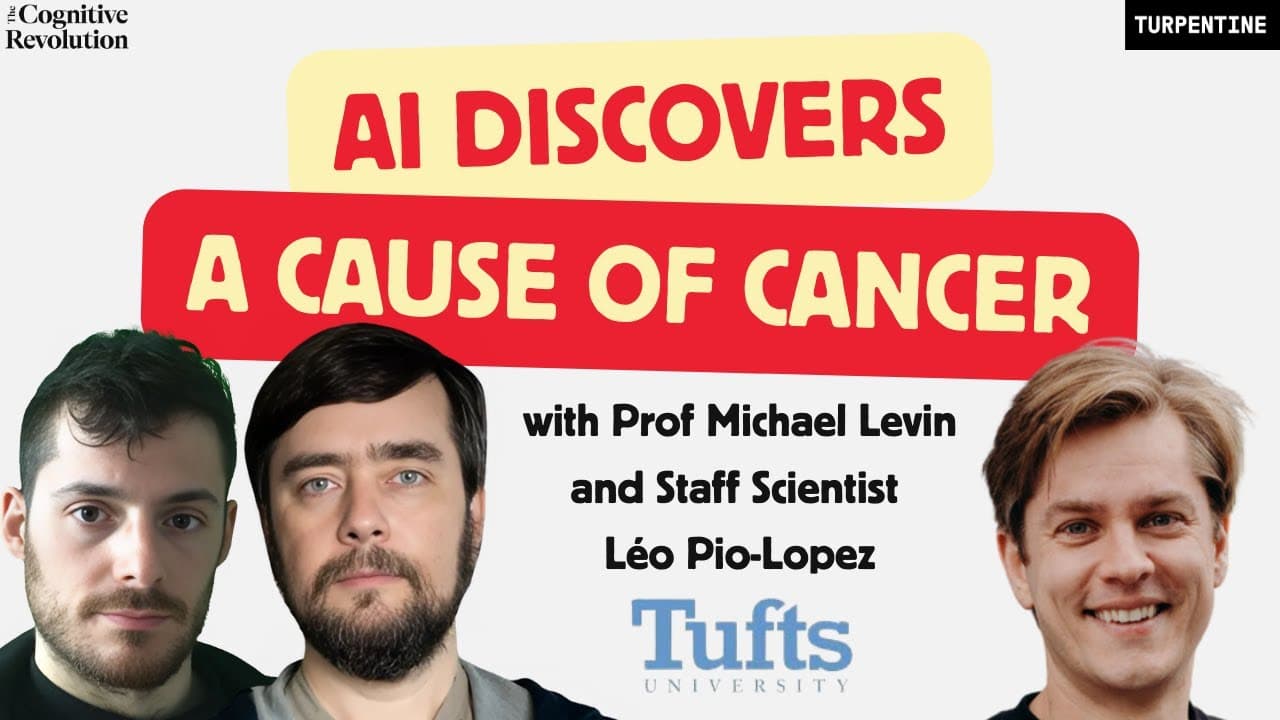
Research indicates a significant link between the GABA neurotransmitter and melanoma, as identified through advanced AI techniques combining various biological datasets. This breakthrough highlights the potential for AI to uncover novel insights into diseases by modeling complex biological systems and emphasizes the need for diverse data types in future studies.
Transcript
we are interested in cancer obviously because of the biomedical importance of the disease but also because it teaches us about a multicellularity and the failures of the collective intelligence of cells there's nothing genetically wrong with any of these cells it's a purely physiological change what you've altered is the ability of the cells to wor... Read More
Key Insights
- The convergence of AI and biology offers new insights into complex biological systems, potentially revolutionizing our understanding of diseases like cancer.
- Multilayer network embedding techniques allow for the integration of diverse biological datasets, revealing novel connections such as the link between GABA neurotransmitter and melanoma.
- AI can transform vast amounts of biological data into actionable knowledge, but challenges remain in standardizing and collecting the right types of data.
- Emergent cognition in biological systems suggests that intelligence and problem-solving are inherent at multiple scales, from molecular pathways to entire organisms.
- The future of AI in biology may involve developing systems that can communicate with and understand the 'cognitive' processes of biological entities.
- Ethical considerations arise when outsourcing cognitive functions to AI, particularly concerning human enhancement and the blurring of lines between living organisms and machines.
- Digital life forms, while potentially transformative, pose risks and ethical dilemmas regarding their integration and impact on natural ecosystems.
- Understanding and predicting the goals of collective intelligences is crucial for managing their development and ensuring they align with human values.
Install to Summarize YouTube Videos and Get Transcripts
Explore YouTube Video Summarizer or Get YouTube Transcript Extractor
Questions & Answers
Q: What is the significance of the link between GABA and melanoma?
The predicted link between GABA neurotransmitter and melanoma, identified through advanced network embedding techniques, highlights a non-genetic pathway for cancer development. This finding challenges traditional views of cancer as purely genetic and underscores the role of physiological changes, such as cell communication failures, in disease progression. It opens new avenues for therapeutic interventions targeting bioelectrical signaling pathways.
Q: How do multilayer network embeddings work in this research?
Multilayer network embeddings integrate various biological data types, such as genes, drugs, and diseases, into a unified model. The technique uses random walk with restart algorithms to identify associations across different modalities. This approach allows researchers to uncover novel connections and potential therapeutic targets by analyzing the complex interactions within biological systems, as demonstrated by the GABA-melanoma link.
Q: What are the current limitations in biological data collection for AI applications?
Despite the abundance of biological data, significant limitations exist in its standardization and the types of data available. For example, bioelectrical data, crucial for understanding cell communication, is lacking. Additionally, transforming raw data into actionable information requires a deeper theoretical understanding of biological processes. Overcoming these challenges is essential for leveraging AI's full potential in biology.
Q: How does emergent cognition relate to biological systems?
Emergent cognition suggests that intelligence and problem-solving abilities are inherent at multiple scales within biological systems, from molecular pathways to entire organisms. This perspective challenges the view of biological processes as merely mechanical and highlights the complex, goal-directed behaviors that arise from interactions within and between different biological layers. Understanding this multiscale intelligence is key to advancing AI in biology.
Q: What are the ethical implications of outsourcing cognition to AI?
Outsourcing cognitive functions to AI raises ethical concerns about human enhancement, autonomy, and identity. As AI systems become more integrated into daily life, they may blur the lines between living organisms and machines. This could lead to questions about agency, consent, and the potential loss of uniquely human experiences. Addressing these issues is crucial for ensuring that AI technologies align with societal values and enhance human well-being.
Q: What role could digital life play in the future of intelligence?
Digital life forms, created through AI and computational models, could offer insights into diverse intelligences and help us better understand natural ecosystems. However, they also pose risks, such as ecological disruption and ethical dilemmas about their rights and integration. Balancing the benefits and challenges of digital life will be essential for harnessing its potential while safeguarding existing biological systems.
Q: How can AI help us understand and manage the goals of collective intelligences?
AI can aid in developing a science of understanding where collective intelligence goals originate and how they evolve. By studying the interactions and decision-making processes within groups, AI can help predict and guide the development of these goals, ensuring they align with human values. This understanding is crucial for managing the risks associated with powerful collective intelligences and fostering beneficial outcomes.
Q: What is the importance of developing a new science of intelligence?
Developing a new science of intelligence is vital for navigating the complexities of AI and its integration with biological systems. This science would explore the origins and dynamics of agency, cognition, and goal formation across different intelligences. By advancing our understanding of these processes, we can better manage the development of AI technologies, ensuring they contribute positively to society and align with ethical and philosophical considerations.
Summary & Key Takeaways
-
In this episode, Nathan Lens hosts Professor Michael Levin and Dr. Leo Pio Lopez to discuss their research on integrating biological datasets using AI techniques. They explore the implications of their findings, including a predicted link between GABA and melanoma, and the broader potential of AI in biology.
-
The conversation delves into the challenges and opportunities in using AI to model complex biological systems. The guests discuss the limitations of current biological data, the concept of emergent cognition, and the potential for AI to facilitate communication with biological systems.
-
The episode also touches on philosophical and ethical considerations, such as the future of human enhancement, digital life, and the importance of developing a new science to understand and manage the goals of collective intelligences. The discussion highlights the rapidly approaching future and the need for preparation.
Read in Other Languages (beta)
Share This Summary 📚
Summarize YouTube Videos and Get Video Transcripts with 1-Click
Try YouTube Summary with ChatGPT & Claude or YouTube Transcript Generator
Explore More Summaries from Cognitive Revolution "How AI Changes Everything" 📚



Summarize YouTube Videos and Get Video Transcripts with 1-Click
Try YouTube Summary with ChatGPT & Claude or YouTube Transcript Generator