What is the true timeline for AGI and automation?
TL;DR
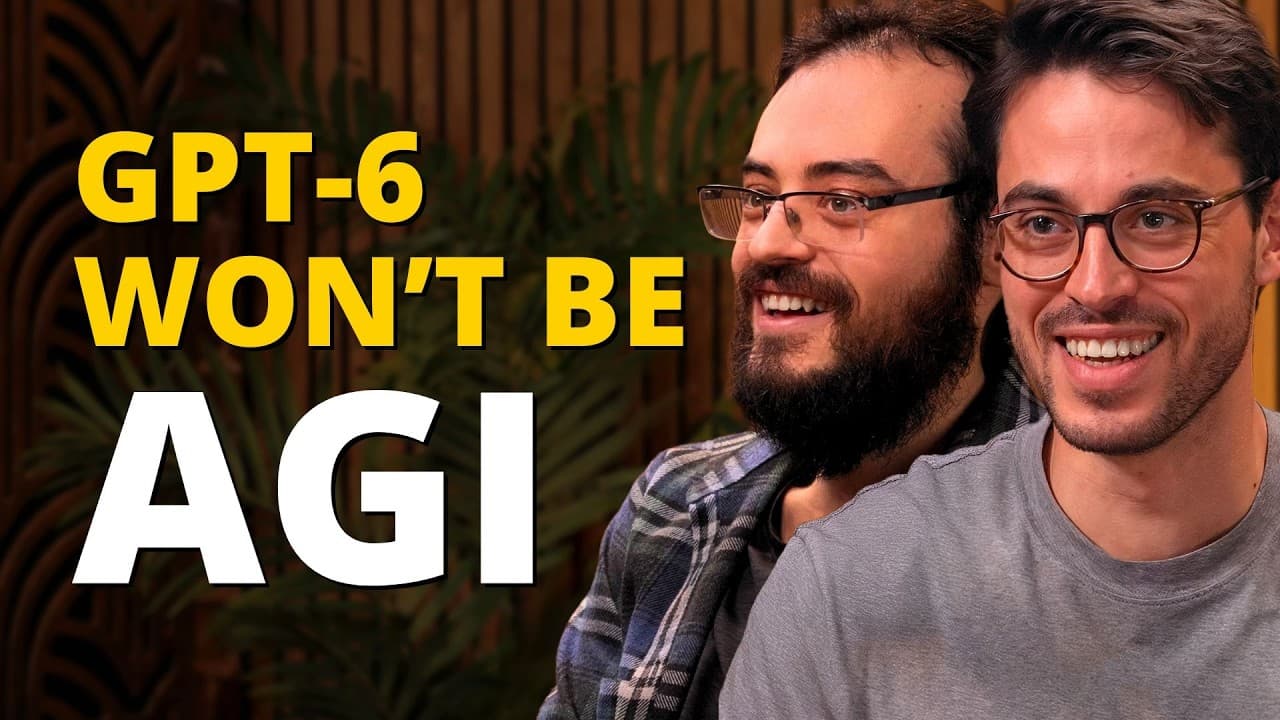
There is no single intelligence explosion. Instead, progress comes from multiple big capability unlocks and continued compute growth. Remote work automation could arrive, but likely not in a single leap; expect mid to late 2040s for near complete automation of broad remote tasks, with overall rapid economic growth driven by many complementary AI advances.
Transcript
Today, I'm chatting with Tamay Besiroglu and Ege Erdil. They were previously running Epoch AI and are now launching Mechanize, which is a company dedicated to automating all work. One of the interesting points you made recently, Tamay, is that the whole idea of the intelligence explosion is mistaken or misleading. Why don't you explain what you're ... Read More
Key Insights
- AI progress depends on many complementary changes, not just more horsepower.
- AI timelines for AGI are likely longer than many San Francisco forecasts.
- There may be 3 to 4 orders of magnitude of compute left to unlock new capabilities.
- Remote work automation is possible but may require mastering many tasks, not just one simple job.
- Unhobbling frames suggest that giving models richer context and environment data dramatically boosts productivity.
- Reasoning and post training alignment can be improved with small but targeted compute allocations.
- Progress has historically come in discrete capability unlocks rather than smooth curves.
- The economy could experience very rapid growth if several core AI competencies unlock in tandem.
- More videos from this channel:
- More from this channel: Dwarkesh Patel
Install to Summarize YouTube Videos and Get Transcripts
Explore YouTube Video Summarizer or Get YouTube Transcript Extractor
Questions & Answers
Q: What is the main claim about the idea of an intelligence explosion?
The main claim is that the intelligence explosion is not a very useful or accurate concept. The speakers compare it to calling the Industrial Revolution a horsepower explosion, arguing that there were many complementary changes across agriculture, transport, law, finance, urbanization, and more that together drove rapid change. They apply this broader view to AI, suggesting that broad economic impact will come from multiple moving parts, not a single explosive jump.
Q: Do the speakers think AGI will arrive quickly or slowly?
They argue for a slower, more multi faceted path to AGI, with longer timelines than many in San Francisco think. They emphasize that the development of AI will involve unlocking a set of core capabilities through successive leaps in compute and training, rather than a single runaway event. This implies a gradual but accelerating progression rather than an abrupt moment of AGI.
Q: What is meant by the term unhobblings in this context?
Unhobblings refer to the idea of removing artificial constraints and providing models with richer training data and context from real environments. The speakers argue that current limitations, such as training on text alone and restricted context, suppress the full productivity of near intelligent systems. Unhobblings could unlock capabilities closer to human level performance in practical tasks.
Q: How do the speakers view the role of compute in AI progress?
They view compute as a key driver of progress, noting that there have been multiple orders of magnitude of compute growth that unlocked major capabilities over the past decade. They estimate that a few more orders of magnitude of scaling may be required to unlock additional competencies necessary for broad automation, though the exact amount depends on efficiency, data, and architecture.
Q: What is the expected timeline for remote work automation according to one speaker?
One speaker suggests a timeline around 2045 for a drop in remote worker replacement, acknowledging it could vary by interpretation of what counts as fully automated. They argue that progress will depend on how many core competencies AI systems must master and how quickly we can scale compute to support that advancement.
Q: Why do they discount extrapolating current trends to predict automation timelines?
They argue that extrapolating current trends is misleading because the fraction of the economy actually automated by AI is still very small, and progress has not followed a simple linear path. They emphasize that broad automation requires solving multiple distinct capabilities, not just continuing the same rate of progress in a single domain.
Q: What does the term a few big capabilities unlocking imply for AI progress?
It implies that progress may come in discrete, high impact leaps rather than gradual continuous improvements. If a handful of core competencies such as long horizon coherence, autonomy, and multimodal understanding unlock, these could dramatically expand AI usefulness in tasks like remote work and beyond, potentially accelerating economic impact.
Q: How do they relate model reasoning and post training to practical automation?
They observe that reasoning improvements can emerge with relatively small, targeted compute allocations during post training. This suggests that practical automation benefits can accrue through focused investments in training regimes and environment interaction, rather than needing to overhaul core model architectures, highlighting a path to increased capability with efficient use of resources.
Summary & Key Takeaways
-
The discussion argues against a single sensational intelligence explosion and emphasizes a multi part progression of AI capabilities. It highlights the role of complementary innovations and broader economic factors in driving growth rather than a simple horsepower metaphor.
-
The speakers place timelines longer than some urban SF forecasts, stressing that only a handful of major competencies need to unlock for broad impact, and that compute growth will shape how quickly those unlocks happen.
-
The conversation centers on remote work automation as a practical milestone, noting that task by task automation does not immediately erase complex human roles and that context and training data are critical to real progress.
Read in Other Languages (beta)
Share This Summary 📚
Summarize YouTube Videos and Get Video Transcripts with 1-Click
Try YouTube Summary with ChatGPT & Claude or YouTube Transcript Generator
Explore More Summaries from Dwarkesh Patel 📚


Summarize YouTube Videos and Get Video Transcripts with 1-Click
Try YouTube Summary with ChatGPT & Claude or YouTube Transcript Generator