Could America Have Prevented War With Japan?
TL;DR
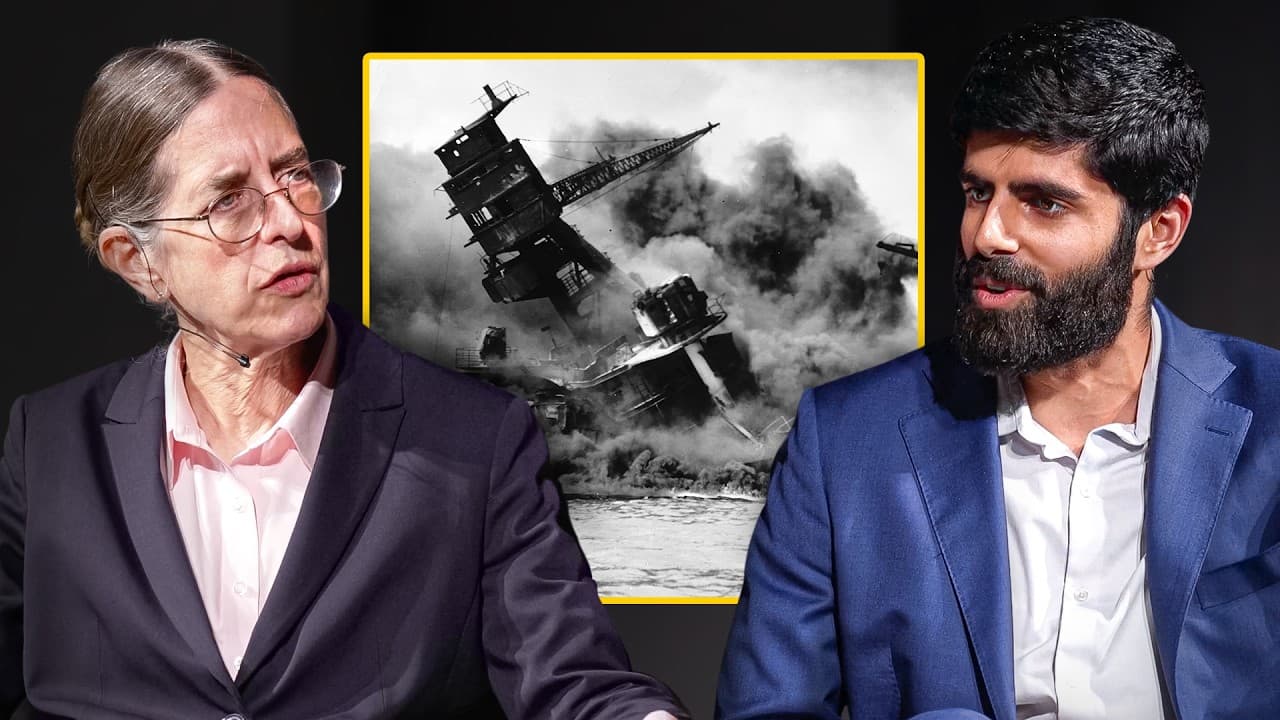
The oil embargo and strategic choices by the United States shaped a path toward war, but alternatives were constrained by the Depression era and the global balance of power. The discussion weighs whether concessions to Japanese factions or different embargo policies could have altered outcomes, while acknowledging the limits of counterfactuals. The takeaway centers on how far diplomacy, economics, and alliance dynamics could realistically shift a feared escalation.
Transcript
basically America puts in this oil embargo and knows that the outcome of failed negotiations on getting rid of that embargo is a total World War of this kind and it's not even for the main strategic objective which is you know you got to get Hitler you got to get beat Germany wasn't this just our failure of grand strategy to realize why are we doin... Read More
Key Insights
- The oil embargo was a central factor in shaping Japan's strategic choices and the US response, tying economic policy to international security outcomes.
- The international system and laws governing freedom of navigation are cited as fundamental to prosperity, influencing both American and Japanese calculations about war and peace.
- Factions within Japan who favored peace faced a military counterweight, and appeasing them would have required concessions long enough to save face and alter the path to conflict.
- Hitler’s actions and Japan's alliance dynamics are described as pivotal to the timing and nature of the war, suggesting counterfactuals depend on how these broader powers interacted.
- Tariff and economic policy are framed as restrictive tools that can backfire if not balanced with diplomacy, potentially pushing states toward more aggressive strategies.
- There is a recognition that counterfactual history has limits, but exploring alternative options is valuable for learning lessons about strategic decision making.
- The discussion recognizes the fear of admitting possible missteps in grand strategy, yet emphasizes the importance of analyzing what could have changed outcomes.
- The speaker highlights that even in hindsight, the inevitability of certain outcomes cannot be assumed, given the volatile mix of domestic politics and international pressures.
- More videos from this channel:
- More from this channel: Dwarkesh Patel
Install to Summarize YouTube Videos and Get Transcripts
Explore YouTube Video Summarizer or Get YouTube Transcript Extractor
Questions & Answers
Q: Could the oil embargo have been avoided, and would that have changed the outcome of US-Japan relations?
The oil embargo is described as a policy meant to protect the International System and prevent Empire, but it also risked pushing Japan toward war. The discussion weighs whether lifting or altering the embargo might have allowed Japan to save face and pursue diplomacy, potentially averting a broader conflict. However, it acknowledges that other factors such as factional power within Japan and military influence would still shape outcomes, making a different path uncertain at best.
Q: What is the role of the International System in this historical moment?
The International System is portrayed as a framework for commercial and strategic interactions among great powers. Its preservation is linked to freedom of navigation and adherence to laws, which in turn affects prosperity and stability. The talk argues that both Americans and Japanese valued this system, influencing decisions about war, diplomacy, and the acceptability of concessions.
Q: Did Japan have internal factions willing to pursue peace, and could concessions save face?
Yes, there were civilian factions in Japan seeking to prevent further expansion and preserve prosperity through international cooperation. The discussion notes these factions were constrained by the military and by the loss of influence after 1936 and 1941, making it difficult to secure a peaceful path without meaningful concessions that would save face.
Q: Was Hitler’s alliance with Japan a decisive factor in America entering World War II?
According to the conversation, Hitler's error in aligning with Japan and the cascade of events that followed were instrumental in drawing the US into the war. Without that blunder and the attack on Pearl Harbor, explaining a shift to fighting Nazis would have been more complex. This framing emphasizes how alliance dynamics influenced strategic choices.
Q: Could alternate US policies after the Depression reduce the risk of war?
The discussion suggests that tariff walls during the Depression period worsened economic hardship and encouraged retaliatory policies, increasing the likelihood of conflict. A different approach emphasizing sustained diplomacy and international cooperation might have reduced tensions, though the era’s constraints and competing priorities complicated such a path.
Q: Is it possible to determine an optimal alternative history path for US-Japan relations?
No single alternative path stands out as definitively optimal due to the imperfect information and competing interests of the time. The speaker emphasizes that counterfactuals are useful for learning but cannot guarantee a precise alternative outcome, given the volatile mix of economic pressures, factional power, and strategic objectives.
Q: What lessons does this discussion offer about grand strategy and decision making?
The conversation highlights the high stakes of grand strategy and the difficulty of balancing economic policy, alliance dynamics, and domestic politics. It suggests that concessions, credible diplomacy, and attention to internal political pressures can influence war outcomes, but the limits of what could be achieved must be acknowledged.
Q: Why is it important to study counterfactuals in history, according to the speaker?
Counterfactuals help illuminate how different choices might have altered trajectories and outcomes, offering a framework to analyze decision making and policy consequences. The speaker notes that such exercises reveal the range of feasible options and the tradeoffs policymakers faced, even if the actual history remains fixed.
Summary & Key Takeaways
-
The discussion frames the oil embargo as a pivotal policy that influenced Japan’s decision calculus and the broader international system, highlighting both diplomatic limits and strategic risks. It argues that without careful concessions, factional power within Japan and external pressures could still lead to conflict.
-
The talk emphasizes the importance of the international system and rule of law in preventing aggression, while noting that domestic pressures and military influence in Japan constrained peaceful endings despite negotiations.
-
Ultimately, the speaker suggests counterfactuals are difficult but necessary for understanding how different choices might have shifted the trajectory toward or away from war, while recognizing the high stakes and imperfect options available at the time.
Read in Other Languages (beta)
Share This Summary 📚
Summarize YouTube Videos and Get Video Transcripts with 1-Click
Try YouTube Summary with ChatGPT & Claude or YouTube Transcript Generator
Explore More Summaries from Dwarkesh Patel 📚





Summarize YouTube Videos and Get Video Transcripts with 1-Click
Try YouTube Summary with ChatGPT & Claude or YouTube Transcript Generator