How Does Morning Sunlight Improve Wakefulness and Sleep?
TL;DR
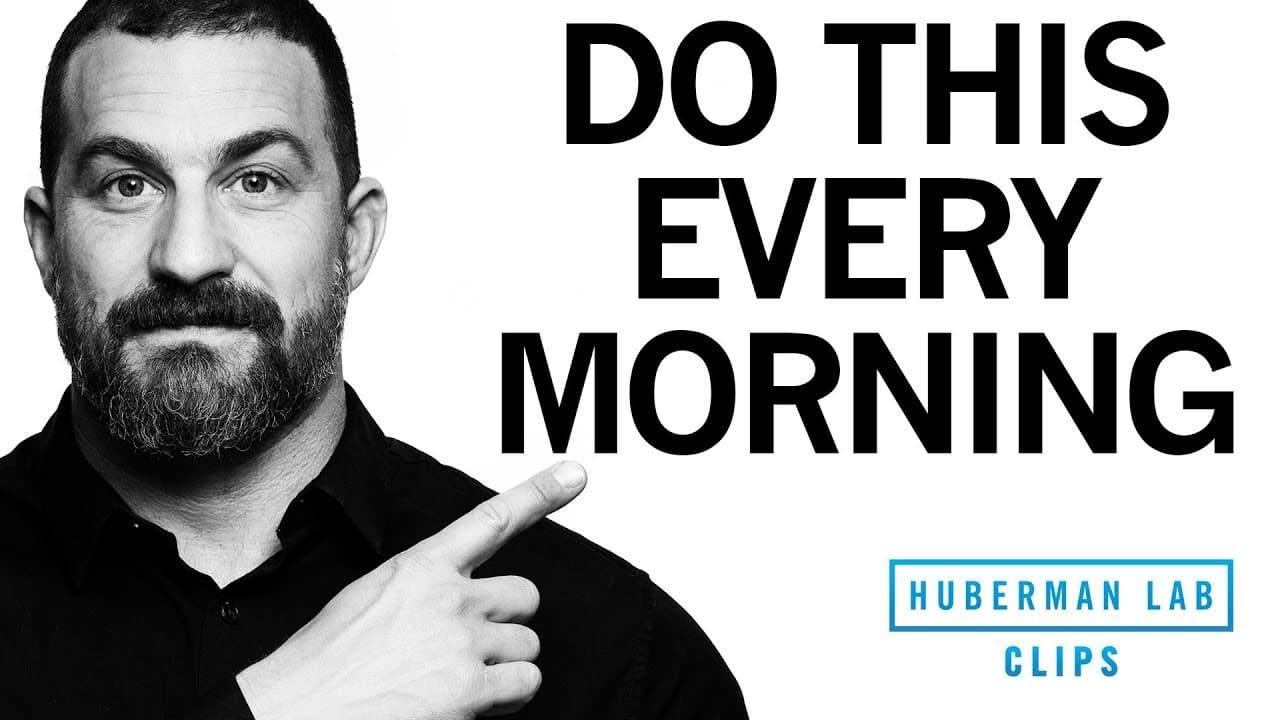
Morning sunlight exposure enhances wakefulness by triggering cortisol release, helping you stay alert throughout the day and promoting better sleep at night. Aim to get outside within the first hour after waking, ideally for five to thirty minutes depending on weather conditions, and avoid using artificial lights for wakefulness as they are less effective.
Transcript
- I wake up in the morning and I want to reach for my phone, but I know that even if I were to crank up the brightness on that phone screen, it's not bright enough to trigger that cortisol spike, and for me to be at my most alert and focused throughout the day and to optimize my sleep at night. So what I do is I get out of bed and I go outside, and... Read More
Key Insights
- 😪 Morning sunlight exposure is scientifically proven as a powerful tool for improving wakefulness and sleep quality.
- 🙂 Artificial lights are not as effective as sunlight in triggering the mechanisms necessary for optimum wakefulness.
- 🥳 Cloudy days also provide valuable sunlight exposure, so it is important to spend time outside regardless of weather conditions.
- 😎 Sunglasses should be avoided during morning sunlight viewing, while corrective eyeglasses or contact lenses are acceptable.
- ⌛ Morning sunlight exposure should be obtained within the first hour of waking for maximum benefits.
- 🙂 Artificial lights, if used too late at night, can disrupt sleep and compromise circadian rhythms.
- 🙂 The required duration of sunlight exposure varies based on factors like location, sensitivity to light, and weather conditions.
Install to Summarize YouTube Videos and Get Transcripts
Explore YouTube Video Summarizer or Get YouTube Transcript Extractor
Questions & Answers
Q: Why is morning sunlight exposure important for wakefulness and sleep?
Morning sunlight exposure triggers the release of cortisol, which helps to keep us awake and focused during the day, while also improving sleep quality at night.
Q: Can I replace morning sunlight exposure with artificial lights if I wake up before the sun rises?
Artificial lights, including bright ones, cannot fully substitute for sunlight in stimulating wakefulness. If you wake up before sunrise, it is recommended to turn on as many artificial lights as possible until you can go outside and get sunlight.
Q: Can cloudy days still provide the necessary sunlight exposure?
Yes, even on cloudy days, sunlight is beneficial. In fact, on overcast or rainy days, it is recommended to spend more time outdoors to compensate for the reduced intensity of sunlight.
Q: Can I get enough sunlight by sitting near a window or wearing sunglasses?
Trying to get sunlight exposure through a window or windshield is not as effective as being outside. Similarly, wearing sunglasses obstructs the necessary light stimulation. It is best to get outside and directly expose your eyes to sunlight.
Key Insights:
- Morning sunlight exposure is scientifically proven as a powerful tool for improving wakefulness and sleep quality.
- Artificial lights are not as effective as sunlight in triggering the mechanisms necessary for optimum wakefulness.
- Cloudy days also provide valuable sunlight exposure, so it is important to spend time outside regardless of weather conditions.
- Sunglasses should be avoided during morning sunlight viewing, while corrective eyeglasses or contact lenses are acceptable.
- Morning sunlight exposure should be obtained within the first hour of waking for maximum benefits.
- Artificial lights, if used too late at night, can disrupt sleep and compromise circadian rhythms.
- The required duration of sunlight exposure varies based on factors like location, sensitivity to light, and weather conditions.
- Direct sunlight should be avoided if it is deemed too bright or painful to look at, but looking toward the sun without direct staring is safe.
Summary & Key Takeaways
-
Morning sunlight exposure triggers cortisol production, optimizing alertness and focus throughout the day and promoting better sleep at night.
-
It is best to view sunlight early in the day, within the first hour of waking, to reap its benefits.
-
Artificial lights are not as effective as sunlight in stimulating wakefulness, and excessive exposure to artificial lights at night can disrupt sleep.
Read in Other Languages (beta)
Share This Summary 📚
Summarize YouTube Videos and Get Video Transcripts with 1-Click
Try YouTube Summary with ChatGPT & Claude or YouTube Transcript Generator
Explore More Summaries from Huberman Lab Clips 📚



Summarize YouTube Videos and Get Video Transcripts with 1-Click
Try YouTube Summary with ChatGPT & Claude or YouTube Transcript Generator