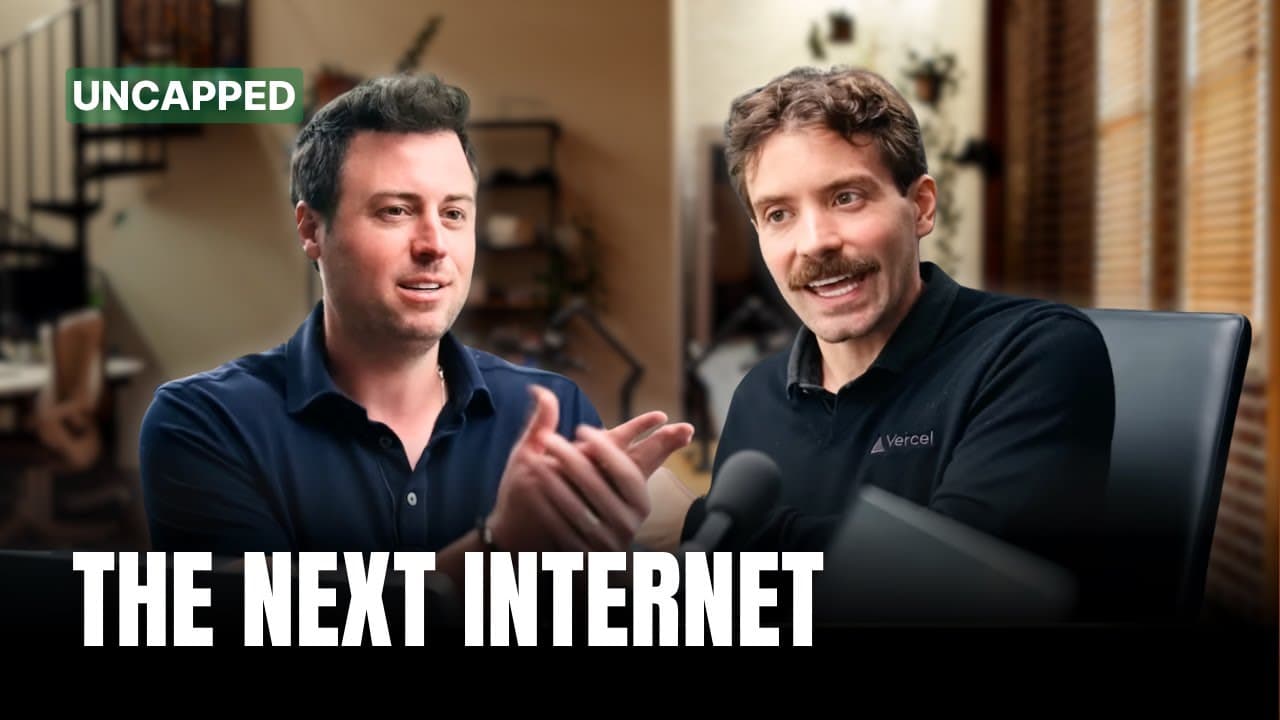
What Is the Future of Code Generation? Guillermo Rauch, CEO of Vercel | Ep. 20
TL;DR
The future of code generation depends on turning generated code into deployed, usable software that produces meaningful outcomes. Guillermo Rauch, CEO of Vercel, argues that fast feedback loops matter: as a CTO, he built a system that gave every Git push a working URL linked to its commit. Read on to see how deployment velocity, frontend experiences, and rigorous definitions of completion shape his view.
Transcript
you've been coding for hours and hours and he didn't even know what the output was. He was just impressed by the fact that someone could be so locked in. And so I think programming taught me that. It taught me how to focus. It taught me to be disciplined. It taught me to receive this negative feedback from the compiler and overcome it. I do think, ... Read More
Key Insights
- Programming is a discipline for developing focus and resilience because it requires sustained concentration, repeated exposure to negative compiler feedback, and persistent correction. Rauch believes society may eventually need another activity that teaches these qualities if programming itself becomes less central in an AI-assisted future.
- Deployment velocity was the most impactful improvement Rauch introduced as a CTO. His team could push code to Git and receive a URL tied to the commit, creating a rapid feedback loop that made development feel like editing the internet in real time.
- Vercel originated from the goal of making development tools feel immediately usable. Rauch contrasted that experience with setting up environments, installing many dependencies, fighting configuration problems, and delaying productive work before a developer could begin implementing an idea.
- Cloud infrastructure can make organizations rigid when deployment processes and earlier infrastructure choices become difficult to change. Rauch cites companies that deploy quarterly or freeze code for weeks or months, a problem that becomes more important when new AI models appear rapidly.
- Frontend technology creates differentiated internet experiences because important interactions happen visibly and in real time. Rauch uses ChatGPT's thinking, streaming, and live document interface as examples of experiences that require frameworks designed to support powerful frontend behavior.
- Developer experience is incomplete without business outcomes. Rauch says a move to Vercel should produce visible benefits such as faster experiences, more dynamic products, quicker iteration, and an improved ability to build AI products, rather than merely replacing infrastructure.
- Product experience is Vercel's organizing principle for cloud development. Rauch describes working backward from the deployed URL and the resulting user experience, then identifying the technology needed to support it, instead of beginning exclusively with implementation details and infrastructure primitives.
- Code generation productivity depends on landing software, not simply writing code. Rauch defines stronger forms of landing as deploying something that is usable and, ideally, observing a business outcome, while still balancing that discipline with enough attempts to create opportunities for success.
Install to Summarize YouTube Videos and Get Transcripts
Explore YouTube Video Summarizer or Get YouTube Transcript Extractor
Questions & Answers
Q: How should teams evaluate the productivity of code generation?
Teams should evaluate whether generated code becomes fully deployed and usable, rather than measuring code output alone. Guillermo Rauch says the strongest definition of success also includes observing a business outcome through the complete funnel.
Q: What does it mean to land software successfully?
Landing software means moving beyond writing or generating code to deploying something people can actually use. Rauch says an even stronger standard is achieving an observable business outcome while maintaining enough attempts to discover valuable results.
Q: How did deployment velocity inspire the creation of Vercel?
As a CTO, Rauch optimized continuous integration and deployment so that every Git push produced a working URL associated with its commit. His colleagues later identified this iteration and deployment velocity as his most impactful contribution, helping him recognize a larger business opportunity.
Q: What developer experience did Guillermo Rauch want Vercel to create?
Rauch wanted development tools to feel immediately ready for productive work, like receiving a new laptop whose operating system and hardware already work together. He contrasted that with installing numerous dependencies, fighting configuration problems, and waiting before an idea can be implemented.
Q: What first-principles ideas shaped Vercel’s early development?
Vercel pursued an almost immediate path from editing a file to publishing it online. Rauch examined constraints such as file-transfer speed, cloud containers, and build duration, comparing the desired experience to editing a file in a magic folder that instantly becomes a live deployment.
Q: Why can established companies struggle to deploy quickly?
Rauch says growing companies can become rigid because of accumulated infrastructure choices and deployment processes. He describes companies that deploy once a quarter or freeze code for weeks or months, limiting their ability to experiment and adapt.
Q: Why did Vercel focus heavily on frontend development?
Rauch sees frontend systems as central to the visible experiences that differentiate internet products. Interfaces involving real-time streaming, visible thinking, and live documents require frameworks capable of supporting responsive, dynamic behavior.
Q: What skills did programming teach Guillermo Rauch?
Programming taught Rauch sustained focus, discipline, and resilience when receiving negative feedback from a compiler. He learned to correct errors repeatedly and continue working, although he believes another activity may eventually need to teach those qualities if programming becomes less central.
Summary & Key Takeaways
-
Rauch traces Vercel's origins to his experience as a CTO, where improving continuous integration and deployment had the greatest impact on his team. Giving each Git commit a working URL made development feel like editing the internet in real time, revealing that iteration speed and carefully configured tools could become a significant business opportunity.
-
Vercel began with a first-principles pursuit of instant development, including faster file transfer, cloud builds, and deployment. Its focus increasingly shifted toward frontend systems because differentiated internet experiences depend heavily on responsive interfaces, real-time streaming, and visible interactions. Next.js and Vercel connected that developer experience to faster, more dynamic products.
-
Rauch argues that code generation cannot be evaluated by code output alone. Teams must define what it means to land software, preferably reaching full deployment, actual usability, and observable business results. Perceived speed can differ from realized productivity, so disciplined completion standards and enough attempts to discover valuable outcomes must remain balanced.
Read in Other Languages (beta)
Share This Summary 📚
Summarize YouTube Videos and Get Video Transcripts with 1-Click
Try YouTube Summary with ChatGPT & Claude or YouTube Transcript Generator
Explore More Summaries from Uncapped with Jack Altman 📚






Summarize YouTube Videos and Get Video Transcripts with 1-Click
Try YouTube Summary with ChatGPT & Claude or YouTube Transcript Generator