Brian Armstrong on Why Assets Will Move Onchain
TL;DR
Assets are likely to move onchain because blockchain systems can make trading faster, cheaper, global, continuously available, and open to smaller investors. Brian Armstrong argues that wider adoption depends on capable technology, clear regulation, responsible experimentation, and companies working with policymakers instead of waiting indefinitely for every legal question to be resolved.
Transcript
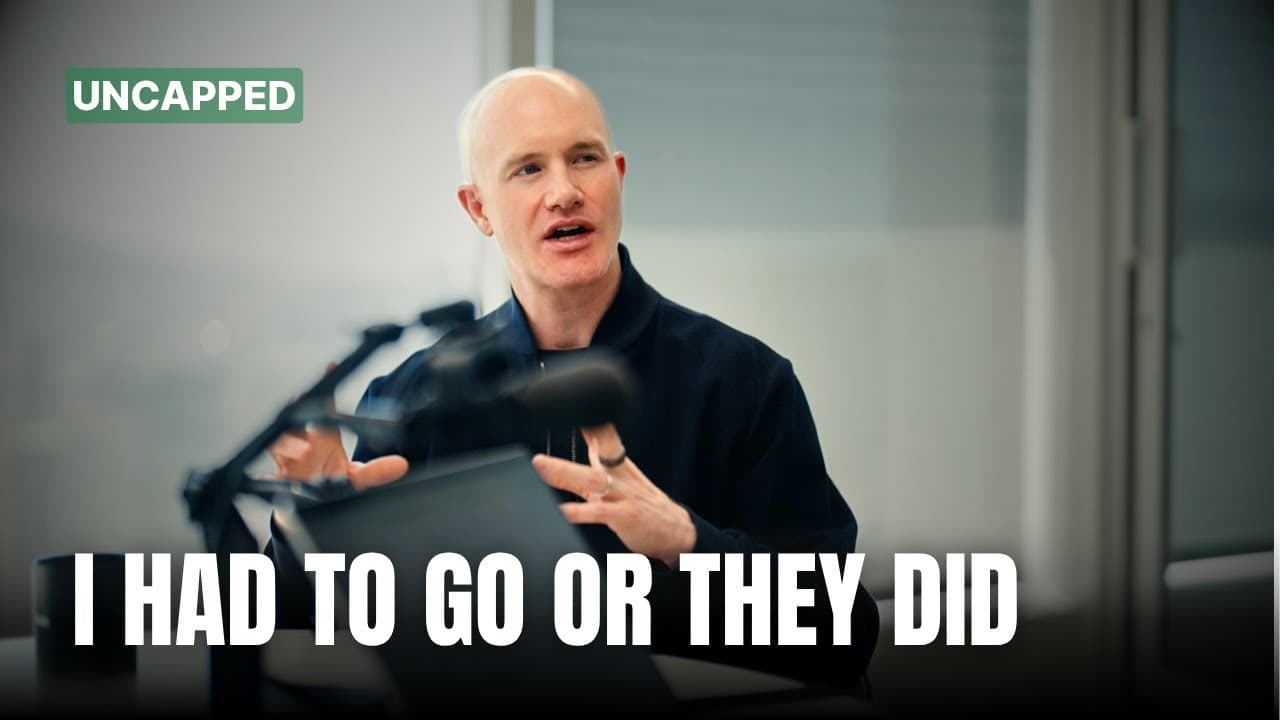
People shouldn't like seek out a specific moment to do something super contrarian, but if you're in a position of leadership, it will occasionally become necessary for you to do something really difficult, which will piss off some large group of people, but it's the right thing to do for the company. And so these moments present themselves to you a... Read More
Key Insights
- Onchain assets are expected to expand because blockchain-based markets can be faster, cheaper, more global, and available continuously. Armstrong frames crypto as an infrastructure upgrade that could affect payments, trading, borrowing, lending, capital formation, and some uses outside finance.
- Tokenized stocks could broaden access to US securities for people in countries where traditional brokerage accounts are difficult to obtain. Onchain markets could also support fractional shares, 24/7 trading, perpetual futures, and market structures that traditional financial systems have not fully adopted.
- Onchain governance can make ownership rules programmable. A company could, for example, restrict voting to shareholders who have held stock for more than a year, potentially encouraging long-term participation and reducing the influence of someone who buys shares shortly before a governance vote.
- Company cooperation is important when bringing assets onchain. Armstrong says creating derivatives without a company's permission is not a good approach, and he expects frontier companies to opt in first before regulated onchain fundraising and asset issuance become a widely followed path.
- Regulatory clarity is a prerequisite for broader crypto adoption. Armstrong points to improved discussions with the SEC, its crypto task force, the enacted GENIUS Act for stablecoins, and the proposed Clarity Act for market structure and crypto securities as signs of progress.
- The GENIUS Act defines acceptable backing for dollar-backed stablecoins. Armstrong says reserves must be fully held in US dollars in a bank account or in short-term Treasuries, while issuers must also follow requirements concerning audits and eligible organizational structures.
- Responsible innovation often begins before legislation is complete. Armstrong argues that startups cannot wait for every rule because clarity can take a decade, but they should still build products that are responsible and consistent with the requirements they expect future laws to establish.
- Government engagement becomes necessary as frontier companies grow. Armstrong initially believed Coinbase could simply follow existing law and avoid policy work, but unclear rules eventually required the company to educate lawmakers, build a policy team, help shape legislation, and develop political influence among crypto users.
Install to Summarize YouTube Videos and Get Transcripts
Explore YouTube Video Summarizer or Get YouTube Transcript Extractor
Questions & Answers
Q: Why does Brian Armstrong think assets will move onchain?
Brian Armstrong believes assets will move onchain because blockchain-based financial infrastructure can be faster, cheaper, and more global than existing systems. It can enable continuous trading, fractional ownership, broader international access, programmable governance, and new order books. He expects the shift to extend beyond crypto into stocks, commodities, prediction markets, startup fundraising, and other forms of capital formation.
Q: How could tokenized stocks improve access to US securities?
Tokenized stocks could allow people in many countries to access US assets without relying entirely on traditional brokerage arrangements that may be available mainly to wealthier customers. Armstrong uses Argentina as an example of a place where obtaining a US brokerage account can be difficult. Onchain markets could also provide fractional shares and 24/7 trading, making participation more flexible.
Q: What new features could onchain securities support?
Onchain securities could support continuous trading, fractional shares, perpetual futures order books, and programmable voting rules. Armstrong suggests that a company could permit only investors who held shares for more than a year to vote in a governance decision. Such rules could encourage long-term ownership and limit the influence of investors who purchase shares immediately before a vote.
Q: What does the GENIUS Act require for stablecoins?
According to Armstrong, the GENIUS Act clarifies that a dollar-backed stablecoin must maintain full reserves in US dollars held in a bank account or in short-term Treasuries. It also establishes basic requirements involving audits and the types of entities that may issue stablecoins. He says an issuer does not necessarily need to be a bank and may operate as a trust company.
Q: Why does Armstrong consider the GENIUS Act symbolically important?
Armstrong says the GENIUS Act does more than specify reserves, audits, and issuer structures. Its larger symbolic effect is to state that building stablecoin businesses is allowed and encouraged in the United States. With a federal law in place, companies can follow defined requirements instead of facing an environment where regulatory uncertainty can be used to challenge the entire industry.
Q: How should startups operate before regulations are clear?
Startups working on a new frontier should build responsibly without waiting for every law to be settled, according to Armstrong. Regulatory clarity can take a decade, so waiting may leave a company too late to compete. However, founders should not ignore likely obligations. They should develop products consistent with what responsible future regulation would probably require while preparing to engage policymakers.
Q: When should a growing technology company engage with government?
A technology company should expect government engagement to become necessary as it grows and enters areas where existing law is unclear. Armstrong initially thought Coinbase could focus on customers and products while simply following the law. He later concluded that frontier companies need policy teams, educational outreach, and participation in shaping rules because government will take an interest even when founders prefer not to engage.
Q: What leadership lesson does Armstrong give about contrarian decisions?
Armstrong says leaders should not search for opportunities to act contrarian merely for the sake of appearing unconventional. However, leadership will occasionally require a difficult decision that angers a large group while still being right for the company. These situations arise naturally, and a leader must be willing to endure opposition when the company's long-term interests justify the choice.
Summary & Key Takeaways
-
Brian Armstrong presents crypto as a technology for updating financial infrastructure across payments, trading, borrowing, lending, and capital formation. He expects stocks, commodities, prediction markets, and other assets to move onchain because the model can offer global access, fractional ownership, continuous trading, programmable governance, and new market structures.
-
Regulation and technology are described as the two main constraints on adoption. The GENIUS Act established clearer requirements for dollar-backed stablecoins, including permitted reserves and audits. Armstrong also highlights the proposed Clarity Act and improved conversations with the SEC as possible foundations for regulated crypto securities and onchain fundraising.
-
Armstrong says founders working at a technological frontier must act responsibly before every legal issue is settled, because legislation can take years. As companies grow, they inevitably encounter government and need policy expertise. Leadership also sometimes requires difficult, unpopular decisions that protect the company despite provoking opposition from a large group.
Read in Other Languages (beta)
Share This Summary 📚
Summarize YouTube Videos and Get Video Transcripts with 1-Click
Try YouTube Summary with ChatGPT & Claude or YouTube Transcript Generator
Explore More Summaries from Uncapped with Jack Altman 📚



Summarize YouTube Videos and Get Video Transcripts with 1-Click
Try YouTube Summary with ChatGPT & Claude or YouTube Transcript Generator