How Enduring Companies Are Built and Funded
TL;DR
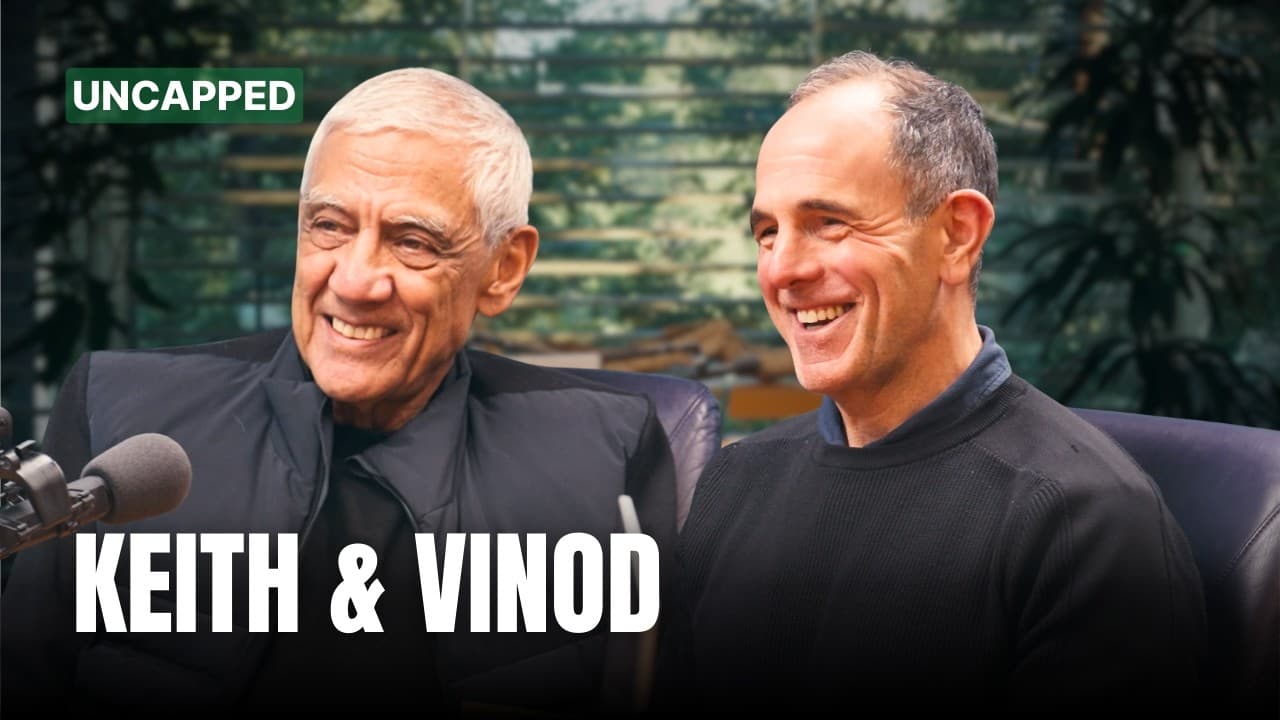
Enduring companies are built by exceptional teams, direct communication, first-principles decisions, and investors who prioritize the company’s long-term potential. Khosla Ventures treats investing as a 10-to-20-year partnership, reviews existing portfolio companies before new opportunities, and believes strong founders seek candid feedback while retaining the confidence to reject advice they consider wrong.
Transcript
I've invested a lot in AI. So, >> yeah, I love your quote about AI and how you'd have done it differently if you hadn't joined Coastal Venture before I joined KB. I joined KB literally two years ago, basically this week. >> Yeah, >> I had invested in zero zero rejoined. Yeah, rejoined. Rejoin >> and literally had invested in zero AI companies befor... Read More
Key Insights
- The team a founder builds is the company the founder builds, according to a principle Khosla taught Rabois while serving on Square’s board. Team quality therefore shapes the organization itself, not merely its ability to execute an existing business plan.
- First-principles thinking is the foundation of Khosla and Rabois’s working relationship. By breaking a problem into explicit factors, they can identify where they agree, isolate the source of disagreement, and state which assumptions would make a decision good or bad.
- Direct communication reduces uncertainty within an investment partnership. Khosla and Rabois prefer brutal honesty to hypocritical politeness because clear statements prevent colleagues and founders from guessing what an investor thinks, why the investor thinks it, or whether concerns are being withheld.
- Khosla Ventures spends far less than 5% of its discussion time operating the venture firm, excluding some attention to hiring and assessment. The partners find investing and working with entrepreneurs more engaging, while compensation is described as one of the few recurring management matters.
- Existing portfolio companies receive attention before new investment opportunities at every Monday meeting. This ordering reflects the firm’s belief that investing creates a long-term responsibility to help each company pursue its highest ambition and change its trajectory when greater potential exists.
- Venture assistance is Khosla’s preferred description of his role after 40 years in venture capital. He avoids calling himself a venture capitalist or investor because he views the core work as assisting entrepreneurs who are trying to build consequential companies.
- Credible founder advice requires experience building companies, according to Khosla. He argues that people who have worked inside companies and helped build them possess greater empathy for founders and have better earned the right to push entrepreneurs toward stronger decisions.
- Artificial intelligence became about 70% of Rabois’s investments during the two years after he rejoined Khosla Ventures. He says he had invested in zero AI companies before returning and believes the firm helped him avoid either missing the wave or approaching it recklessly.
Install to Summarize YouTube Videos and Get Transcripts
Explore YouTube Video Summarizer or Get YouTube Transcript Extractor
Questions & Answers
Q: How do Vinod Khosla and Keith Rabois make investment decisions together?
Vinod Khosla and Keith Rabois use first-principles thinking to separate a difficult investment decision into its decisive variables. They discuss the conditions that would make an opportunity attractive or unattractive, then assess the founder and company against those conditions. Rabois gives an example in which Khosla identified three essential founder attributes, allowing the team to recognize that the founder rated highly on all three dimensions and reach a decision.
Q: Why is first-principles thinking useful in venture capital?
First-principles thinking makes an investment debate more precise by replacing vague reactions with explicit assumptions and factors. Khosla says it becomes easy to determine where people agree and disagree when they can debate a small set of underlying variables. The partners can even frame a conclusion conditionally, stating that if a particular premise is true, the investment is good, while a different premise would make it bad.
Q: Why do Khosla and Rabois value direct communication?
Direct communication allows partners and founders to understand concerns without guessing at hidden meanings. Khosla says being direct saves hassle, while Rabois notes that nobody in the partnership has to wonder what another person thinks or why. They believe ambitious founders process succinct, candid feedback particularly well, making this communication style useful both for internal investment debates and for advising portfolio company leaders.
Q: How does Khosla Ventures divide time between investing and managing the firm?
Khosla Ventures devotes very little discussion time to operating the venture firm. Rabois estimates that firm operations account for far less than 5% of their conversations, although hiring and assessment can add some related time. Compensation receives attention once a year, but the partners report few major policy disagreements. Most of their energy goes toward evaluating new opportunities and helping existing portfolio companies.
Q: Why does Khosla Ventures review portfolio companies before new investments?
Every Monday meeting begins with the current portfolio before the partners discuss new opportunities. The ordering reflects their belief that they are in the company-building business and that an investment begins a partnership lasting 10 to 20 years. Their central question is how they can help a portfolio company achieve its highest ambition, realize its potential, or change its trajectory when the opportunity for improvement exists.
Q: What does Vinod Khosla mean by being a venture assistant?
Khosla describes himself as a venture assistant because he sees his primary role as helping entrepreneurs build companies, not merely supplying capital or selecting investments. He says he has avoided calling himself a venture capitalist or investor throughout 40 years in the field. The term emphasizes continuing assistance, candid advice, and responsibility for helping a company pursue its potential after the original investment decision.
Q: What kind of investor feedback benefits strong founders?
Strong founders benefit from clear, candid feedback that prioritizes the company rather than the investor’s popularity or future referrals. Khosla compares constant approval to saying yes to children regardless of what they request. He argues that supportive investors must also push founders to improve. At the same time, a strong founder should be capable of considering the criticism and responding, clearly and confidently, that they disagree.
Q: How did joining Khosla Ventures affect Keith Rabois’s AI investing?
Rabois says he had invested in zero artificial intelligence companies before rejoining Khosla Ventures. During the following two years, AI grew to about 70% of his investments. He believes joining the firm changed his exposure to the sector materially. Without that move, he thinks he might either have missed the AI wave and become irrelevant to it or participated in a reckless, insufficiently disciplined way.
Summary & Key Takeaways
-
Vinod Khosla and Keith Rabois describe a working relationship grounded in first-principles thinking and direct communication. They reduce difficult investment decisions to decisive variables, debate assumptions openly, and rarely disagree fundamentally because they can identify the exact conditions under which a decision would become good or bad.
-
Khosla Ventures focuses its internal attention on new investments and existing portfolio companies, while spending little time managing the firm. Monday meetings begin with the current portfolio because the partners see themselves as long-term company builders whose responsibility is helping ambitious businesses reach their highest potential.
-
Khosla and Rabois reject superficial founder friendliness and what they call hypocritical politeness. They argue that investors should earn the right to advise founders through operating experience, provide candid feedback, and prioritize what benefits the company. Strong founders seek useful criticism but can confidently decline advice when they disagree.
Read in Other Languages (beta)
Share This Summary 📚
Summarize YouTube Videos and Get Video Transcripts with 1-Click
Try YouTube Summary with ChatGPT & Claude or YouTube Transcript Generator
Explore More Summaries from Uncapped with Jack Altman 📚
Summarize YouTube Videos and Get Video Transcripts with 1-Click
Try YouTube Summary with ChatGPT & Claude or YouTube Transcript Generator