How to apply Darwinism to venture capital strategy
TL;DR
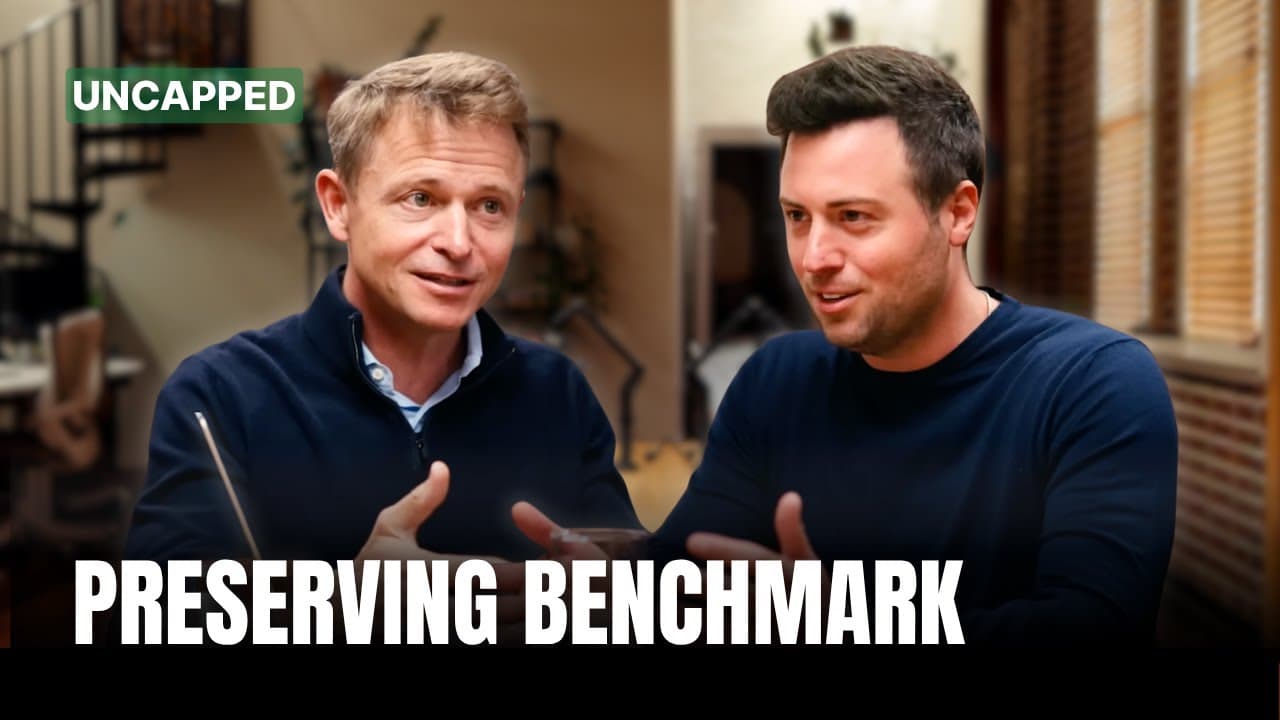
The core idea is to generalize Darwinism to organizations and ecosystems. Things mutate, are selected, and inherited, shaping how companies and funds survive, adapt, and flourish. In Silicon Valley the adaptive landscape supports rapid variation, competition, and knowledge transfer, which keeps the ecosystem resilient and central to future innovation.
Transcript
Six minutes in you're like okay there's 40 coding companies and this and that but there's one person who has this clarity totally and you just don't even have to finish like the the five minutes in the meeting you're done but then it's clumsy cuz you're like it's a relationship so you want to have a two-way you want to have a you don't want to just... Read More
Key Insights
- Mutation includes both planned and unplanned variance that drives exploration and learning within companies and ventures.
- Selection is the force that determines which ideas, products, or teams survive and prosper in the market and within portfolios.
- Inheritance lets successful past experiences, processes, and structures carry forward into new ventures.
- The health of an ecosystem depends on its ability to tolerate variation and to apply selection pressure through capital, teams, and entrepreneurship.
- Silicon Valley is portrayed as the current epicenter due to its dense startup network, capital markets, and cultural norms around speed and experimentation.
- China is presented as a competitor with a more distributed and multi-team approach to development, offering a different model of selection pressure.
- The value of being a great board member lies in understanding the Darwinian dynamics that shape company evolution and guiding adaptive strategies.
- Embracing things that don’t scale is healthy because it sustains variety and long-term fitness of organizations and ecosystems.
Install to Summarize YouTube Videos and Get Transcripts
Explore YouTube Video Summarizer or Get YouTube Transcript Extractor
Questions & Answers
Q: What is the central idea of generalizing Darwinism to business and venture capital?
The central idea is that complex systems like companies, venture funds, and entire ecosystems follow Darwinian mechanics: mutation, selection, and inheritance. These mechanics operate in both planned and unplanned ways, driving adaptation, growth, and the ability to survive changing market conditions. Understanding this helps leaders steer organizations toward maximum fitness.
Q: How do mutation, selection, and inheritance apply to startups and ventures?
Mutation refers to variance in ideas and products, some of which are planned while others are unplanned or serendipitous. Selection determines which ideas persist by proving their value in the market or within a portfolio. Inheritance carries forward lessons, processes, and strategies from past successes into new ventures, enabling cumulative improvement over time.
Q: Why is Silicon Valley described as highly adaptive compared to other regions?
Silicon Valley is described as highly adaptive because it tolerates both planned and unplanned variation and supports rapid experimentation. It has dense startup activity, capital markets, and a culture that rewards speed, clarity, and focus. This combination creates a feedback loop that sustains vitality and resilience in the ecosystem.
Q: What role does competition play in the Darwinian framework for ecosystems?
Competition acts as a selective force that helps identify which groups, teams, or approaches are most fit. The presence of multiple groups pursuing different strategies accelerates learning and adoption of successful adaptations, as seen in examples where many teams work toward similar objectives.
Q: How does the discussion compare Silicon Valley with China in terms of development models?
The discussion notes that China has a distributed, multi-team approach with many players pursuing varied strategies. This creates strong selection pressure and rapid iteration, offering a contrast to Silicon Valley’s dense ecosystem. Both models illustrate different ways to drive adaptive success through competition and variance.
Q: What is the significance of being a great board member in this Darwinian view?
A great board member understands the Darwinian dynamics shaping company evolution. They help ensure the organization maintains adaptive fitness by guiding strategy, monitoring selection pressures, and supporting productive variation while avoiding maladaptive behaviors that could hinder long-term survival and growth.
Q: Why is embracing things that don’t scale considered healthy in this framework?
Things that don’t scale introduce valuable experiments, diverse approaches, and learning opportunities. They create the variance needed for evolution, allowing the organization to discover unique capabilities and strategies. Over time, successful elements can scale, while the broader experience strengthens the ecosystem’s resilience.
Q: What is the relevance of tempo and pace in venture strategy according to this talk?
Tempo and clarity matter more than deep, slow R&D in some cases. A fast, focused pace enables rapid experimentation, feedback, and refinement. This aligns with Darwinian adaptation, where timely decisions and the ability to pivot based on evidence determine long-term success.
Summary & Key Takeaways
-
Darwinism is generalized beyond biology to explain evolution in markets, tech, and organizations, using mutation, selection, and inheritance as the core mechanics.
-
Silicon Valley is described as the most adaptive ecosystem due to its tolerance for planned and unplanned variation and dense startup activity.
-
The discussion compares Silicon Valley with China and highlights the importance of competition among groups and rapid information flow for sustaining innovation.
Read in Other Languages (beta)
Share This Summary 📚
Summarize YouTube Videos and Get Video Transcripts with 1-Click
Try YouTube Summary with ChatGPT & Claude or YouTube Transcript Generator
Explore More Summaries from Uncapped with Jack Altman 📚




Summarize YouTube Videos and Get Video Transcripts with 1-Click
Try YouTube Summary with ChatGPT & Claude or YouTube Transcript Generator