How to Become a Job-Ready Python Backend Developer
TL;DR
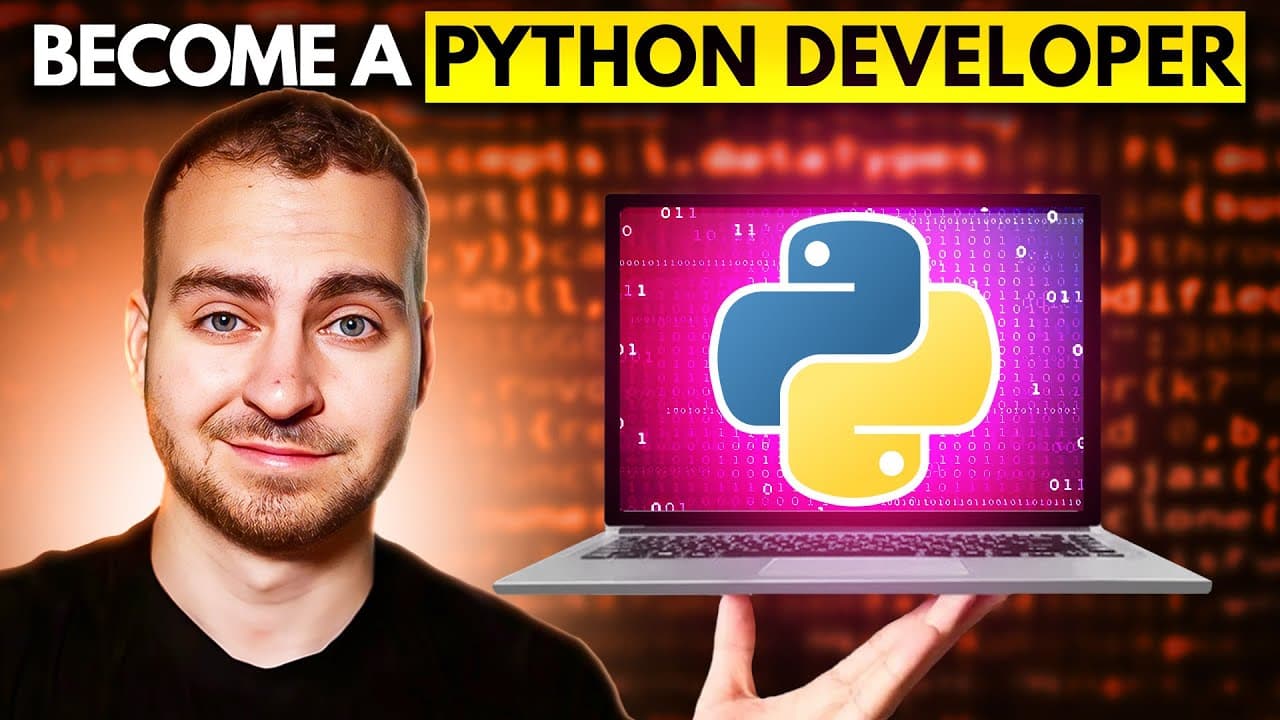
Build strong Python knowledge, then develop practical skills in APIs, databases, testing, Linux, version control, and deployment. A competitive Python backend developer should also understand data structures, algorithms, basic frontend technologies, authentication, security, debugging, and performance topics such as asynchronous programming, multiprocessing, and multithreading. The exact requirements vary by role, so the roadmap can be studied in any order.
Transcript
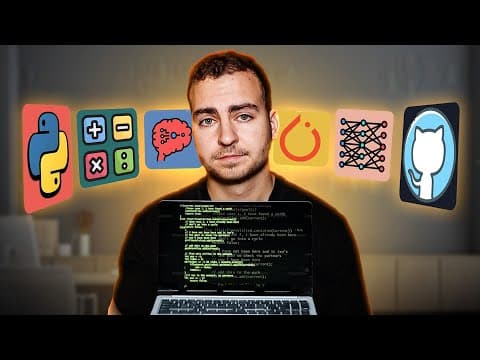
How do you become a Python backend developer in today's market? Well, I've created a list of all of the skills that you need to know. So stick around and let me know how far you are on this journey. So first, let's quickly break down what the role of a Python backend developer actually is. Now these developers are typically responsible for building... Read More
Key Insights
- Python backend development is the work of building, maintaining, and testing server-side logic, databases, and APIs. The role also involves communication between frontend and backend systems, data storage, authentication, and security, while some jobs additionally include deployment and service scaling.
- Advanced Python knowledge is necessary beyond basic conditionals, comprehensions, lists, and functions. Relevant language features include object-oriented programming, metaclasses, decorators, generators, context managers, and iterators, along with an understanding of modules, libraries, conventions, and Pythonic coding practices.
- Python performance work involves asynchronous programming, the global interpreter lock, multiprocessing, and multithreading. Understanding these subjects helps developers reason about how applications execute and how to get more performance from Python programs, particularly when different concurrency or processing approaches may be relevant.
- Data structures and algorithms are especially important during job applications and coding interviews. Candidates should understand structures such as arrays, linked lists, heaps, and binary trees, as well as time complexity and runtime analysis, even if these subjects are not used frequently in everyday backend work.
- Basic frontend knowledge helps backend developers inspect client-side code and communicate with frontend teams. Familiarity with HTML, CSS, JavaScript, and frameworks such as React, Angular, or Vue may appear in job postings, although backend developers do not necessarily need expert-level frontend skills.
- API development is a central backend skill that includes understanding APIs, REST, HTTP, and HTTP methods. Python developers should become familiar with Django, Flask, and FastAPI, plus authentication, authorization, tokens, JWT, OAuth, API security, rate limiting, and Pydantic-based data validation.
- Database competence requires familiarity with both SQL and NoSQL approaches. Backend developers should know how to structure document data, create relational tables, insert and retrieve values, perform advanced queries, design databases, prevent SQL injection, and use object-relational mapping tools such as SQLAlchemy.
- Backend tooling includes Linux command-line work, Git, automated testing, debugging, and manual API testing. Developers should be able to navigate remote systems, edit configuration files, use repositories and branches, write unit and integration tests, step through code, and inspect APIs with curl or Postman.
Install to Summarize YouTube Videos and Get Transcripts
Explore YouTube Video Summarizer or Get YouTube Transcript Extractor
Questions & Answers
Q: What does a Python backend developer do?
A Python backend developer typically builds, maintains, and tests server-side logic, databases, and APIs. The developer supports communication between frontend interfaces and backend services, handles data storage, and works with authentication and security. Depending on the employer and exact position, the role may also include deploying services and helping scale them, so responsibilities can differ substantially between jobs.
Q: How much Python should a backend developer know?
A backend developer should know Python beyond basic conditionals, lists, comprehensions, and functions. The recommended knowledge includes object-oriented programming, metaclasses, decorators, generators, context managers, iterators, modules, libraries, conventions, and Pythonic coding style. It should also cover asynchronous programming, the global interpreter lock, multiprocessing, and multithreading so the developer can better understand execution behavior and application performance.
Q: Why should Python backend developers study data structures and algorithms?
Data structures and algorithms are important primarily because they commonly appear in software engineering coding interviews. Preparation should include arrays, linked lists, heaps, binary trees, time complexity, and analysis of runtime performance. A developer may not use every topic regularly on the job, but employers can still evaluate these skills during applications, making focused interview preparation an important part of becoming employable.
Q: Do Python backend developers need frontend skills?
Python backend developers should understand basic frontend development because they may need to inspect frontend code and communicate with frontend teams. Useful subjects include HTML, CSS, JavaScript, and some familiarity with React, Angular, or Vue. They do not need to become frontend experts, but job postings may request this foundational knowledge because backend services must work correctly with the applications consuming them.
Q: What API skills should a Python backend developer learn?
A Python backend developer should understand what APIs and REST APIs are, how HTTP works, and how HTTP methods are used. Practical framework knowledge should include Django, Flask, and FastAPI. API preparation should also cover authentication, authorization, tokens, JWT, OAuth, security, and rate limiting. Pydantic is useful for data validation, particularly when building services with FastAPI.
Q: What database knowledge is required for Python backend development?
Backend developers should understand both SQL and NoSQL databases because database work is a major part of the role. Relevant skills include structuring document data in systems such as MongoDB or Firebase, creating relational tables, inserting and retrieving values, and writing advanced queries. Developers should also study database design, backups where relevant, safe data handling, and prevention of SQL injection attacks.
Q: What is ORM used for in Python backend development?
Object-relational mapping connects database data with Python objects and allows developers to make database changes or retrieve information using Python syntax instead of writing every custom SQL query directly. Major Python frameworks commonly use this approach. SQLAlchemy is presented as a popular example, so developers should become comfortable with ORM concepts alongside direct knowledge of databases, queries, and secure data handling.
Q: Which tools should a Python backend developer know?
A Python backend developer should be comfortable with Linux and command-line tasks such as navigating directories, creating or removing files, editing configuration files, using SSH, and writing basic shell scripts. Essential development tools also include Git for repositories, commits, branches, and teamwork, automated testing for unit and integration coverage, IDE debugging, and curl or Postman for manually testing APIs.
Summary & Key Takeaways
-
Python backend developers build, maintain, and test server-side logic, databases, and APIs. Their work connects frontend systems with backend services and commonly includes data storage, authentication, and security. Some positions also assign deployment and service-scaling responsibilities, although the precise combination of duties and required skills varies among jobs and organizations.
-
Deep Python knowledge extends beyond basic statements, collections, comprehensions, and functions. Important subjects include object-oriented programming, metaclasses, decorators, generators, context managers, iterators, asynchronous programming, the global interpreter lock, multiprocessing, and multithreading. Developers should also understand modules, libraries, established conventions, performance considerations, and how to write code in a Pythonic style.
-
Practical backend preparation covers REST APIs, HTTP, Python web frameworks, SQL and NoSQL databases, object-relational mapping, Linux, Git, testing, debugging, and API inspection tools. Basic HTML, CSS, JavaScript, and frontend-framework familiarity support collaboration. Data structures and algorithms remain important for coding interviews, even when they are not frequently used directly at work.
Read in Other Languages (beta)
Share This Summary 📚
Summarize YouTube Videos and Get Video Transcripts with 1-Click
Try YouTube Summary with ChatGPT & Claude or YouTube Transcript Generator
Explore More Summaries from Tech With Tim 📚
Summarize YouTube Videos and Get Video Transcripts with 1-Click
Try YouTube Summary with ChatGPT & Claude or YouTube Transcript Generator