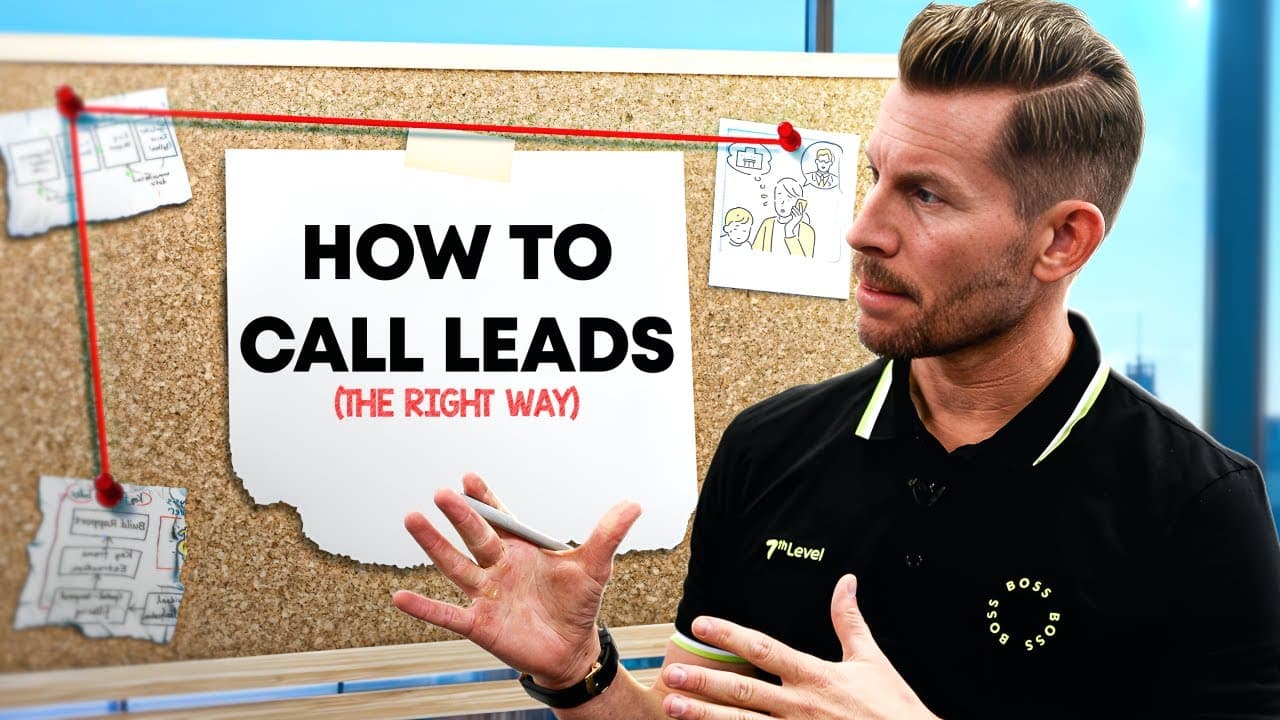
How to Call Warm Leads Without Sales Resistance
TL;DR
Call warm leads with calm, natural tonality and focus first on why they responded and the result they want, rather than immediately describing your product or service. Avoid predictable openings such as asking whether it is a good time, promising only two minutes, or asking how their day is, because these patterns can reduce trust and trigger defensive responses.
Transcript
in this training video I'm going to show you three questions that you can use when you call outbound leads or any type of lead from a lead list could be from an ad that will actually help you cause your prospect to let their guard down and actually open up to you rather than trying to get rid of you or say not interested or call me back later so co... Read More
Key Insights
- Natural tonality is central to reducing sales resistance because prospects recognize overly excited, monotone, timid, or uncertain voices as familiar sales patterns. When the caller sounds like other salespeople, the prospect may become defensive before considering the reason for the conversation.
- A warm outbound lead is someone who submitted contact information or requested information through a form or advertisement. The person may expect a call without knowing exactly who will call or when the call will occur, which makes the opening especially important.
- Product-first openings focus attention on the seller's solution before understanding why the prospect responded. The recommended focus is the prospect's reason for responding and the desired result, rather than an immediate description of products, services, or solutions.
- Asking whether it is a good time gives the prospect an easy opportunity to end the conversation. The training advises against this predictable question because busy or guarded prospects can simply say that the timing is not good.
- A promise to take only two minutes can weaken trust when the prospect does not believe the conversation will actually be that short. The mismatch between the promise and the prospect's expectation may lower the caller's credibility at the beginning.
- Generic rapport questions can trigger resistance when they appear scripted or insincere. Asking how someone is doing at the start of a sales call may signal that the caller is trying to build rapport, especially when prospects have repeatedly heard the same opening.
- Immediate agreement to call back later can move the salesperson into chase mode. By asking when to call again without first exploring the situation, the caller begins qualifying to the prospect instead of encouraging the prospect to explain why help may be needed.
- Permission-based questioning is less forceful than announcing, "Let me ask you a question." A paced request such as asking whether you can ask something before ending the call gives the prospect a sense of control and makes the transition into a question feel more natural.
Install to Summarize YouTube Videos and Get Transcripts
Explore YouTube Video Summarizer or Get YouTube Transcript Extractor
Questions & Answers
Q: How should you open a call with a warm lead?
Open with calm, natural tonality and orient the conversation around why the person responded or what result they may want. Avoid immediately presenting products or services. The opening should not sound overly excited, monotone, timid, or uncertain, because those familiar sales patterns can alert the prospect that a pitch is coming and cause defensive reactions.
Q: What is a warm outbound lead in sales prospecting?
A warm outbound lead is a person who requested information or submitted contact details through a form or advertisement. The person generally knows someone may call but may not know who will call or when. This differs from the cold-calling context discussed in the training, although some of the same communication principles may still apply.
Q: Why does sales-call tonality affect prospect resistance?
Tonality affects resistance because prospects have heard many salespeople use the same vocal patterns. A voice that sounds excessively enthusiastic, flat like a telemarketer, timid, or uncertain can signal that a sales pitch is beginning. According to the training, that recognition activates defensive behavior, including saying they are not interested, busy, or unable to talk.
Q: Why should salespeople avoid asking if it is a good time?
Salespeople should avoid asking whether it is a good time because the question makes it easy for prospects to say no and end the conversation. The training treats this as a predictable opening that often works against the caller. A stronger approach begins naturally and focuses on the reason the prospect responded rather than requesting broad permission to talk.
Q: Why is promising a two-minute sales call a mistake?
Promising that the conversation will take only two minutes can reduce trust if the prospect doubts that the caller will keep that promise. The training argues that prospects are unlikely to believe a sales discussion will be so brief. Starting with a claim they question can lower the salesperson's credibility and perceived status before the real conversation begins.
Q: Why can asking how a prospect is doing create resistance?
Asking how the prospect is doing can sound like a predictable attempt to build rapport rather than genuine interest. Prospects frequently hear this opening from people trying to sell many kinds of products and services. Because they recognize where the question is leading, some respond impatiently or defensively instead of becoming more open to the conversation.
Q: What should you do when a prospect asks for a callback?
Do not automatically accept the request and immediately ask when to call again, because that can put you into chase mode. Before ending the conversation, politely ask permission to ask something. This creates an opportunity to understand the prospect's situation while avoiding an aggressive response that could make the person more guarded or defensive.
Q: How do permission-based questions improve a lead call?
Permission-based questions improve the transition by giving the prospect a sense of control. Instead of saying, "Let me ask you a question," the salesperson can pause, pace the words naturally, and ask whether they may ask something before ending the call. The training presents this phrasing as less forceful and harder to reject than simply steamrolling into a question.
Summary & Key Takeaways
-
Warm-lead calls often fail because salespeople sound overly excited, monotone, timid, or uncertain. Prospects associate these familiar vocal patterns with telemarketing and selling, so their guard rises. A more effective opening uses natural tonality and avoids sounding like the predictable sales calls prospects have heard before.
-
Common opening questions can unintentionally create resistance. Asking whether it is a good time invites a negative answer, while promising a two-minute conversation may seem unbelievable. Asking how the prospect is doing can also feel like an obvious rapport-building technique rather than a sincere business question.
-
When a prospect asks for a later callback, immediately agreeing can place the salesperson in chase mode. Instead of steamrolling into a problem question, the salesperson should politely request permission, pace the words naturally, and ask something relevant before ending the call. This approach preserves status while reducing defensiveness.
Read in Other Languages (beta)
Share This Summary 📚
Summarize YouTube Videos and Get Video Transcripts with 1-Click
Try YouTube Summary with ChatGPT & Claude or YouTube Transcript Generator
Explore More Summaries from Jeremy Miner 📚



Summarize YouTube Videos and Get Video Transcripts with 1-Click
Try YouTube Summary with ChatGPT & Claude or YouTube Transcript Generator