What Is a Computer Network and How Does It Work?
TL;DR
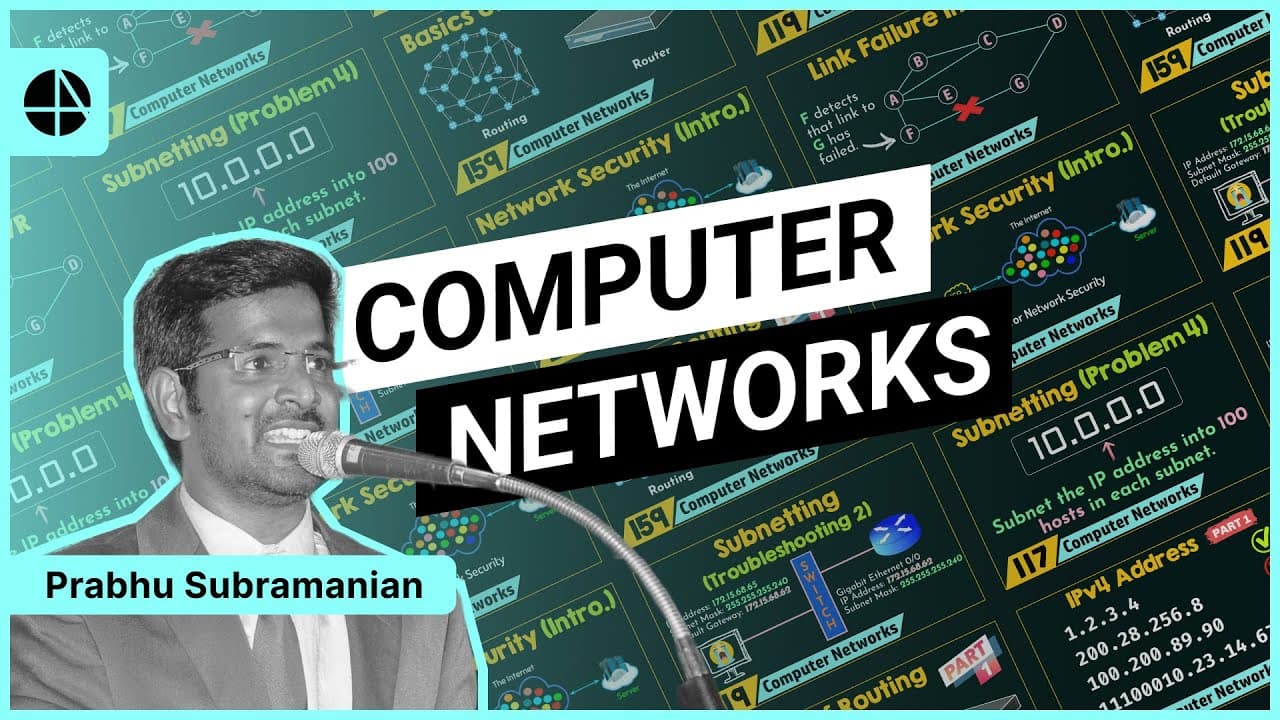
A computer network is a set of nodes connected by communication links, which can be wired or wireless. It enables resource sharing among devices like printers and supports various forms of communication. Understanding the distinction between end devices and intermediary devices is crucial for grasping how data flows within a network.
Transcript
hello everyone I welcome you all to this wonderful course on computer networks I am your instructor here to take you throughout this journey on computer networks before we start let's figure out to whom this course is actually intended to this course is mainly for the undergraduate students and this course is useful for the students who are prepari... Read More
Key Insights
- 💦 Networking provides essential support for modern communication, learning, and work processes, demonstrating its ubiquity in daily life.
- 💁 Understanding nodes and communication links forms the foundation of networking knowledge, critical for anyone entering the field.
- 💻 Computer networks can significantly reduce resource costs through shared access to devices like printers among multiple computers.
- 🤩 The distinction between end devices and intermediary devices is key in recognizing how data flows and is managed within a network.
- ❓ The course structure combines traditional lectures with contemporary methods, fostering engagement and understanding of complex networking concepts.
- 🧑🎓 Practical exercises, such as identifying nodes and links in given scenarios, ensure students apply theoretical knowledge effectively.
- 🧑🎓 The importance of security in networking addresses real-world challenges and prepares students to implement protective measures in their future careers.
Install to Summarize YouTube Videos and Get Transcripts
Explore YouTube Video Summarizer or Get YouTube Transcript Extractor
Questions & Answers
Q: Who is the intended audience for this computer networking course?
The course is primarily aimed at undergraduate students, particularly those preparing for GATE exams, as well as individuals seeking to enhance their knowledge for networking interviews. The content is tailored to provide foundational knowledge necessary to support their academic and professional pursuits in computer networking.
Q: What are the key components of a computer network discussed in the course?
The course emphasizes two main components of computer networks: nodes and communication links. Nodes can include devices like computers, printers, and routers that can send or receive data. Communication links, on the other hand, can be wired or wireless, facilitating data transfer between these nodes through various media.
Q: How do nodes and communication links interact in a computer network?
In a computer network, nodes are connected through communication links, which serve as pathways for data transfer. For instance, when two computers exchange information, they rely on links—wired or wireless—to transmit data. The efficiency of communication depends on both the nodes' capabilities and the quality of the links used.
Q: Why is security an important topic in this course?
Security is crucial in networking as it protects data integrity, confidentiality, and availability. The course will cover how various security measures can be implemented within a computer network to safeguard information against unauthorized access, cyber attacks, and other vulnerabilities, ensuring safe communication and resource sharing.
Q: What practical tools will be used in this course to enhance learning?
The course will incorporate practical tools such as Cisco Packet Tracer to simulate real networking scenarios. This hands-on approach allows students to visualize the configuration and management of networks, facilitating a deeper understanding of the concepts and enabling them to solve real-world problems effectively.
Summary & Key Takeaways
-
This computer networking course is designed for undergraduate students and those preparing for competitive exams, providing essential knowledge for networking-related interviews.
-
The course covers both theoretical concepts and practical applications, utilizing tools like Cisco Packet Tracer for hands-on learning and engaging teaching methods.
-
Key topics include the definition of computer networks, the distinction between nodes and communication links, and the importance of security in networking.
Read in Other Languages (beta)
Share This Summary 📚
Summarize YouTube Videos and Get Video Transcripts with 1-Click
Try YouTube Summary with ChatGPT & Claude or YouTube Transcript Generator
Explore More Summaries from Neso Academy 📚

Summarize YouTube Videos and Get Video Transcripts with 1-Click
Try YouTube Summary with ChatGPT & Claude or YouTube Transcript Generator