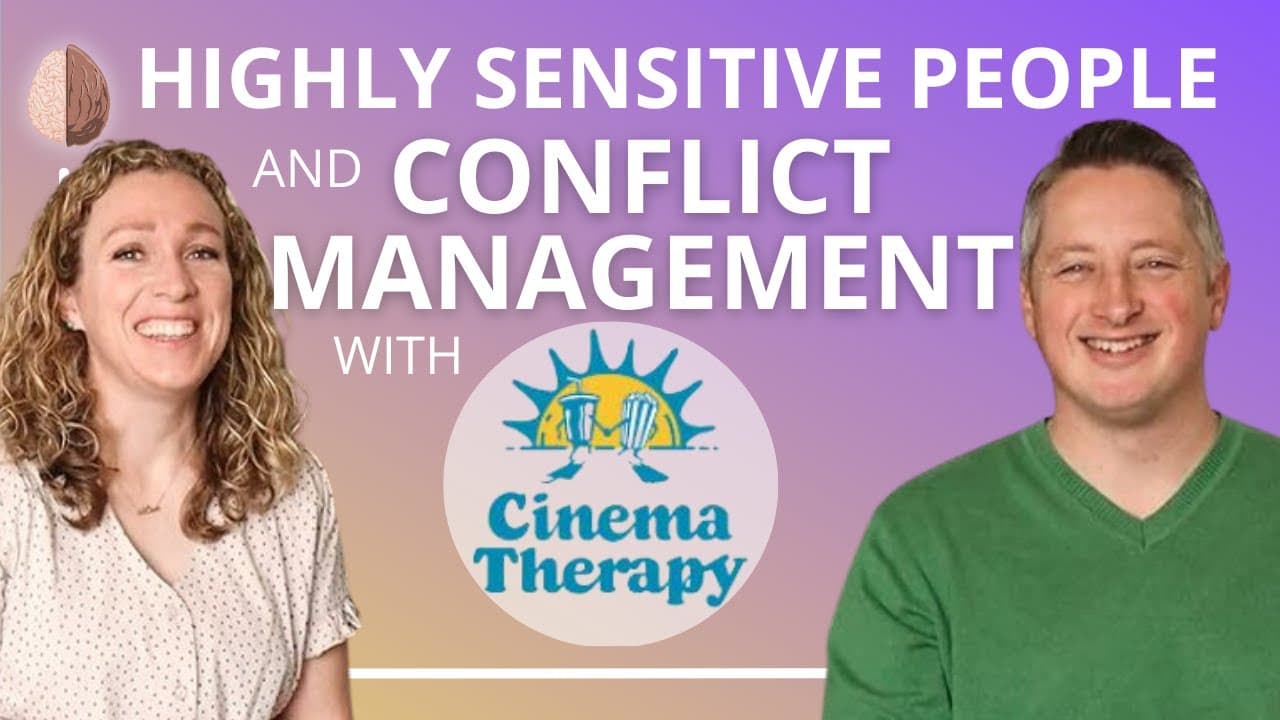
How to Manage Conflict as a Highly Sensitive Person
TL;DR
Regulate your nervous system before trying to resolve a conflict, then identify the more vulnerable feeling beneath anger and communicate it clearly. Highly sensitive people may experience minor disapproval or disruption as intense nervous system activation, so slow breathing, emotional awareness, and active listening can reduce avoidance and support a more thoughtful response.
Transcript
All right. Today we have a special guest with us, Jonathan Decker from Cinema Therapy and Mended Light. Hello. Hi. Thanks for joining us. Thanks for having me on the show. And you're going to be on both of my channels as well, so we're doing some cross-pollination here. Yeah. Definitely check those out because it's gonna be a lot of fun. Yeah. ... Read More
Key Insights
- Highly sensitive people often default to conflict avoidance because they care strongly about preserving their own comfort and the comfort of others. This pattern can appear even when the situation involves only a minor request or a gentle interruption rather than an actual disagreement.
- Sensitivity can function as both a strength and a challenge. Empathy, validation, care, deep thought, and emotional intelligence are valued qualities, but criticism, disapproval, and hurt feelings may become especially difficult when other people expect those qualities without accepting their emotional costs.
- Emotional intensity can make a small conflict feel much larger to a highly sensitive person. A level of disapproval that seems minor to someone else may be experienced as severe, producing nervous system activation that interferes with clear thinking and measured communication.
- Nervous system arousal is an emotional state in which activation becomes strong enough to reduce clear thinking. It can involve adrenaline, cortisol, a faster heartbeat, and a fight, flight, or freeze response, including avoidance of conversations that might create discomfort.
- Regulation is the first step when a highly sensitive person becomes flooded during conflict. Slow, deep breathing can lower the heart rate, increase oxygen and blood flow to the brain, reduce the sense of being triggered, and make thoughtful communication more possible.
- Anger can signal another underlying experience, including fear, hurt, embarrassment, overwhelm, stress, or hunger. After calming down, asking what is really being felt can turn a broad angry reaction into a more precise understanding of the need or injury involved.
- Conflict avoidance can involve taking responsibility for another person’s needs while neglecting one’s own. A highly sensitive person may remain silent, accept inconvenience, or delay feedback because politeness and the prevention of discomfort feel safer than making a reasonable request.
- Active listening is an important part of conflict management after personal emotions have been acknowledged. Understanding the other person’s perspective can help a highly sensitive person move beyond emotional overwhelm and express thoughts and feelings with greater clarity and effectiveness.
Install to Summarize YouTube Videos and Get Transcripts
Explore YouTube Video Summarizer or Get YouTube Transcript Extractor
Questions & Answers
Q: How can a highly sensitive person manage conflict?
A highly sensitive person can begin by regulating nervous system activation before attempting to solve the disagreement. Slow, deep breathing can reduce the feeling of being flooded and support clearer thinking. The next step is identifying the specific emotion beneath anger, such as fear, hurt, embarrassment, overwhelm, or stress. From that calmer position, the person can communicate more accurately and listen actively to the other perspective.
Q: Why do highly sensitive people avoid conflict?
Highly sensitive people may avoid conflict because they place great value on comfort, connection, and the emotional well-being of others. Causing inconvenience or discomfort can feel deeply unsettling, even when a request is reasonable. Because disapproval may also feel more intense to them than it does to another person, avoidance, silence, excessive politeness, or absorbing someone else’s needs can seem safer than initiating a difficult conversation.
Q: What should an HSP do before responding during conflict?
An HSP should first pause and regulate rather than trying to reason while emotionally flooded. Slow, deep breathing is presented as a practical way to reduce the heart rate, support blood flow and oxygen to the brain, and restore clearer thought. Once calmer, the person can ask what they are truly feeling and decide how to communicate that emotion instead of reacting automatically through fighting, fleeing, freezing, or avoidance.
Q: How does nervous system activation affect conflict resolution?
Nervous system activation can make emotions so strong that clear thinking becomes difficult. The transcript describes physical and mental effects such as a faster heartbeat, adrenaline, cortisol, and a fight, flight, or freeze response. For a highly sensitive person, this flooding can turn a small disruption or mild disapproval into an intense experience, making it harder to ask for something, offer feedback, or explain a concern thoughtfully.
Q: What emotions can exist beneath anger during a disagreement?
Within the framework presented, anger can reflect a more specific underlying experience such as fear, hurt, embarrassment, overwhelm, stress, or hunger. Identifying that experience matters because saying what is actually happening internally can be more informative than expressing anger alone. A person who first regulates and then names the underlying feeling is better positioned to understand the conflict and communicate the source of distress clearly.
Q: How can an HSP stop avoiding difficult conversations?
An HSP can interrupt avoidance by recognizing that the urge to escape may be a response to emotional flooding rather than evidence that the conversation is unsafe or unreasonable. The person can slow down, breathe deeply, identify the underlying feeling, and clarify what needs to be communicated. Practicing this process with small requests can help distinguish a manageable disruption from a serious conflict while reducing the habit of self-neglect.
Q: Why is active listening useful in conflict management?
Active listening helps a highly sensitive person understand the other individual’s perspective after first acknowledging and regulating personal emotions. Conflict can narrow attention around hurt, fear, or perceived disapproval, so listening creates room for information that may otherwise be missed. Combined with clear emotional expression, it supports a conversation in which both perspectives can be considered instead of allowing overwhelm, assumptions, or avoidance to control the response.
Q: Are sensitivity and emotional intelligence the same thing?
The discussion treats the label highly sensitive person as subjective and notes that behavior one person calls highly sensitive may look like emotional intelligence to someone else. Qualities associated with sensitivity include empathy, validation, care, deep thought, and awareness of emotion. These qualities can be valuable in relationships, although the same person may also experience criticism, disapproval, sensory input, or conflict with unusual intensity and become overwhelmed more easily.
Summary & Key Takeaways
-
Highly sensitive people often value comfort, empathy, and emotional connection, but those same qualities can make conflict, criticism, and inconvenience feel unusually intense. They may avoid even small disruptions, absorb another person’s needs, or postpone necessary conversations because causing discomfort feels more threatening than tolerating their own unmet needs.
-
Conflict can trigger nervous system activation involving a faster heartbeat, stress responses, and reduced clarity of thought. The recommended first step is regulation through slow, deep breathing. Calming the body can improve clear thinking and create enough emotional space to choose a response instead of automatically fighting, fleeing, freezing, or avoiding.
-
After regulating, a highly sensitive person can ask what they are actually feeling beneath anger, such as fear, hurt, embarrassment, overwhelm, stress, or hunger. Understanding those emotions helps them express themselves more accurately. Active listening to the other person’s perspective can then support clearer communication and more constructive conflict management.
Read in Other Languages (beta)
Share This Summary 📚
Summarize YouTube Videos and Get Video Transcripts with 1-Click
Try YouTube Summary with ChatGPT & Claude or YouTube Transcript Generator
Explore More Summaries from Therapy in a Nutshell 📚





Summarize YouTube Videos and Get Video Transcripts with 1-Click
Try YouTube Summary with ChatGPT & Claude or YouTube Transcript Generator