How to build a startup with relentless work ethic
TL;DR
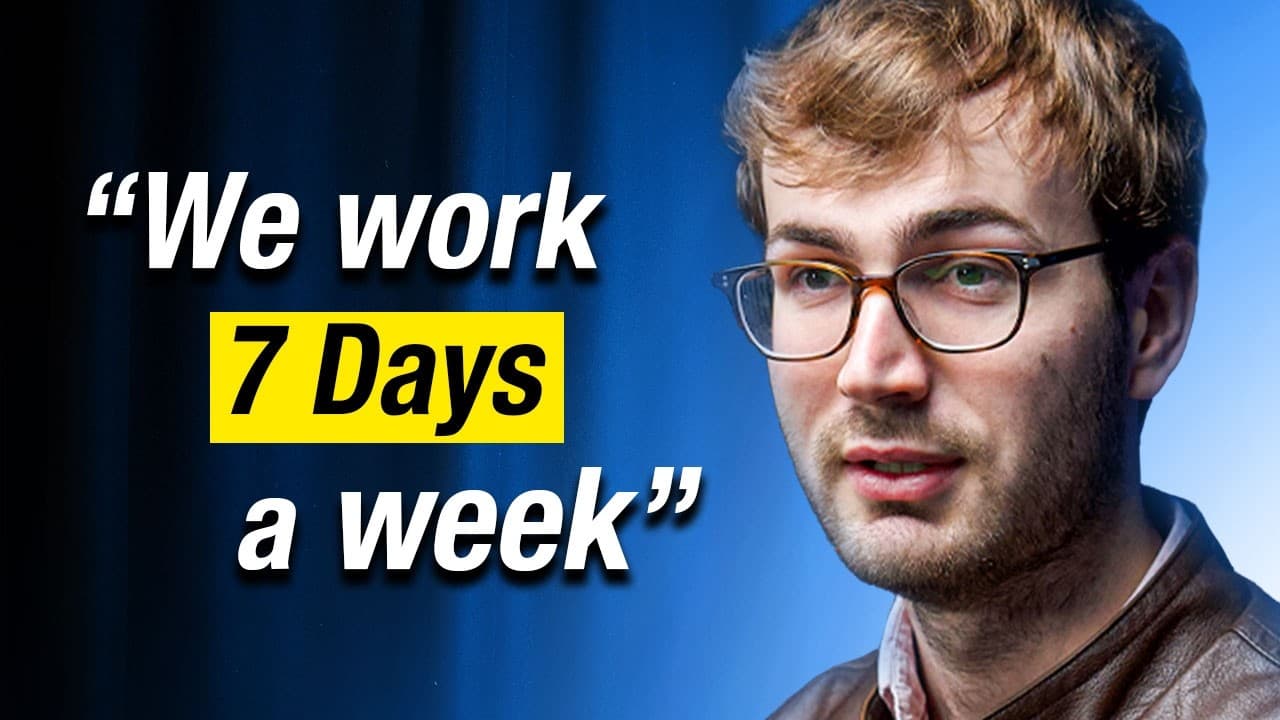
The core idea is that extraordinary upside comes from aggressive action and a willingness to endure heavy workloads. The interview frames a startup culture that prizes 7 day weeks, living in the office, and rigorous hiring through work trials, while stressing the importance of ambitious investors and long term vision. It argues that legitimacy in startups is earned by execution, not credentials.
Transcript
If your days off happen to be Saturday and Sunday every week, then you will not have a place at Corgi. I don't sleep a lot. I think the average night probably 3 to four hours. So, you literally live in the office. >> Yeah, I have a mattress there. >> Would you rather? Corgi was a trillion dollar company, but you died at 50 or it was a fail and you ... Read More
Key Insights
- Relentless pursuit of asymmetric upside is central to startup strategy.
- The founder believes infinite upside can emerge from a single bold move, like a successful breakthrough or sudden market shift.
- Profound commitment is demonstrated by working seven days a week and living in the office to align with company goals.
- Work trials help separate highly motivated candidates from those who are not aligned with the intensity of the culture.
- University credentials are seen as less essential than proven ability and willingness to endure early, tough periods.
- Brand legitimacy in startups is often borrowed from investors, but true legitimacy comes from execution and results.
- The company emphasizes recruiting people who want to win and repel those who prefer less intense environments.
- Open discussions about fundraising focus on the quality of investors and the value they bring beyond money.
Install to Summarize YouTube Videos and Get Transcripts
Explore YouTube Video Summarizer or Get YouTube Transcript Extractor
Questions & Answers
Q: What is the core philosophy behind building a startup with relentless work ethic?
The core philosophy is that startups should seek asymmetric upside, aiming for outcomes where the potential upside is unbounded while the downside remains limited. This is achieved by taking calculated risks, pursuing big bets, and being willing to endure intense work periods. The mindset emphasizes long term vision over short term comfort.
Q: How does the founder describe the importance of working seven days a week?
The founder argues that solving the most important problems requires continuous effort and a willingness to commit fully. He suggests that extra time beyond a five day week can lead to more progress, collective momentum, and a stronger sense of community among teammates, which is essential for building something large.
Q: Why are work trials used in the hiring process?
Work trials serve to reveal who can operate under the company’s intensity and weekend schedule. They act as a screening mechanism to show applicants what the work environment actually demands, ensuring that new hires are aligned with the culture and capable of performing under pressure before joining the team.
Q: What role do education and credentials play according to the interview?
Education and credentials are seen as less decisive than demonstrated capability and the ability to thrive in a harsh, high contact environment. The speaker discusses building legitimacy through execution rather than relying on formal credentials, suggesting that real impact comes from doing the hard work and achieving results.
Q: How does branding and investor status affect startup legitimacy?
Branding and investor status can borrow legitimacy from established names, but this is not a permanent substitute for performance. The interview argues that while prestige helps in some contexts, true legitimacy is earned through consistent execution, growth, and delivering on ambitious goals that attract like minded talent and customers.
Q: What is the stance on rest and burnout in this startup culture?
Rest is acknowledged as beneficial for some individuals, but the overall stance is that the strongest path to big wins is through intense, continuous effort. The conversation emphasizes doing the job with maximum dedication rather than relying on long breaks or weekend rest as a routine for everyone.
Q: How does the founder view the idea of becoming the biggest company?
The founder frames becoming the biggest company as the objective, arguing that the only way to win at scale is to commit fully and maintain relentless momentum. This means prioritizing ambitious goals, building a sense of camaraderie, and refusing to settle for less aggressive timelines or outcomes.
Q: What concerns are raised about startup culture and investor dynamics?
The discussion raises concerns about how funds influence perceptions of a startup, noting that capital can signal legitimacy but also that founders must avoid overreliance on investor branding. Ultimately, the success of a startup depends on the team’s ability to execute and sustain a winning trajectory regardless of external labels.
Summary & Key Takeaways
-
A founder emphasizes chasing asymmetric upside and taking big bets, arguing that the upside from bold moves can be infinite while downside remains capped. He uses analogies from sports and history to justify relentless pursuit of big wins over comfort and tradition.
-
The discussion covers how the team operates around the clock, including sleeping in the office and evaluating candidates via work trials to filter for the right level of dedication and fit. The tone is intense and mission oriented, aiming to attract like minded peers.
-
The interview touches on investor influence and the role of brand legitimacy, suggesting that capital can confer temporary legitimacy, but real strength comes from execution and a culture that attracts the right talent who are willing to work relentlessly.
Read in Other Languages (beta)
Share This Summary 📚
Summarize YouTube Videos and Get Video Transcripts with 1-Click
Try YouTube Summary with ChatGPT & Claude or YouTube Transcript Generator
Explore More Summaries from 20VC with Harry Stebbings 📚


Summarize YouTube Videos and Get Video Transcripts with 1-Click
Try YouTube Summary with ChatGPT & Claude or YouTube Transcript Generator