How Did YKK Become the Global Zipper Leader?
TL;DR
YKK became a global zipper leader by controlling nearly every production step, maintaining quality, offering extensive product variety, and manufacturing near major customers. Its vertically integrated system supports specialized products and reliable supply chains, although Chinese price competition, regulatory scrutiny, and aging populations in mature countries are pushing the company to improve machinery and explore new businesses.
Transcript
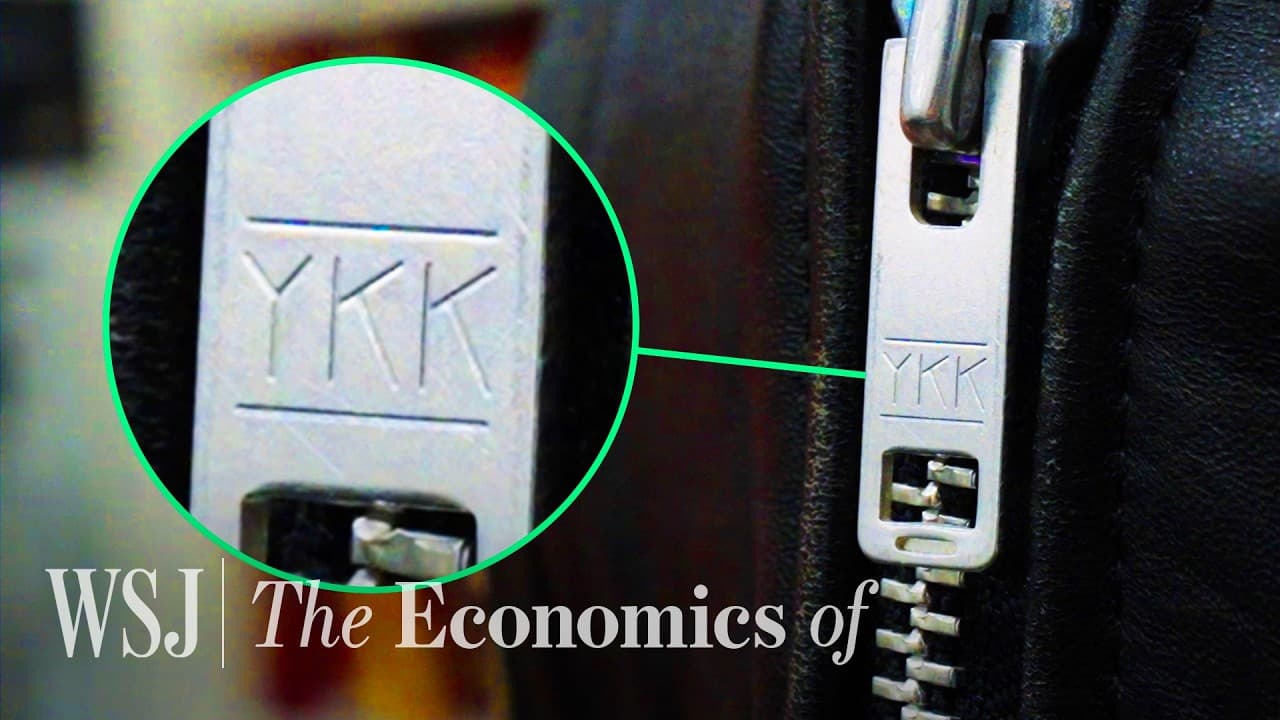
- Look closely at the zippers around you, and there's a good chance you'll find the same three letters. YKK. They're on everything from clothes, backpacks, and furniture, to NASA spacesuits. - Zippers are often considered extremely small components in the textile world, but for our products, zippers are very often a critical component to the perfor... Read More
Key Insights
- YKK's market position is built on vertical integration, with the company controlling raw materials, proprietary technology, production machinery, and final zipper manufacturing. This system distinguishes it from competitors that outsource portions of production and gives YKK direct oversight of quality and manufacturing performance.
- Product variety is a major part of YKK's customer strategy. The company offers more than 100,000 zipper types in Japan, allowing it to serve many manufacturers with different functional and design requirements instead of relying on a narrow selection of standardized fasteners.
- YKK's global scale includes operations in 69 countries and regions and annual sales of 10 billion zippers. Manufacturing near customers helps the company respond to local needs, employ people within those communities, and build a durable commercial presence close to buyers.
- Quality is central to YKK's identity because zippers can determine whether critical equipment performs safely. On anti-exposure dry suits, the main zipper prevents water from entering, while failure could severely compromise the suit's ability to keep a person alive.
- Specialized product development strengthens YKK's customer relationships. YKK and Switlik jointly created a quick-burst zipper whose elements open as an inflatable life preserver expands, demonstrating how a zipper can be engineered as a functional part of lifesaving equipment.
- Local manufacturing can satisfy customer sourcing requirements. Switlik says about 60% of its products serve the US military, and YKK's Georgia facility helps its supply chain comply with a requirement that sources come from within the United States.
- Persistence in the United States helped YKK overcome negative perceptions of Asian imports. After establishing its US operation in 1960, the company remained and invested locally while American manufacturers moved production offshore during the 1970s and 1980s, becoming number one by the late 1980s.
- Regulatory compliance remains a significant challenge for YKK. The European Commission fined YKK and other zipper manufacturers in 2007 for price fixing and customer allocation. Courts reduced the fine but largely upheld the findings, prompting YKK to emphasize stronger controls and fair business practices.
Install to Summarize YouTube Videos and Get Transcripts
Explore YouTube Video Summarizer or Get YouTube Transcript Extractor
Questions & Answers
Q: How did YKK become a global leader in zippers?
YKK built its position through quality, extensive product variety, vertical integration, and global manufacturing close to customers. It controls nearly every stage of production, including materials, proprietary technology, machinery development, and finishing. The company also offers more than 100,000 zipper types in Japan and operates in 69 countries and regions, allowing it to address varied customer requirements and strengthen local relationships.
Q: What does YKK's vertically integrated business model include?
YKK's vertically integrated model covers nearly every aspect of zipper production. The company manages raw materials, develops proprietary technology, creates its own production machinery, and finishes zippers internally. This approach differs from competitors that outsource parts of their processes. It gives YKK greater control over product quality, manufacturing reliability, technical development, and its ability to create many zipper varieties for different customers.
Q: Why does YKK manufacture its own zipper machinery?
YKK manufactures production machinery to control how its zippers are made and protect product quality. The company also faces weaker price competitiveness against Chinese manufacturers, so it has developed new machines designed to produce more competitively priced zippers without quality failures. Building machinery internally is therefore both a quality strategy and a response to increasing cost pressure in the zipper market.
Q: Why does YKK operate manufacturing facilities near customers?
Manufacturing near customers helps YKK serve local requirements, create a community base, and build trust with buyers. It can also support sourcing compliance. Switlik says about 60% of its products are made for the US military, whose supply chain must use US sources. YKK's facility in Georgia allows it to meet that requirement while supporting a decades-long relationship with Switlik.
Q: How are YKK zippers used in survival equipment?
YKK supplies high-performing zippers for equipment where failure can have serious consequences. On anti-exposure dry suits, the main zipper forms the barrier that keeps water outside the suit. YKK also worked with Switlik on a quick-burst zipper for an inflatable life preserver used primarily by the US Air Force. Its yellow elements open during inflation so the preserver can expand.
Q: How did YKK succeed in the United States?
YKK established its US operation in 1960, when Japanese technology was not yet widely acknowledged in the country and some Asian imports were viewed as cheap products. The company stayed in the United States and deepened its local presence even as American manufacturers moved production offshore during the 1970s and 1980s. By the late 1980s, YKK had become number one in the market.
Q: What regulatory scrutiny has YKK faced?
In 2007, the European Commission fined YKK and other zipper manufacturers for colluding, fixing prices, and dividing customers to reduce competition. YKK appealed the decision. Courts later reduced the fine but largely upheld the Commission's findings. YKK subsequently described the matter as a reminder to continually strengthen compliance, internal controls, and fair business practices across its operations.
Q: What challenges and growth opportunities does YKK face?
YKK faces pricing pressure from Chinese competitors and is responding by developing machinery that can produce competitive zippers without quality failures. The company has also faced legal scrutiny related to anticompetitive conduct. For future growth, YKK has expanded beyond zippers into architectural products and equipment development, while considering entirely new businesses to balance the effects of aging populations in mature countries.
Summary & Key Takeaways
-
YKK transformed a small textile component into the foundation of a global business. Founded by Tadao Yoshida in 1934, the company emphasized quality across products, materials, and manufacturing methods. It now sells billions of zippers, offers more than 100,000 zipper types in Japan, and supplies products ranging from clothing to NASA spacesuits.
-
Vertical integration is central to YKK's business model. The company controls raw materials, develops proprietary technology, builds production machinery, and finishes zippers internally. This control helps protect quality and enables product variety. YKK is also developing more competitive machinery as it faces pricing pressure from Chinese zipper manufacturers without accepting quality failures.
-
YKK manufactures close to customers across 69 countries and regions, supporting local employment, regulatory compliance, and long-term customer relationships. Its growth has included specialized work for survival equipment, but also regulatory scrutiny over past anticompetitive conduct. The company has expanded into architectural products and equipment development while considering entirely new businesses.
Read in Other Languages (beta)
Share This Summary 📚
Summarize YouTube Videos and Get Video Transcripts with 1-Click
Try YouTube Summary with ChatGPT & Claude or YouTube Transcript Generator
Explore More Summaries from The Wall Street Journal 📚






Summarize YouTube Videos and Get Video Transcripts with 1-Click
Try YouTube Summary with ChatGPT & Claude or YouTube Transcript Generator