How does OpenAI train health AI for clinicians and patients

TL;DR
OpenAI trains health AI with a physician cohort and safety grounding to ensure reliable clinical use. The approach combines evaluation through HealthBench, context grounding for patient specificity, and secure handling of data so models assist clinicians, patients, and healthcare systems without compromising privacy or accuracy.
Transcript
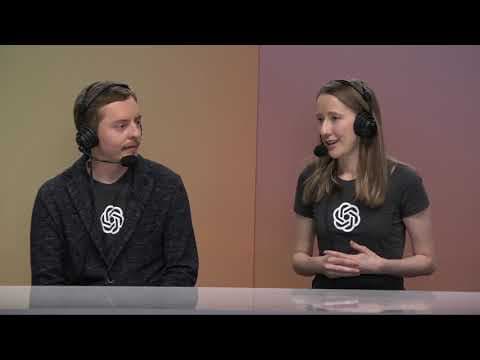
Andrew Mayne: Hello, I'm Andrew Mayne, and this is the OpenAI Podcast. Andrew Mayne: Today, we're talking to Dr. Nate Gross, Andrew Mayne: head of health in Karan Singhal, Andrew Mayne: who leads health AI research at OpenAI. Andrew Mayne: We'll cover what went into training models Andrew Mayne: to handle sensitive questions Andrew Mayne: and how i... Read More
Key Insights
- Health AI is trained with a physician cohort to guide data generation and evaluation.
- Safety and alignment are treated as foundational, not afterthoughts, in health model development.
- Evaluation focuses on clinically relevant and impactful areas with tailored responses based on user type.
- HealthBench conducts realistic, multi-turn assessments of model performance in clinical conversations.
- Models are designed to seek context when needed to ground responses in user specifics.
- OpenAI uses secure data practices to protect patient conversations and avoid training on healthcare data.
- The strategy leverages large-scale accessibility to deliver value to patients and healthcare systems.
- Collaboration with hospitals and healthcare systems informs practical deployment and adoption in real settings.
- More videos from this channel:
- More from this channel: OpenAI
Install to Summarize YouTube Videos and Get Transcripts
Explore YouTube Video Summarizer or Get YouTube Transcript Extractor
Questions & Answers
Q: What is OpenAI's basic mission in health AI and why is it important?
OpenAI aims to ensure that AGI benefits all of humanity, and health is identified as a highly achievable and clear area for that benefit. The rationale is that healthcare today is fragmented and reactive, with limited time for clinicians to engage deeply with patients. By building health AI tools, OpenAI seeks to expand access to knowledge and support for clinicians, patients, and healthcare systems, enabling more proactive and effective care.
Q: Who contributed to shaping the health AI data and evaluation process?
A cohort of around 250 physicians collaborated across all stages of data generation and evaluation. Their input helped define what is clinically relevant, how responses should be tailored for laypeople versus health professionals, and when the model should seek context before answering. This close collaboration ensures the system aligns with real-world clinical needs and safety standards.
Q: How does OpenAI address data security and privacy in health AI?
OpenAI emphasizes strong security measures, including encryption and a one-way data flow that protects conversations. Crucially, healthcare data is not used for training the models, mitigating risk of leakage or misuse. This foundation is paired with empowerment features that allow users to bring their own context to ensure grounded, private interactions.
Q: What does HealthBench evaluate and why is it important?
HealthBench is a realistic evaluation framework for conversations between users, including health professionals and consumers, and AI models. It measures performance and safety across multi-turn interactions, focusing on how well the model tailors responses, uses context, and maintains safety in scenarios that mimic real health discussions. This helps close gaps between capability and safe, useful practice.
Q: How do clinicians influence the training and evaluation of health AI?
Clinicians influence health AI by guiding what the model should prioritize for evaluation, such as tailoring to audience, requesting context, and prioritizing clinically impactful content. The approach integrates clinician feedback directly into data generation and scoring criteria, ensuring the model’s improvements reflect actual clinical needs and safety considerations.
Q: What role does context play in health AI responses?
Context is essential because health information must be personalized to each patient’s situation. The model is designed to seek context when needed and to ground its replies in user-specific information, which improves relevance and reduces the risk of generic, incorrect, or unsafe guidance. This grounding helps align AI output with real clinical scenarios.
Q: What are the opportunities OpenAI sees for AI in healthcare beyond patient-facing tools?
Beyond patient-facing assistance, health AI is envisioned to support clinicians and healthcare systems by enhancing access to the latest medical literature, improving decision support, and enabling scalable tools for diverse edge cases. The goal is to empower the entire healthcare ecosystem with reliable, safe AI that can operate at scale while upholding rigorous safety and privacy standards.
Q: What challenges are highlighted in deploying AI in healthcare and how are they addressed?
Key challenges include safety, privacy, reliability, and alignment with clinical workflows. OpenAI addresses these by grounding model development in safety and evaluation, collaborating with physicians, implementing strict data protections, and building features that allow context-aware, patient-specific responses. Ongoing collaboration with healthcare organizations helps ensure practical deployment that fits real-world needs.
Summary & Key Takeaways
-
Health AI aims to be both proactive and reactive, supporting clinicians and patients across the healthcare system.
-
The HealthBench evaluation tools measure real-world performance in multi-turn conversations with clinicians and consumers.
-
OpenAI emphasizes safety, grounding, and data privacy as foundational to deploying healthcare AI at scale.
Read in Other Languages (beta)
Share This Summary 📚
Summarize YouTube Videos and Get Video Transcripts with 1-Click
Try YouTube Summary with ChatGPT & Claude or YouTube Transcript Generator
Explore More Summaries from OpenAI 📚


Summarize YouTube Videos and Get Video Transcripts with 1-Click
Try YouTube Summary with ChatGPT & Claude or YouTube Transcript Generator