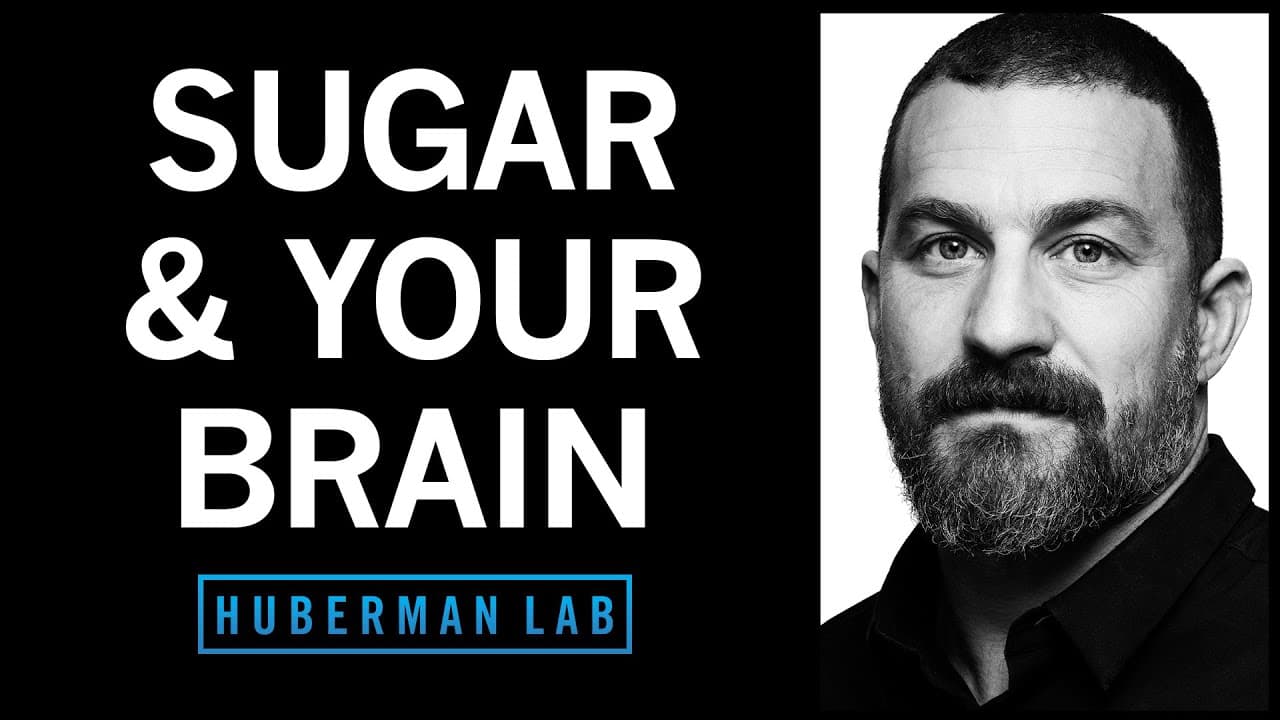
Controlling Sugar Cravings & Metabolism with Science-Based Tools | Huberman Lab Podcast #64
TL;DR
Sugar cravings are regulated through two main mechanisms: the rewarding sweet taste and sugar’s nutritive effects on the nervous system, which can operate subconsciously. Sweetness activates neurons that encourage further consumption, while sugar’s caloric content also influences food seeking. Blood glucose matters because neurons may function poorly when it becomes too low, although some very-low-blood-sugar conditions can improve function. Read on to understand these distinct pathways and their implications for food choices.
Transcript
- Welcome to the Huberman Lab Podcast, where we discuss science and science based tools for everyday life. I'm Andrew Huberman, and I'm a professor of neurobiology and ophthalmology at Stanford School of Medicine. Today, we are going to discuss sugar, in particular, how our nervous system regulates our sugar intake and our are seeking of sugar. We'... Read More
Key Insights
- 😋 The perception of sweetness triggers the release of dopamine, leading to increased craving for sweet foods.
- 😋 The post-ingestive effect of sugar, including its impact on blood glucose and neural pathways, reinforces the preference for sugar-containing foods.
- 😋 Hidden sugars in foods can manipulate our taste preferences and make us crave more sugar.
- 😋 Dopamine plays a crucial role in our motivation to seek out sweet foods, causing a pleasure-pain balance in the brain.
Install to Summarize YouTube Videos and Get Transcripts
Explore YouTube Video Summarizer or Get YouTube Transcript Extractor
Questions & Answers
Q: How does the nervous system regulate sugar cravings?
The nervous system regulates sugar intake and seeking through two main mechanisms. Sugar’s sweet taste activates neurons that encourage more consumption, while its nutritive and caloric content affects the nervous system subconsciously and can also drive cravings.
Q: Why does the sweet taste of sugar make people want more?
Sweetness is rewarding and strongly reinforcing. It activates nerve cells in the brain and body that make people want to consume more of the sweet substance.
Q: Can sugar affect cravings independently of its sweetness?
Yes. Sugar’s caloric content and its interaction with the nervous system can influence craving and food seeking at a subconscious level, independently of how sweet it tastes.
Q: Can sweet tastes increase appetite for foods that are not sweet?
Yes. The transcript states that sweet tastes can make people want to eat more of other substances as well, so their reinforcing effect is not limited to the sweet item itself.
Q: Why does blood glucose matter for brain function?
Sugar is described as a powerful fuel for the brain. When people do not ingest enough sugar or their blood glucose becomes too low, their neurons may not function as well.
Q: Can very low blood sugar ever improve neuron function?
The episode says that neurons can function even better under certain conditions of very low blood sugar. The excerpt does not identify those conditions or explain when this effect occurs.
Q: What does Huberman Lab Podcast #64 aim to explain about sugar intake?
The episode aims to clarify how much sugar a person should ingest and whether some currently consumed sugars should be avoided. It also examines the energy and fuel sources used by the brain to support better-informed food choices related to mental health, physical health, and performance.
Q: Who presents this discussion of sugar cravings and metabolism?
Andrew Huberman presents Huberman Lab Podcast #64. He identifies himself as a professor of neurobiology and ophthalmology at Stanford School of Medicine and says the podcast is separate from his teaching and research roles there.
Summary & Key Takeaways
-
Sugar impacts the brain and body through both its taste and its nutritive content.
-
Sweet tastes trigger the release of dopamine, which makes us crave more sugar and seek out sweet foods.
-
The post-ingestive effect of sugar leads to a preference for sugar-containing foods, even without the perception of sweetness.
Read in Other Languages (beta)
Share This Summary 📚
Summarize YouTube Videos and Get Video Transcripts with 1-Click
Try YouTube Summary with ChatGPT & Claude or YouTube Transcript Generator
Explore More Summaries from Andrew Huberman 📚

Summarize YouTube Videos and Get Video Transcripts with 1-Click
Try YouTube Summary with ChatGPT & Claude or YouTube Transcript Generator