How to live with less and reduce your footprint
TL;DR
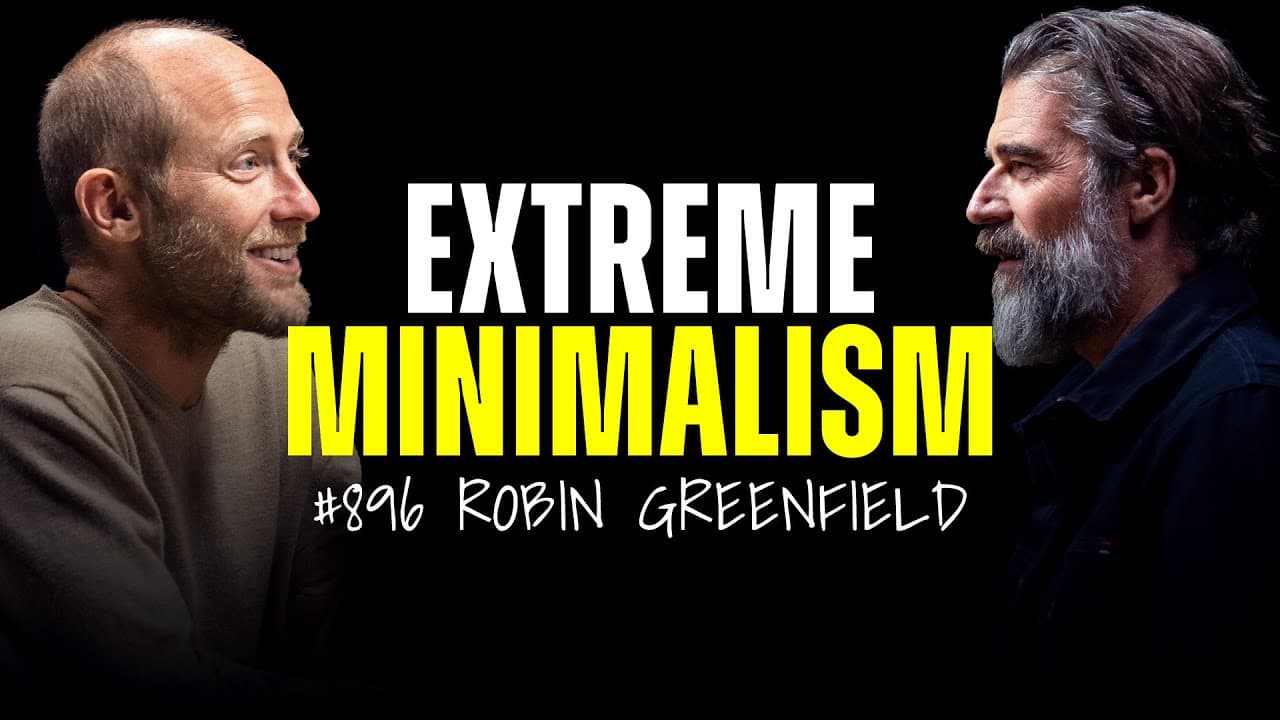
The core idea is to exist without destroying the Earth and to contribute positively by embracing simplicity and reduced consumption. The interview explores radical non ownership, public experiments, and how pulling back from modern comforts can deepen relationships, reconnect humanity, and influence wider change.
Transcript
here in the United States we have 5% of the world's population but we consume 25% of the world's resources that by definition is Extreme the world can't handle the way that we exist the reason that I am so extreme is that I am a product of an extreme Society Robin Greenfield he is minimalism and extremist personified this sort of thorough esque cha... Read More
Key Insights
- X is a radical approach to consumption that centers on not owning material goods and reducing environmental impact.
- The key to Greenfield’s practice is public experimentation that invites others to join and reflect on their own habits.
- The journey includes extreme steps such as living without money, without identification, and minimizing personal belongings as core strategies.
- Greenfield frames existence as a way to live neutrally or positively, avoiding unnecessary harm while striving for regeneration of the Earth.
- Influences range from Gandhi to TikN Han and indigenous wisdom, selected to form a personal philosophy rather than a single tradition.
- He emphasizes universal truths, rather than dogma, as guiding principles for ethical living and relationship building.
- The approach shifts from physical endurance to internal exploration, focusing on mental discipline and the quality of life rather than sheer acts of risk.
- The dialogue raises questions about the comfort economy and whether relinquishing ownership reveals deeper human connections and social responsibility.
- More videos from this channel:
- More from this channel: Rich Roll
Install to Summarize YouTube Videos and Get Transcripts
Explore YouTube Video Summarizer or Get YouTube Transcript Extractor
Questions & Answers
Q: How does Robin describe his overall mission in simple terms
Robin describes his mission as existing on Earth in a way that doesn’t destroy this home and, at best, contributes positively to its regeneration. He talks about deepening relationships with plants, animals, and people, while examining how modern life can perpetuate inequity and exploitation. The goal is to live with minimal harm and maximize positive impact, even if that means challenging deeply ingrained habits.
Q: What role does Gandhi play in his philosophy
Gandhi influences Robin’s core idea of living simply to allow others to live, which he cites as a guiding quote. He uses this inspiration to frame a broader practice of minimalism and non consumption, while acknowledging the necessity to critically examine the systems that enable exploitation so that personal choices can matter more widely.
Q: Why does he avoid committing to a single philosophical label
Robin avoids a single label to keep his mind open and to prevent dogmatic thinking. He wants to formulate his own understanding by drawing from multiple sources, including Buddhist and Indigenous wisdom, rather than aligning with one tradition. This allows him to adapt principles to real-world situations and personal growth.
Q: How does he view universal truths in practice
He regards universal truths as guiding principles that transcend specific traditions. These truths emphasize interconnectedness, respect for life, and the idea that humans are global neighbors. In practice, this means adopting practices that honor others, the Earth, and the web of life, while remaining willing to question and adjust beliefs.
Q: What is meant by public experiments in this context
Public experiments refer to the visible, ongoing choices and challenges Robin undertakes, such as living without money or owning possessions. These acts invite scrutiny and participation from others, turning personal decisions into conversations about sustainability, equity, and human connection, making ethical living a shared inquiry rather than a private quest.
Q: How does he reconcile personal sacrifice with social impact
He argues that personal sacrifice is a pathway to broader impact by revealing the costs of consumption and the value of relationships. The idea is that by simplifying life and reducing waste, he models possibilities for others and fosters conversations about how to balance comfort with responsibility to people and the planet.
Q: What challenges does he anticipate in advocating for these ideas
He expects resistance rooted in comfort, habit, and systemic inertia that rewards consumption. The challenges include public skepticism, practical constraints of living with less, and the need to show viable paths for others to participate without feeling deprived or judged. He emphasizes exploration and honesty over perfection.
Q: How does the conversation frame the relationship between freedom and constraint
The discussion frames constraint as a pathway to freedom from material burdens and social pressures. By limiting possessions and resources, Robin suggests people can gain deeper autonomy, time for meaningful connections, and a clearer sense of purpose, ultimately enabling more conscious and compassionate choices.
Summary & Key Takeaways
-
Robin Greenfield pursues a life of extreme minimalism to explore freedom and environmental impact, shedding possessions and challenging consumer culture. The discussion covers personal philosophy, public experimentation, and the goal of living neutrally or positively with respect to the planet. The journey includes years of self-imposed constraints and public visibility.
-
The conversation traces influences from Gandhi, TikN_Han, and indigenous wisdom, emphasizing universal truths over rigid dogma. It highlights a shift from outdoor endurance to inner exploration, aiming to regenerate the world and deepen human connections while questioning societal structures that enable exploitation.
-
The episode frames a simple mission—live simply so that others may live and considers how to balance ideals with the complex realities of modern life. It examines whether non ownership and minimalism can drive meaningful cultural and ecological change.
Read in Other Languages (beta)
Share This Summary 📚
Summarize YouTube Videos and Get Video Transcripts with 1-Click
Try YouTube Summary with ChatGPT & Claude or YouTube Transcript Generator
Explore More Summaries from Rich Roll 📚
Summarize YouTube Videos and Get Video Transcripts with 1-Click
Try YouTube Summary with ChatGPT & Claude or YouTube Transcript Generator