What is context engineering for AI code writing?
TL;DR
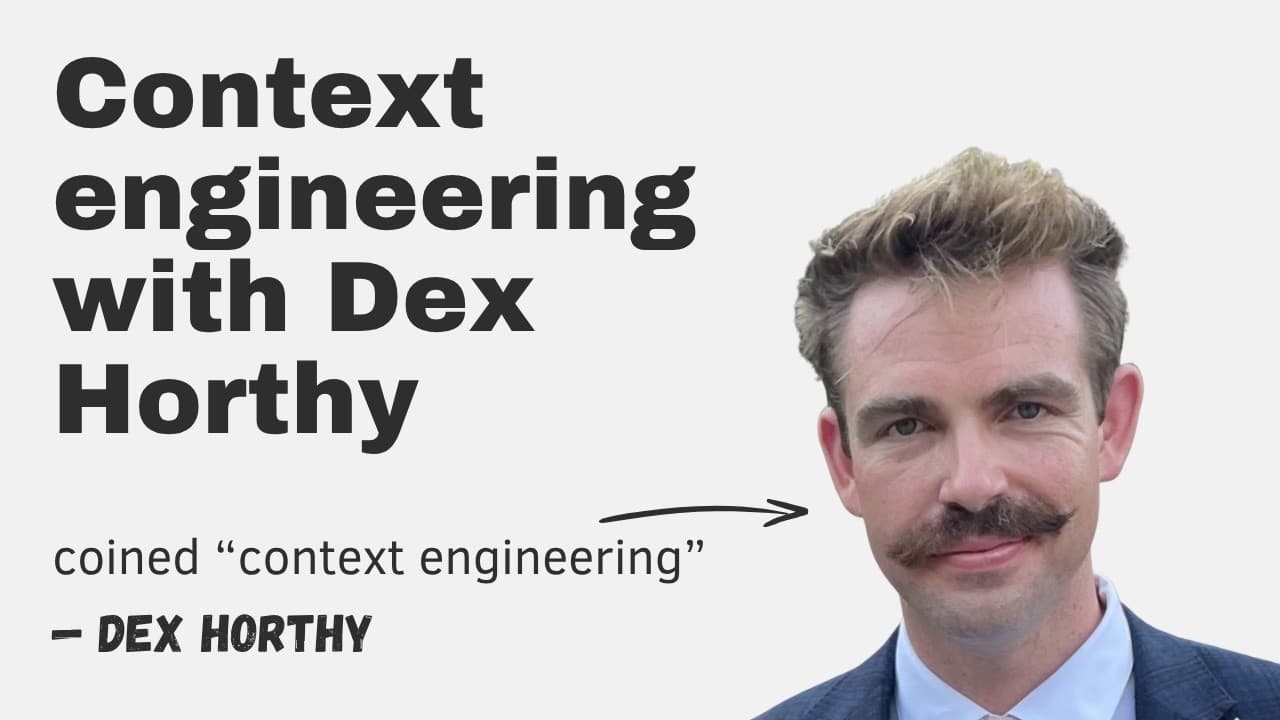
Context engineering is about managing how much and what kind of context a model sees to improve code generation, including ideas like loop engineering and software factories to reduce drift and keep output trustworthy. The practice also emphasizes verification, testing, and scalable CI as agents push more changes. It situates context as a collaborative layer between humans and machines.
Transcript
So what is context engineering? >> It's kind of like deabstracting the abstractions that have been layered on top of rag memory, agentic history. At the end of the day, they're all different ways to pass tokens into a model. >> What is a smart zone and what is a dumb zone? >> The less context window you use, the better outcomes you'll get always. >... Read More
Key Insights
- Context engineering is the practice of deabstracting layered abstractions to optimize token flow and model behavior, focusing on what information is necessary for correct results.
- The less context window used, the better the outcomes tend to be, as smaller, targeted prompts reduce noise and improve model relevance.
- Loop engineering is a rising paradigm that pushes AI to generate more code, but it risks producing unreadable or unmaintainable code if not carefully managed.
- A lights off software factory demonstrates the risks of autonomous code generation, where unchecked automation can lead to system brittleness and eventual shutdown if failures accumulate.
- Token harder versus token smarter describes strategies to maximize useful tokens while minimizing wasted context and misalignment with human intent.
- Software factories, from NATO era concepts to modern DevOps, illustrate how automation layers can accelerate development but require rigorous governance and verification.
- Harness engineering and spec-driven development address drift between specifications and actual code, ensuring that AI outputs stay aligned with human goals and safety constraints.
- Context engineering is complemented by tools and processes like CI pipelines and verification platforms to keep the codebase safe as AI contributions scale.
Install to Summarize YouTube Videos and Get Transcripts
Explore YouTube Video Summarizer or Get YouTube Transcript Extractor
Questions & Answers
Q: What is context engineering and why does it matter for AI code writing
Context engineering is the practice of shaping and limiting the information given to AI agents so they produce more reliable and useful code. It matters because as agents generate more code, the risk of drift, bugs, and unreadable output increases. By managing the tokens, prompts, and context windows, engineers can improve accuracy, maintainability, and alignment with project goals, enabling faster yet safer software delivery.
Q: How does loop engineering relate to context engineering
Loop engineering refers to iterative cycles where AI produces code and humans review or refine it, creating a feedback loop that improves production quality. In context engineering, loops help tune which parts of the context are fed to the model, reducing noise and focusing on essential details. This balance prevents runaway code generation and keeps development manageable.
Q: What is a lights off software factory and what did it reveal
A lights off software factory is a fully automated development environment where AI agents generate most of the code with minimal human intervention. It revealed that without proper safeguards, automated systems can produce an overwhelming amount of code that becomes difficult to read, review, or maintain, eventually causing the system to fail if quality checks lag.
Q: What challenges does token smarter versus token harder address
Token smarter aims to extract maximum value from fewer tokens by prioritizing high impact information, while token harder pushes agents to push more changes and leverage broader context. The challenge is to avoid drowning the model in irrelevant data while still enabling ambitious automation. The right balance improves performance and safety.
Q: How do software factories relate to DevOps and NATO history
The discussion links software factories to historical and modern practices, showing a continuum from early automation concepts to contemporary DevOps, with NATO-era ideas illustrating how standardized processes can scale. The point is that automation requires governance, testing, and reliable pipelines to maintain velocity without compromising reliability.
Q: What is harness engineering in this context
Harness engineering focuses on the tools, tests, and verification methods that ensure AI-generated code behaves correctly within a larger system. It represents a layer of safety and reliability that teams add on top of context engineering to verify outputs before they reach production, helping prevent dangerous or faulty deployments.
Q: Why drift from specs is a problem in AI-assisted development
Drift occurs when specifications diverge from the evolving code produced by AI agents, creating misalignment and quality issues. Addressing drift requires explicit spec-driven workflows, continuous verification, and clear change management so the AI contributions stay within intended boundaries and meet stakeholder expectations.
Q: What practical steps can teams take to implement context engineering today
Teams can start by mapping critical context, trimming prompts to essential information, and establishing repeatable verification processes. Building lightweight CI and automated tests helps validate AI outputs as code grows. Regular audits of model outputs, focused prompts, and gated deployments are essential to sustain quality while scaling AI involvement.
Summary & Key Takeaways
-
Context engineering centers on reducing context window bloat by focusing on essential tokens and structured prompts to improve outcomes. It links to practical methods such as loop engineering and the concept of a lights off software factory to illustrate scaling AI-assisted development. The discussion connects theory to real-world tooling like CI and verification strategies.
-
The interview traces Dex Horthy’s background in platform engineering and software factories, explaining how precursor ideas evolved into context engineering. It highlights the shift from manual coding to AI-assisted pipelines while stressing governance, code quality, and measurable improvements in developer velocity.
-
The episode frames context engineering as a spectrum from conceptual framing to practical deployment, including harness engineering and spec-driven development. It emphasizes the need for robust testing and ongoing cleanup to prevent drift when agents contribute significant code changes.
Read in Other Languages (beta)
Share This Summary 📚
Summarize YouTube Videos and Get Video Transcripts with 1-Click
Try YouTube Summary with ChatGPT & Claude or YouTube Transcript Generator
Explore More Summaries from The Pragmatic Engineer 📚


Summarize YouTube Videos and Get Video Transcripts with 1-Click
Try YouTube Summary with ChatGPT & Claude or YouTube Transcript Generator