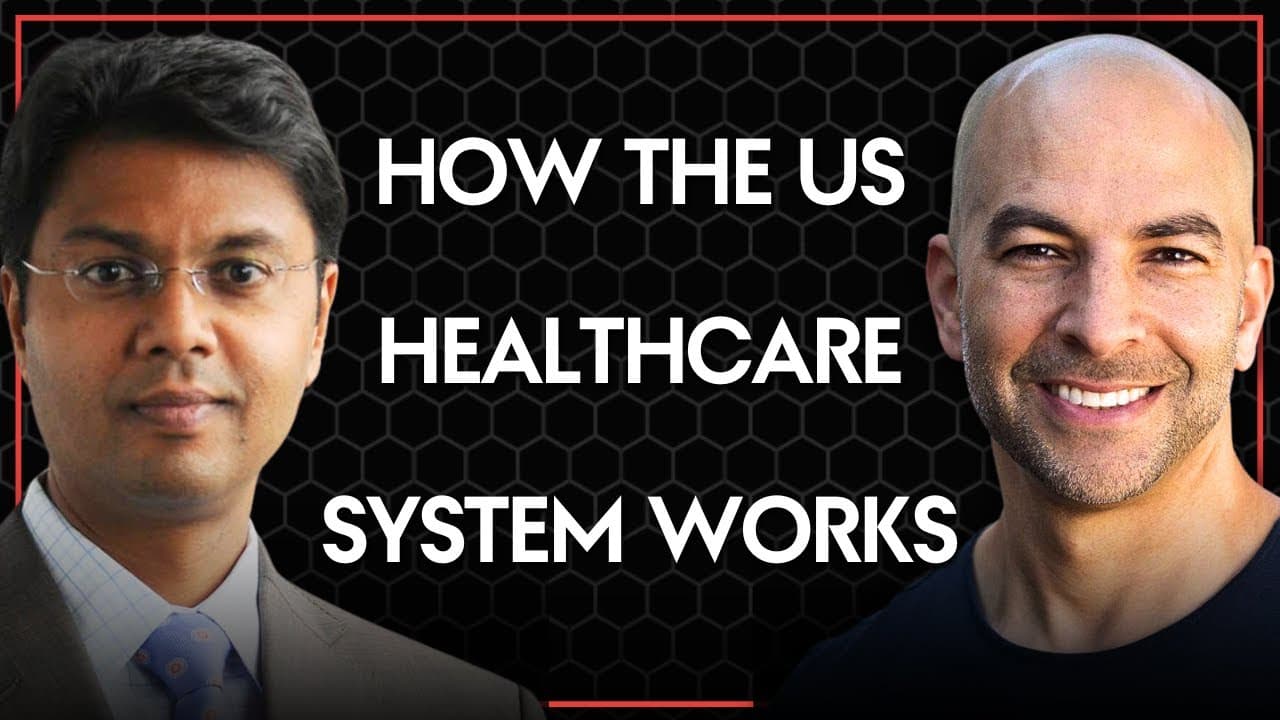
How does the US healthcare system work today and why?
TL;DR
The US healthcare system moves about four trillion dollars annually through consumers, employers, and government, with employer sponsored insurance being a dominant source. The spending is spread across hospitals, physicians, and drugs, while administrative costs contribute to inefficiencies. The discussion frames how we got here and what reforms could change affordability and coverage.
Transcript
s we're going to talk about the things that people care about right which is why is it so expensive why isn't everybody covered why do we not have the best life expectancy in fact on average why do we have horrible life expectancy despite spending twice as much as anybody else but we can't have that discussion if people don't understand the system ... Read More
Key Insights
- Healthcare spending is around four trillion dollars annually, with roughly half funded by government and half by private sources.
- Employer sponsored insurance became the dominant coverage model due to tax incentives created in 1954, shaping how Americans access care.
- About a quarter of spending comes from consumers directly, with the rest funded by employers and government programs.
- Administrative complexity and high costs are a major feature of the US system compared to others, affecting efficiency.
- Health expenditure is distributed across hospitals, physicians, and drugs and devices, influencing buying power and pricing.
- The US economy spends a large share on healthcare relative to other sectors, impacting competitiveness and affordability.
- Self-insuring by employers largely occurs among larger companies, affecting risk pooling and coverage choices.
- Historical context from the 1950s onward explains how policy choices locked in the current financing structure.
Install to Summarize YouTube Videos and Get Transcripts
Explore YouTube Video Summarizer or Get YouTube Transcript Extractor
Questions & Answers
Q: How is US healthcare financing structured today in simple terms?
US healthcare financing is divided among three main streams: consumers who pay out of pocket or through insurance, employers who pay into employer sponsored insurance, and the government which funds programs and subsidies. Together these streams handle roughly four trillion dollars in annual spend, with employer sponsored insurance and government programs forming the backbone of coverage. This structure creates a mix of private and public payers and influences access, costs, and coverage choices for individuals.
Q: What role does employer sponsored insurance play in the system?
Employer sponsored insurance is a dominant form of coverage in the United States. It grew in part due to tax incentives introduced in 1954 that made providing insurance through employers a pre tax benefit. This arrangement means many people receive coverage as a benefit of employment rather than through a universal program, shaping the way health services are paid for and delivered across the country.
Q: How much does the US spend on healthcare relative to the economy?
Healthcare expenditure represents a substantial portion of the US economy, approaching 20 percent of GDP in discussion context. This scale reflects the high level of spending across private and public sectors and helps explain ongoing concerns about affordability, coverage, and the impact on overall economic competitiveness.
Q: What are the main components of healthcare spending?
Spending is typically looked at as divided into three broad categories: hospitals, physicians and clinics, and drugs and devices. This breakdown helps stakeholders understand where money flows within the system, while also highlighting areas where administrative costs and price dynamics can influence overall efficiency and access.
Q: How do government expenditures fit into the system?
The government funds health care through direct expenditures and tax based subsidies, complementing private payer contributions. In the US, government spending covers a significant share of programs like Medicare and Medicaid and also interacts with private insurers through programs like Medicare Advantage, shaping coverage and provider reimbursement in nuanced ways.
Q: Why is administrative cost often cited as a pain point in US health care?
Administrative costs are a prominent concern because the US system involves multiple payers, billing practices, and administrative requirements across both private and public sectors. This complexity can drive higher overhead and transaction costs, potentially contributing to higher overall prices and administrative inefficiencies relative to other systems.
Q: What historical factors shaped the current financing structure?
Historical factors include the rise of employer sponsored insurance after World War II and the 1954 tax policy that made it a pre tax benefit. These decisions entrenched private payer dominance and how insurance is provided and funded, influencing the current mix of government, employer, and consumer contributions that define the system today.
Q: What questions arise when considering reforms for affordability and coverage?
Reform questions focus on balancing the growing share of health care in the economy with affordability, access, and quality. Key considerations include how to reduce administrative waste, redesign coverage mechanisms beyond employer based models, and align payments to outcomes while addressing the financing pressures from an aging population and rising service costs.
Summary & Key Takeaways
-
The US healthcare system channels a large portion of its spending through employer sponsored insurance, consumers, and government programs, making it the dominant force in the economy. These flows create a complex mix of public and private payers that shape access and cost.
-
Administrative costs and the structure of financing influence overall efficiency and outcomes, with significant room for reform in how care is paid for and delivered.
-
Understanding the historical roots, especially the rise of employer sponsored insurance and tax policies, clarifies why the system looks the way it does today and what levers might drive change.
Read in Other Languages (beta)
Share This Summary 📚
Summarize YouTube Videos and Get Video Transcripts with 1-Click
Try YouTube Summary with ChatGPT & Claude or YouTube Transcript Generator
Explore More Summaries from Peter Attia MD 📚





Summarize YouTube Videos and Get Video Transcripts with 1-Click
Try YouTube Summary with ChatGPT & Claude or YouTube Transcript Generator